
Fendt’s e100 Vario, a compact, carbon-neutral, emission-free, electric battery-powered tractor series, is now for sale in North America, albeit only in the U.S. Pacific Northwest.
However, a senior strategic marketing manager with the Agco-owned company says it’s only a matter of time before the series is released in Canada, with the East being the most likely introductory market due to high municipal demand and greenhouse capacity.
“It will eventually — probably in the next year or so — be available in Canada,” says Daniel Smith, who describes the e100’s planned national rollout as “co-ordinated” and “methodical” so the company can gather dealer and customer input.
“There’s so much municipal work that’s going to be done in the eastern side, and that’s where I think e100 is really going to shine: for snow removal, for doing some mowing in municipal areas,” he says.
‘Narrow’ version good for polytunnels and greenhouses
The e100 Vario model now in North America comes in two variants. One is the Fendt e107S Vario (standard) for vegetable growers and livestock farms, particularly those with their own energy production.
The e107 V Vario (narrow) — at a mere 1.07 metres wide and approximately 2.5 metres high — is designed specifically for operating in tight spaces such as vineyards and orchards.
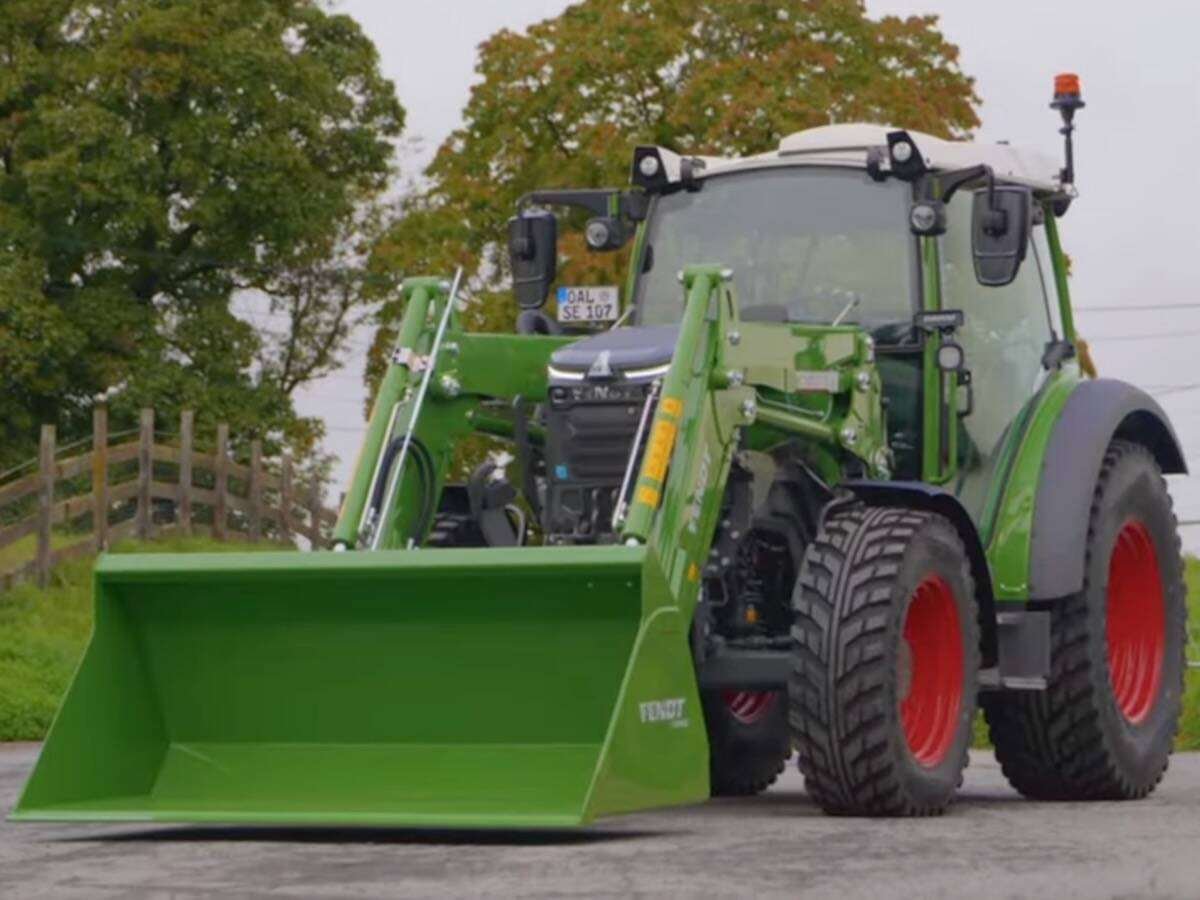
Both use the same 100 kWh capacity battery.
The tractors include what Fendt describes as “a powerful electric motor,” which functions in three driving modes: 50 kW (68 h.p.) in Eco mode, up to 55 kW (75 h.p.) in Dynamic, and up to 66 kW (90 h.p.) — its peak drive power — for short periods in Dynamic+ mode.
“Its maximum torque of 347 Nm ensures optimum pulling power and a dynamic driving experience,” reads a Fendt news release.
The narrow version is a great fit for polytunnels and greenhouses, says Smith. A polytunnel is a tunnel-like structure commonly used for growing vegetables, fruits and flowers that can also accommodate livestock.
“You don’t want to be producing a ton of heat through an exhaust system (in those environments), so these tractors are going to be able to put in some of those specialty crop greenhouse applications as well and not have any damage via heat to that polytunnel.”
Compatibility a priority
The e100 series tractors debuted as a ‘concept’ model in 2017 and have been in development since then. Commercial sales began in Europe in 2024 and in the U.K. and Ireland last year.
The new compact is based on Fendt’s 200 series, except it replaces that lineup’s diesel engine with a battery and electronic motor. Smith says this modularity is a bridge strategy as demand for compact electronic tractors grows.
“The frame is going to be the same, the hydraulics are going to be the same, the lifts, the tires — basically everything is the same other than what’s underneath the hood. Our dealers are going to be able to support these machines better because there’s not a huge market for electronic tractors right now, especially in that premium category.
“This is going to give them the ability to have much, much better access to parts and service for the … tractor.”
Charging requires strategy
Two of the first things consumers think about when entering the electric vehicle market is, “how long is the battery going to last before charging” and “how long will it take to charge?’”
To the first question, Smith says it depends on the application for which the tractor is being used.
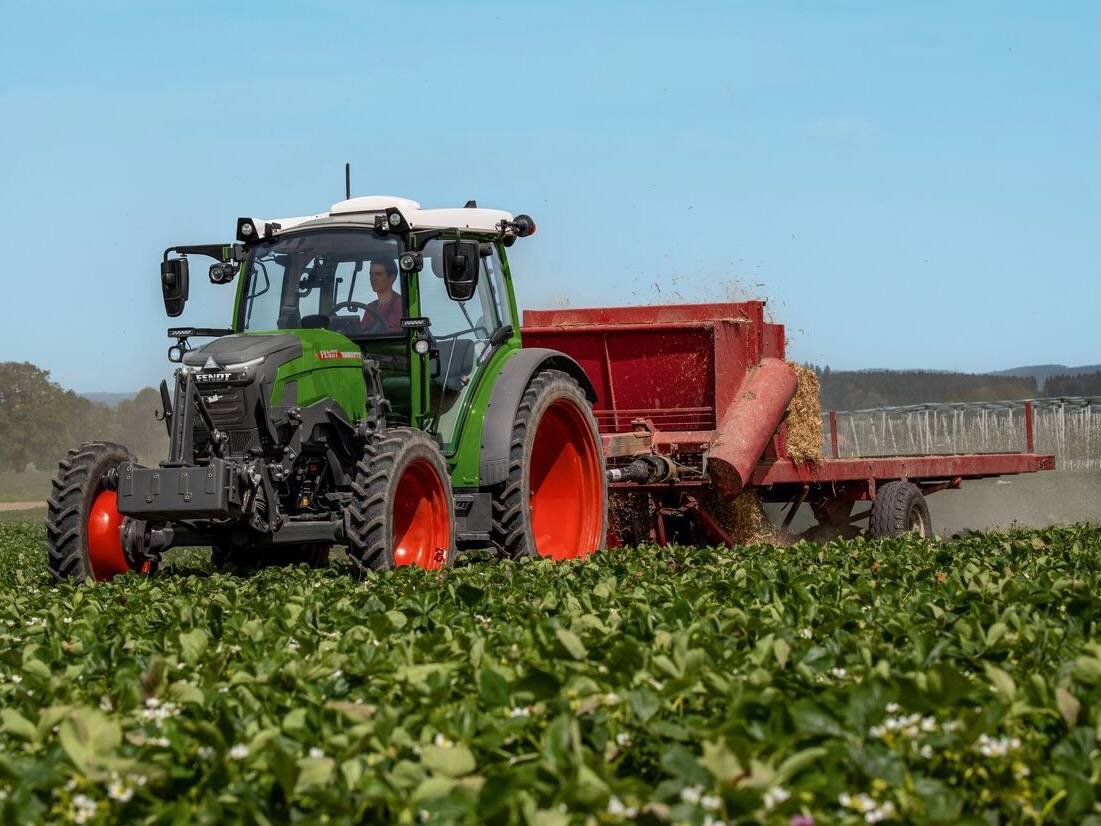
“The battery could last anywhere from a light kind of duty load, basically (with a) 20 per cent engine load that battery would last upwards of 10 hours.
“But if (it’s) a wood chipper application, where it’s a super heavy load, it could be two, three, four hours. It all depends on the duty cycle of that motor and that engine and how much work it’s doing.”
The tractors have two charging options: a “slow” charger (22 kw) and a “fast” one (80 kw).
The battery accommodates a Type 2 plug for standard AC overnight charging for the former and a combined charging system (CCS) plug for the latter.
The 22 kw variant can charge the battery within five hours, while the 80 kw system can get the job done in slightly more than an hour.
“Think of it like you might need to adjust your schedule a little bit,” says Smith.
“You work four or five hours in the morning, (and when you) get ready to go to lunch, you plug the tractor in. You’re ready for another four or five hours in the afternoon.”
The post Canadian debut in sight for Fendt’s fully electric compact tractor appeared first on Farmtario.


