

Designing Trash Out of Existence at Scale
Yankee Stadium is one of the most advanced examples of large-scale
waste diversion in a live event environment. Hosting tens of thousands of fans per game, the stadium has built a fully integrated system that consistently diverts approximately 75–85% of total waste away from landfill.
This case study demonstrates how a venue can move beyond traditional recycling programs and instead design a system where waste is minimized, materials are recovered, and “trash” is largely engineered out of the process.
The Challenge
Large venues face a unique set of waste challenges:
- Extremely high volume in short timeframes
Contamination from mixed materials- Limited attention span of users (fans)
Complex coordination between vendors, staff, and haulers- Food-heavy waste streams with high organic content
Most
stadiums struggle to exceed 30–40% diversion due to these constraints.
Yankee Stadium needed a system that could perform at scale without relying on perfect user behavior.
The Strategy: Design the System, Not Just the Bins
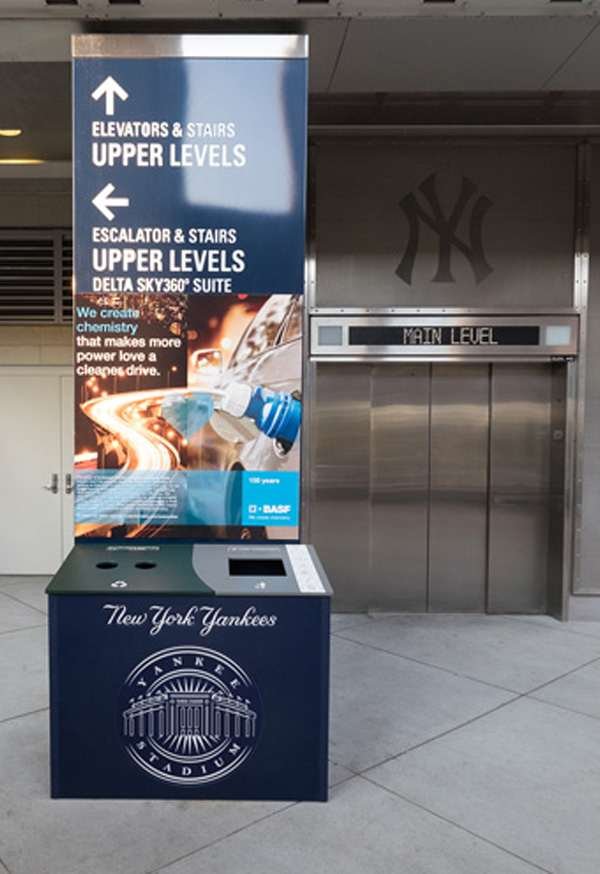
Instead of treating waste as an operational afterthought, Yankee Stadium built a system based on five integrated pillars:
1. Material Stream Simplification
All materials are aligned into
three clear streams :
- Recycling
- Compost
- Minimal landfill
2. Front-of-House Design
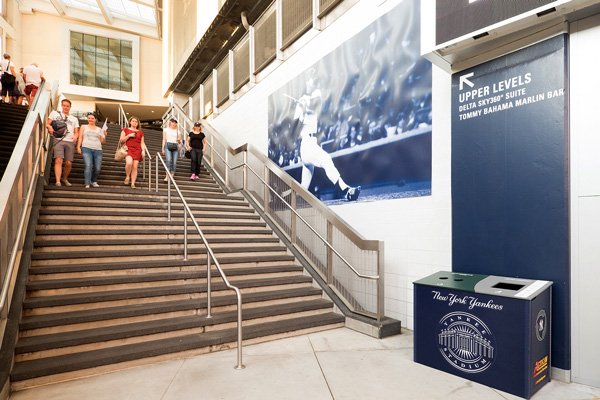
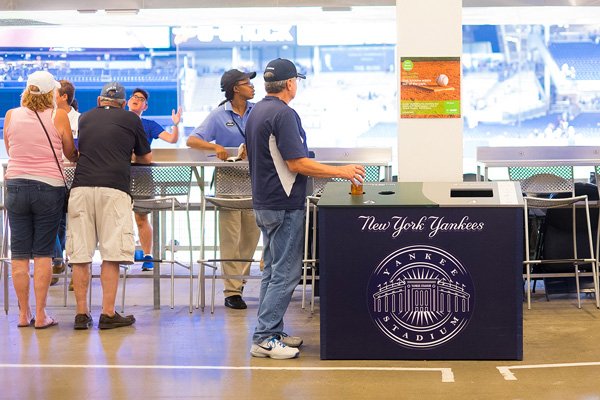
Waste stations are standardized, co-located, and clearly labeled to guide behavior.
3. Back-of-House Recovery
Sorting, recovery, and correction systems ensure materials are captured even when mis-sorted.
4. Procurement Alignment
Packaging and serviceware are selected to match the waste system.
5. Continuous Operations & Partnerships
Haulers, staff, and vendors are aligned to maintain performance over time.
Front-of-House: Designing for Human Behavior
Fan interaction is the most
visible part of the system —and the most critical.
Key Design Features
Co-located stations
Every disposal point includes recycling, compost, and landfill together.
Restricted openings
Bottle slots, compost openings, and landfill limitations
reduce contamination.
Clear, visual signage
Simple, image-based communication allows quick decisions in high-traffic moments.
Consistent placement
Stations are located at:
- Concessions
- Entrances/exits
- Circulation paths
- Seating transitions
Result
Fans are not required to think hard about waste decisions. The system guides them.
Back-of-House: Where Performance Is Won
High diversion is not achieved in public areas alone.
Core Components
Post-event sorting
Teams
recover recyclable and compostable materials after events.
Organics processing
Food waste is separated and sent to composting or anaerobic digestion.
Food donation programs
Edible surplus is redirected to community organizations.
Used cooking oil recovery
Converted into biodiesel, reducing lifecycle emissions.
Result
Even imperfect disposal behavior is corrected downstream.
Procurement: Eliminating Waste Before It Starts
The system works because materials are controlled upstream.
Key Decisions
- Compostable food service packaging replaces traditional plastics
- Recyclable materials are prioritized
- Reduction of hard-to-recycle materials
- Support for refillable containers and reduced single-use items
Result
The waste stream becomes simpler, cleaner, and easier to process.
Infrastructure and Hauling
To support volume and consistency, the stadium integrates:
- High-capacity collection systems
- Compactors to reduce hauling frequency
- Dedicated recycling and compost hauling partners
- Coordination with municipal infrastructure
Result
Operational efficiency supports environmental performance.
Results and Impact
Yankee Stadium’s system delivers measurable outcomes:
- 75–85% diversion rate
- Significant reduction in landfill dependency
- Thousands of pounds of organic waste composted
- Reduced hauling emissions through compaction
- Community impact through food donation
Why This System Works (When Others Fail)
Most waste programs fail due to fragmentation.
Common Failures
- Bins added without system design
- Mismatch between materials and streams
- No back-of-house recovery
- Poor signage and user confusion
- Lack of accountability
Yankee Stadium’s Advantage
Everything is aligned:
- Materials
- Infrastructure
- Operations
- Behavior
- Hauling
This is not a recycling program.
It is a
designed system for diversion.
Key Takeaways for Other Facilities
Any facility can apply these principles:
- Design waste systems early in the project lifecycle
- Standardize bin systems across all spaces
- Align purchasing with waste goals
- Train staff and engage users
- Build back-of-house recovery processes
Track performance and optimize continuously
Final Insight
Yankee Stadium proves that waste is not inevitable.
When systems are designed intentionally, waste becomes a resource stream—and landfill becomes the exception, not the rule.
Additional Resources of Interest:
How Burton Snowboards Achieves Sustainability Through Waste Sorting
Recycle Away Toolkit: 3 tools to support planning and operations


