
Something remarkable just happened in the world of battery technology, and it deserves more attention than it’s getting. CATL, the Chinese battery giant that supplies cells to nearly every major automaker on the planet, has publicly revealed it is actively researching lithium-air batteries – a technology with a theoretical energy density of around 12,000 watt hours per kilogram.
For context, gasoline sits at roughly 13,000 watt hours per kilogram and those two numbers being in the same conversation is, frankly, staggering.
This isn’t a fringe research group making bold claims at a conference. This is CATL, a company with 170,000 employees, a 40% share of the global battery market, and a chief scientist named Wu Kai who doesn’t do hype. When CATL talks about a technology direction, people in the industry pay attention as this serves a new baseline from which new batteries will be judged.
How far batteries have already come
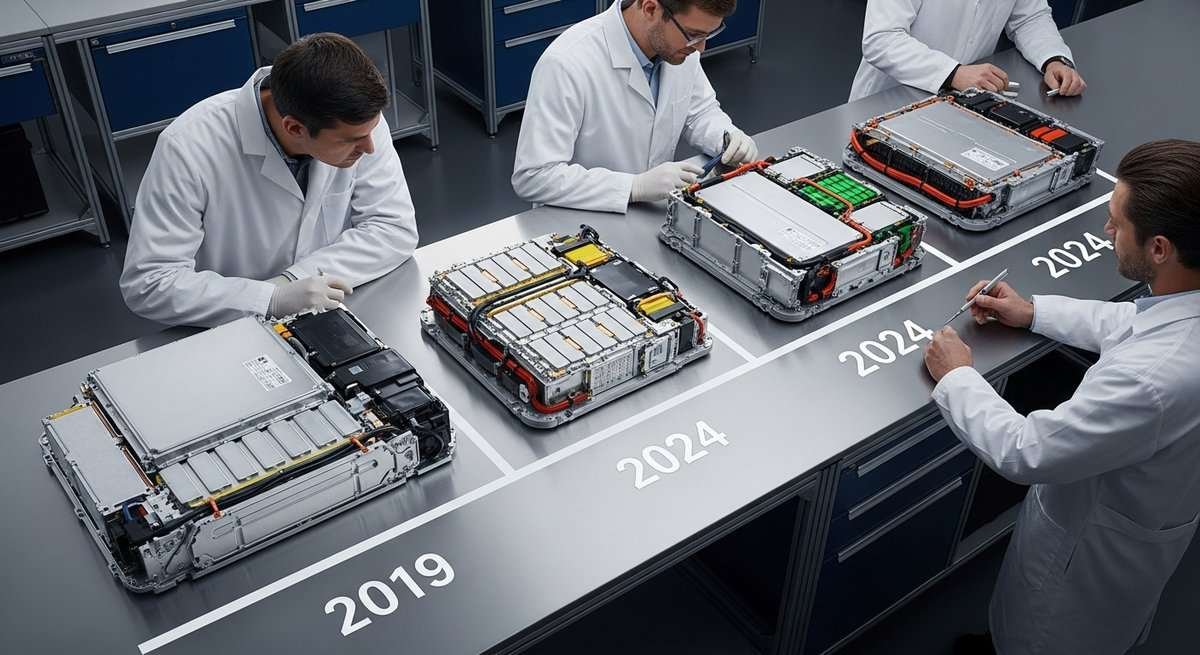
To really appreciate what CATL is now pointing toward, it helps to remember where we started in that circa 2019/2020, most EV batteries were operating at roughly 160 watt hours per kilogram and people were genuinely debating whether electric cars or mass energy storage would ever be practical and economically viable.
Then came the LFP wave. Lithium iron phosphate chemistry swept through the market, bringing affordable, safer batteries to millions of vehicles (and soon to my personal home storage I am hoping). BYD’s Blade Battery pushed that chemistry to around 210 watt hours per kilogram. CATL followed with its condensed battery, hitting close to 500 watt hours per kilogram. Solid-state batteries are now approaching real commercialization.
That progression – from 160 to 500 watt hours per kilogram in roughly five years – is the kind of pace that makes you stop second-guessing what’s possible. If you want a broader picture of where this industry is heading, this deep dive into the future of the electric vehicle battery industry is worth reading alongside this story.
What lithium-air batteries actually are
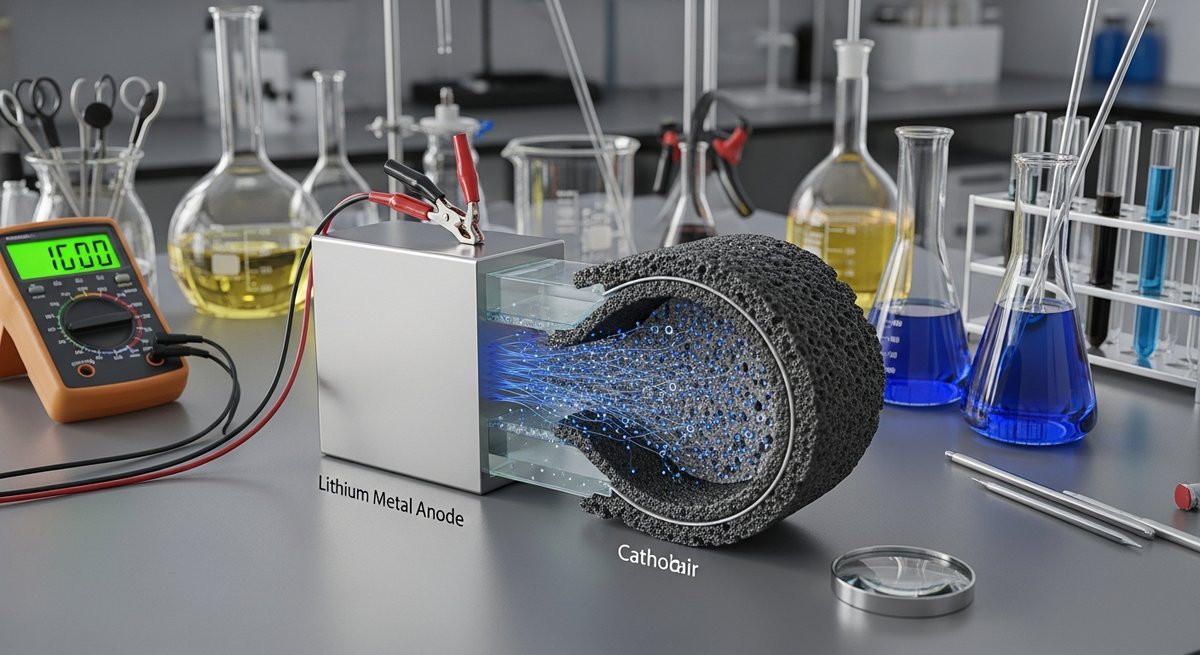
Traditional lithium-ion batteries carry both sides of the chemical reaction inside the battery pack itself. All that material adds weight, which limits range. Lithium-air batteries work differently. They use lithium metal as the anode and pull oxygen directly from the surrounding air to complete the reaction. The battery doesn’t need to carry everything it needs – some of the chemistry comes from the atmosphere around it.
Laboratory versions of lithium-air batteries have already exceeded 1,200 watt hours per kilogram. That’s more than four times the energy density of most batteries currently on the road. The theoretical ceiling of 12,000 watt hours per kilogram is what physics suggests is possible with this chemistry – the kind of number that makes engineers lose sleep in a good way.
The efficiency advantage EVs already have
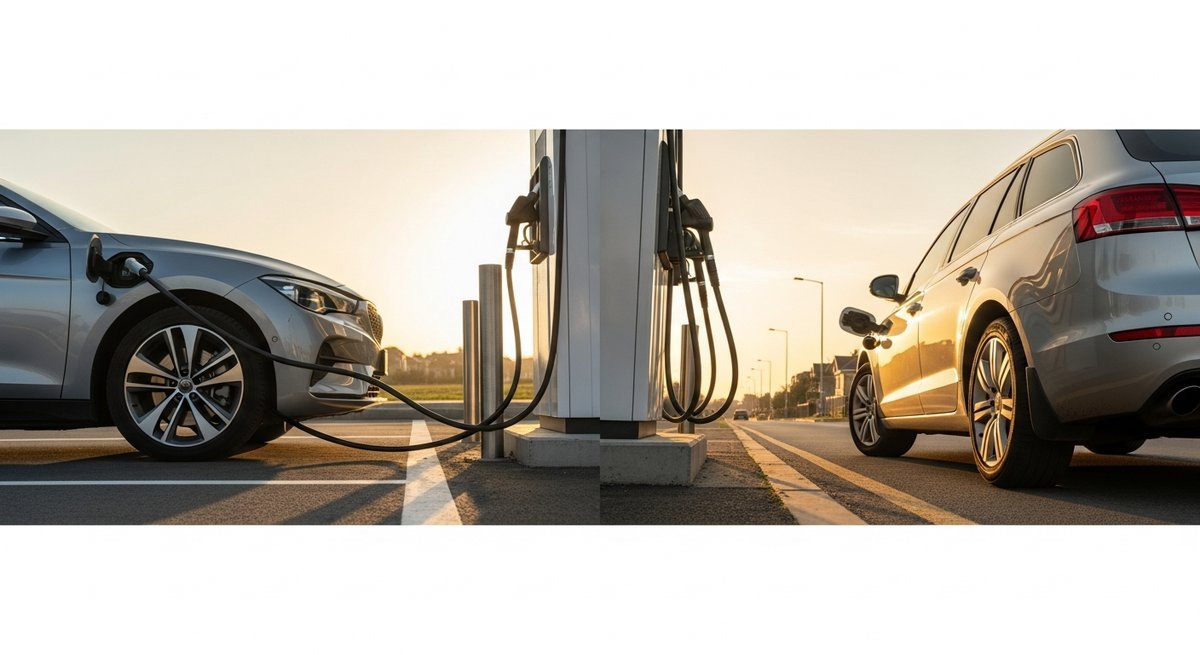
There’s an important point that gets lost in energy density comparisons. Electric motors don’t need to match gasoline kilogram for kilogram to win. They already win on efficiency by a huge margin.
According to the EPA, electric vehicles convert roughly 87 to 91% of battery energy into actual movement. Petrol engines convert only around 16 to 25% – the rest escapes as heat. So even at current battery densities, EVs are already punching above their weight in terms of real-world usable energy. Once battery density starts seriously moving toward liquid fuel territory, combustion engines won’t just look inefficient. They’ll look almost quaint.
CATL specifically mentioned passenger aircraft when it launched its condensed battery. The aviation sector has always seemed nearly impossible to electrify because of the brutal weight-to-energy demands of flight. Lithium-air batteries start to change that equation in a serious way. We may be a couple of decades away, but the conversation is no longer hypothetical.
Why lithium-air batteries aren’t in your car yet

Getting impressive numbers in a laboratory is one thing. Building hundreds of millions of batteries that survive a decade of daily use, extreme temperatures, and thousands of charge cycles is an entirely different engineering challenge.
Lithium-air batteries have well-documented problems. Moisture and carbon dioxide from the air interfere with the reaction. Managing airflow consistently is technically tricky. The batteries degrade unevenly over charge and discharge cycles. Preventing that degradation reliably over time is the core challenge researchers are still working through.
These aren’t small hurdles. They’re the kind of deep engineering problems that take significant time, talent, and investment to solve. CATL has all three – 2,000 people in one research sub-team alone, with around 200 holding doctorates. But even with those resources, lithium-air batteries reaching commercial production before 2035 seems optimistic. Realistically, this is a 2035-plus technology, possibly later if investment shifts toward near-term priorities like sodium-ion and solid-state.
This broader challenge of making advanced battery technology reliable and scalable is something other innovators are tackling from different angles too. Texas recently made headlines with a breakthrough in flow battery manufacturing that shows how diverse the approaches to energy storage are becoming.
What this actually tells us about battery direction
The real story here isn’t just about lithium-air batteries specifically. It’s about the signal CATL is sending by publicly discussing this technology at all.
CATL doesn’t embellish. It doesn’t announce vaporware. When Wu Kai publicly identifies lithium-air as a major long-term research direction, it means there’s real work happening with real resources behind it. The company is simultaneously developing LFP variants, sodium-ion batteries, condensed batteries, and solid-state technology. Lithium-air is the next horizon beyond all of that.
The direction of travel is becoming hard to ignore. Five years ago, mainstream EVs with 400 km of real-world range seemed ambitious. Today, CATL is thinking about batteries that could theoretically give a passenger car a range of 1,500 km or more on a single charge. That’s not science fiction – it’s a roadmap.
As battery technology improves, we’re also seeing more people think about energy storage for homes and businesses. The growing adoption of domestic battery storage systems is one example of how advances in cell chemistry ripple outward from EVs into everyday energy use.
AI is accelerating this timeline too. Computational modelling is letting researchers test thousands of theoretical configurations without touching a lab bench. The pace of battery development may not just be holding steady – it may actually be increasing.
Frequently asked questions about CATL battery energy density
What is the energy density of CATL’s new lithium-air battery?
The theoretical energy density of lithium-air battery technology is estimated at around 12,000 watt hours per kilogram. Laboratory versions have already demonstrated over 1,200 watt hours per kilogram. CATL’s chief scientist identified lithium-air as a key long-term research direction, though commercial products are still years away.
How does gasoline energy density compare to lithium-air batteries?
Gasoline stores roughly 13,000 watt hours per kilogram. Lithium-air batteries have a theoretical ceiling of around 12,000 watt hours per kilogram – remarkably close. However, electric motors convert 87 to 91% of stored energy into movement, while petrol engines only convert 16 to 25%, which means EVs don’t actually need to match gasoline density to outperform combustion engines in real-world use.
What is CATL’s current best battery in production?
CATL’s condensed battery has demonstrated energy density of close to 500 watt hours per kilogram, making it one of the most energy-dense commercially demonstrated batteries in the world. The company also produces sodium-ion batteries and is advancing solid-state battery technology toward commercialization.
When will lithium-air batteries be available in electric vehicles?
- Most realistic estimates point to 2035 or later for commercial lithium-air batteries.
- Key technical challenges include cycle life, moisture sensitivity, carbon dioxide interference, and consistent airflow management.
- Solid-state batteries, which have been in development longer, are only now entering early production in 2024 and 2025.
- Lithium-air is considered at least one full generation beyond solid-state in the development timeline.
Why are lithium-air batteries so much lighter than conventional EV batteries?
Traditional lithium-ion batteries carry both the anode and cathode materials inside the pack. Lithium-air batteries use oxygen from the surrounding atmosphere as part of the chemical reaction, meaning they don’t need to carry one half of the reaction with them. That reduces overall weight significantly and is the primary reason for the dramatic improvement in theoretical energy density.
How big is CATL’s market share and research operation?
- CATL held 39.2% of the global battery market in 2024 and 2025, making it the largest battery manufacturer on earth.
- The company employs roughly 170,000 people total.
- One research team alone has around 20,000 members, with a sub-team of 2,000 dedicated researchers, approximately 200 of whom hold doctorates.
Could lithium-air batteries make electric aircraft practical?
Possibly, in the longer term. Aviation is extremely weight-sensitive, which is why liquid fuels still dominate. CATL mentioned passenger aircraft when launching its condensed battery at 500 watt hours per kilogram. At the theoretical densities lithium-air could reach, electric flight becomes far more viable – though the engineering challenges of reliability and cycle life need to be solved first.
Battery technology has moved faster in the last five years than most people predicted possible. When the world’s largest battery company starts openly discussing a technology that approaches gasoline-level energy density, it’s worth taking seriously – even if the commercial reality is still a decade or more away. The direction is clear, the resources are committed, and the pace isn’t slowing down.
Sources
- Car News China – CATL Chief Scientist Wu Kai on lithium-air battery research directions
- U.S. Environmental Protection Agency (EPA) – EV energy efficiency data
This article is for informational purposes only.
Reference: https://youtu.be/XqERjevYo2M?is=iBLAA4rMvW-YchlJ
The post CATL Reveals Battery With Gasoline-Level Energy Density appeared first on Green.org.


