
When Akin Busari emigrated from Nigeria to Canada 24 years ago, a popular jingle on the radio stuck with him: “Good things grow in Ontario.”
He loved the idea of local food. What he couldn’t understand was how Canadians managed to grow anything in the snow.
Today, Busari is president of Pamoja Farms, a 100-acre organic farm in Kawartha Lakes, Ont., built around community ownership, food sovereignty and culturally relevant crops.
Busari says the journey from newcomer to farmer has involved a steep learning curve, one he hopes will inspire other Canadians who want to explore food production and alternative farm ownership models.
Coming together
“Pamoja” means “together” in Swahili, a fitting name for a farm built on collective ownership, shared decision-making and community food production. Founded in 2022, Pamoja Farms operates as a co-operative with 20 member-owners, all of whom contributed financially to purchase the land. The idea began with Busari, who wanted to grow food for both his family and community, but it was the COVID-19 pandemic that transformed his idea into action.
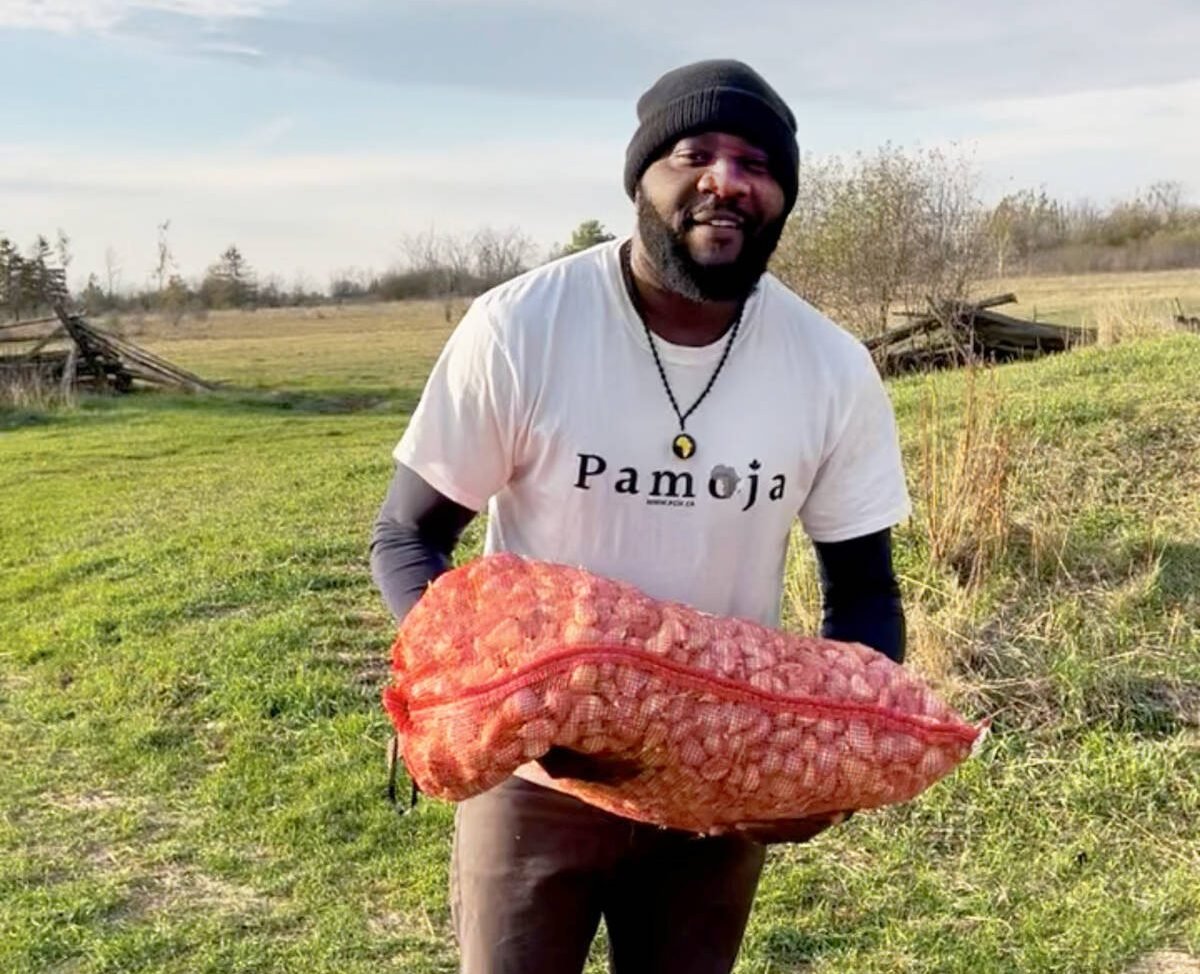
“The pandemic exposed how dependent we are on imported food,” says Busari. “We kept asking ourselves, why can’t we be more self-reliant?”
So, he started that conversation in a WhatsApp group chat among friends living in the Greater Toronto Area (GTA). “We discussed the possibility of buying land and starting a farm to grow our own food,” he says. “At first, it just seemed like a good idea.”
Busari’s wife, Nicole, vice-president of Pamoja Farms, admits she was initially skeptical. “But when I saw the impact of the pandemic shutdowns and the scarcity of available food, I bought in,” she says.
Learning the business of farming
An original group of roughly 50 friends began searching for farmland with the help of a real estate agent. High land prices within the GTA quickly forced them to look beyond their local geography, eventually considering properties as far as six hours away from their homes. By the time the group was ready to commit financially, only 20 members remained. Together, they voted to purchase a farm in Kawartha Lakes, roughly a 1.5-hour drive from the GTA, and the closest viable option within their budget.
Purchasing the property was their first major lesson in farm economics. Busari explains that because the land did not include a permanent residence, the group needed a commercial loan, which required a 40 per cent down payment. “That was probably the biggest and most complex decision we’ve had to make so far,” he says.
The large upfront investment left little working capital for infrastructure or crop production. Looking back, both Busari and Nicole say they underestimated how much they still had to learn about farming and farm financing.
“At the time, we felt we needed to secure the land first and figure everything else out later,” explains Nicole.
The group also assumed there would be financial support available to new farmers through grants or funding programs. Instead, they found themselves scaling back their original production plans almost immediately. “It would make sense if there was funding available to support local food production,” reflects Busari.
Despite the challenges, Nicole says the experience has reinforced the importance of mentorship and community connections. “I’ve learned so much from talking to neighbouring farmers and the farmers we’ve partnered with to help manage the land,” she says.
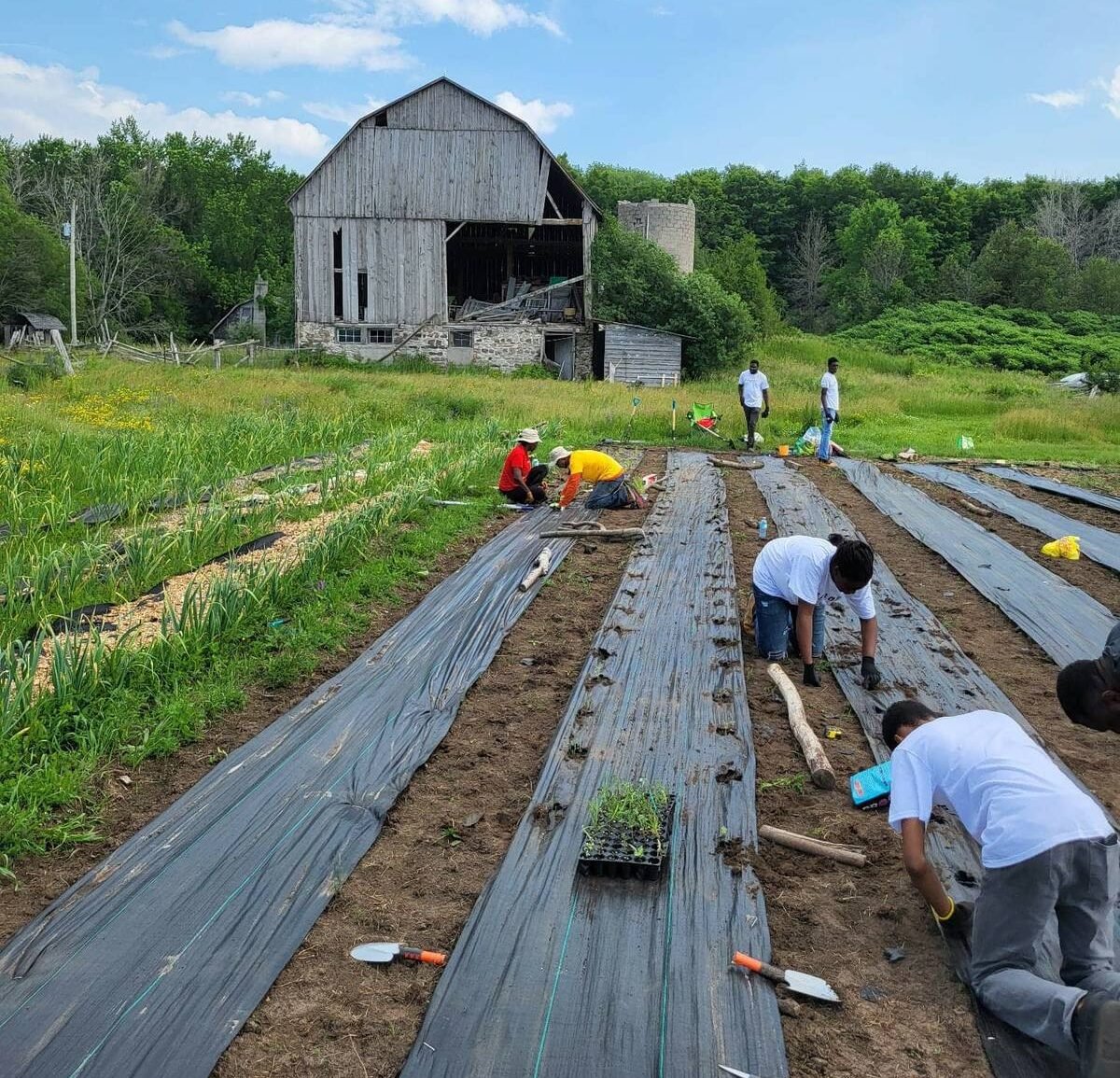
Since its inception, the group has farmed only some of the land, leasing portions of it to a local beef farmer for pasture. They rely on neighbouring farmers to help with tillage that requires tractors and field equipment, and the rest of the work is all done “using our hands and hand tools,” says Nicole. Over the years, they have learned to grow a variety of seasonal vegetables and planted their first crop of garlic last fall.
Vision and purpose
From the beginning, Pamoja Farms was designed to be more than a small organic farm. For the co-operative’s members, the venture represents an effort to rethink who has access to farmland, who grows food and who benefits from local agriculture.
Collectively, the group shares several long-term goals. Their most immediate purpose is to produce local, organic food for consumers while reducing dependence on imported produce. Through its seasonal harvest box program, Pamoja Farms already delivers bi-weekly boxes of vegetables grown both on the farm and through partnerships with neighbouring producers.
“I love seeing the smiles on our customers’ faces when I deliver our produce,” says Busari. “Their reaction alone makes all the work worthwhile.”
For Busari, the project is also about food sovereignty, building more resilient local food systems and giving communities greater control over how and where their food is produced. The co-op places particular emphasis on growing culturally relevant crops that are often difficult for Black, African and Caribbean communities to access locally, including callaloo and Scotch bonnet peppers.
The farm’s vision also extends beyond crop production. Pamoja Farms hopes to eventually develop the property into an agri-tourism destination that combines farming, education and hands-on experiences. Nicole says she wants visitors to experience the peacefulness of the Kawartha Lakes region while gaining a deeper appreciation for rural life and local food production.
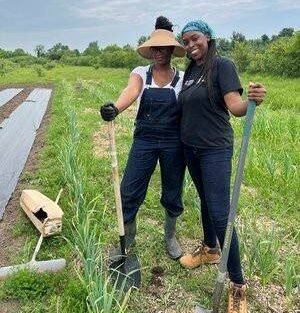
“We want people to come here, connect with the land and understand where their food comes from,” she says. “There’s something powerful about growing and harvesting food yourself.”
Education and community outreach have already become central to the farm’s purpose. The co-op hosts workshops, volunteer events and farm gatherings designed to welcome their surrounding community and introduce more people to agriculture and sustainable food production.
Busari says one of his biggest goals is to create a model that others can replicate. He hopes Pamoja Farms can demonstrate how collective ownership, shared investment and collaborative decision-making can help reduce barriers for new farmers, particularly those who may not otherwise have access to land or capital.
“We want to show that farming doesn’t have to be an individual pursuit,” he says. “Communities can come together, pool resources and build something sustainable.” He’s already been contacted by a similar group of people from Vancouver, B.C., who are eager to learn more about Pamoja Farms’ structure.
Co-operative farm
Building a co-operative farm has meant learning far more than how to grow food.
Over the past several years, Pamoja Farms has developed its own governance structure for shareholders, complete with a seven-member board, bylaws and member voting. Regular meetings are scheduled for the board and broader membership. Each co-owner contributes financially and participates in committees responsible for everything from farm operations to marketing and community events.
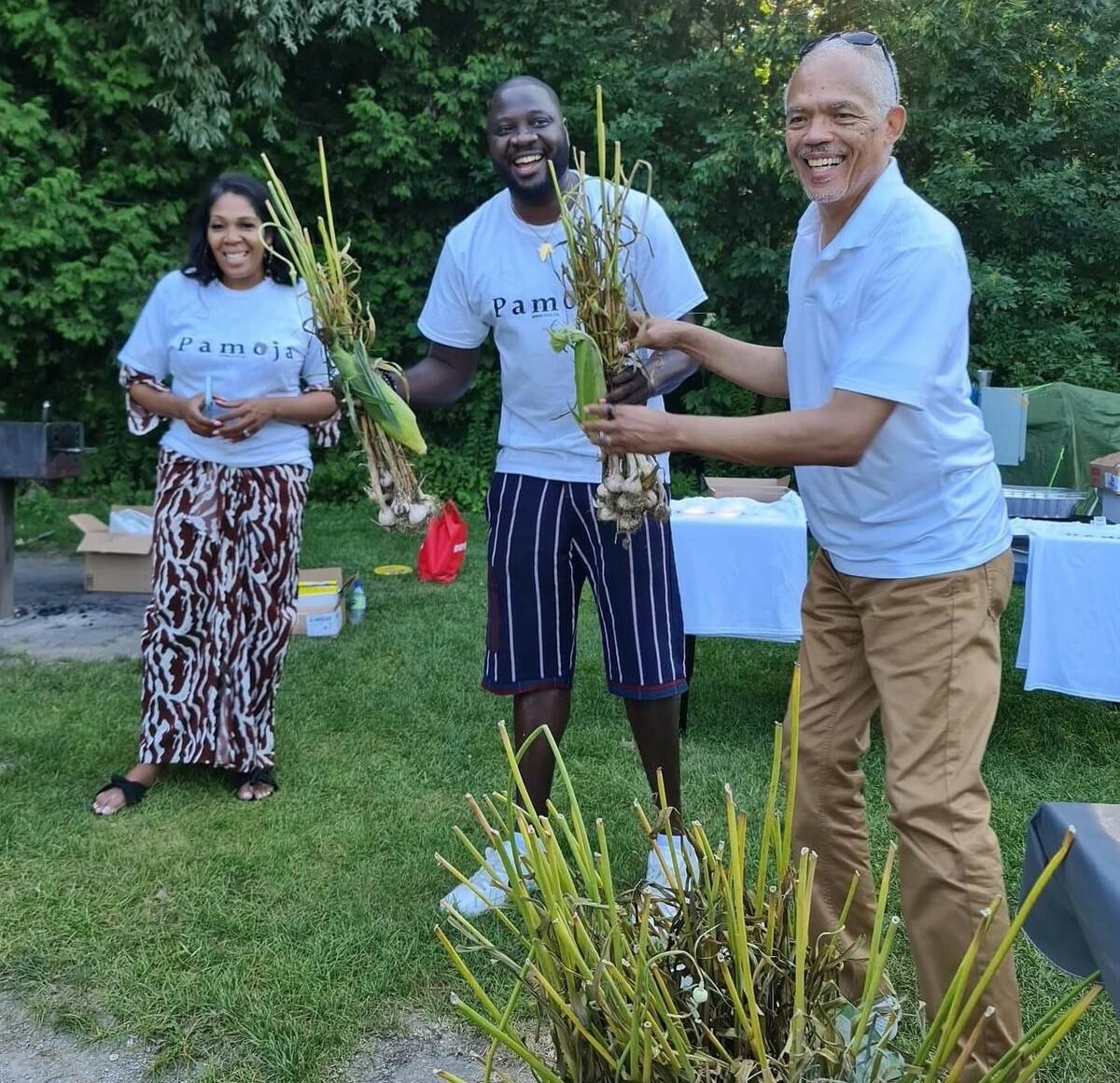
Nearly every major decision at Pamoja Farms is made collectively. Last year, for example, members voted on whether to dedicate a quarter-acre to garlic production. Once the motion passed, the farm committee was responsible for researching everything from how to source and plant garlic to labour and harvest requirements. The events committee stepped in to organize a planting day and hosted a community barbecue to celebrate.
That collaborative approach extends beyond the field, too. The co-op hosts monthly workshops and seminars where members share knowledge and learn more about crop production, farm management and the challenges of building a viable agricultural business.
Cultivating the future
Looking ahead, the co-operative’s members are focused on expanding both their knowledge and food production. Nicole says the group hopes to scale up by building a greenhouse and diversifying their production in the coming years. One ongoing challenge, however, is distance: none of the member-owners live close enough to manage the farm full-time.
That reality has made relationships with neighbouring farmers essential. Nicole says the co-op will continue to depend not only on local help with day-to-day farm operations, but also on the mentorship and knowledge-sharing by experienced producers in the area.
“We’re eager to learn, try new things, grow together and feed the future,” says Busari.
In keeping with the farm’s collaborative spirit, Pamoja Farms is already planning a member event this year where each shareholder will plant a fruit tree on the property as a symbolic investment in the land and the farm’s long-term vision for food security.
Busari says, “Now that I’ve seen both sides of the food system — from the consumer perspective, where I questioned food sovereignty and where my food was coming from, to growing the food myself — I understand what it takes now, and I’m more committed than ever to playing a role in making our world a better place.”
The post For Pamoja Farms, good things grow together appeared first on Farmtario.


