

Ford Motor Company ( has officially launched Ford Energy, a new business focused on manufacturing battery energy storage systems (BESS) for utilities, data centers, and industrial customers. The move is a big step for Ford. It goes beyond electric vehicles and puts the company in one of the fastest-growing energy markets in the world.
ezstandalone.cmd.push(function () { ezstandalone.showAds(119); });
The company plans to produce 20 gigawatt-hours (GWh) of battery storage annually from its Kentucky battery facility by the end of 2027. That level of output would position Ford among the largest U.S.-based energy storage suppliers.
The launch also reflects a broader industry shift. Automakers are stepping into stationary energy storage. This shift comes as electricity demand grows due to AI, cloud computing, and renewable energy.
ezstandalone.cmd.push(function () { ezstandalone.showAds(127); });
The U.S. government is also promoting domestic battery manufacturing. It offers clean energy tax credits and supply-chain incentives to encourage this effort.
Ford Energy stated:
“Utilities and developers need storage systems they can finance, insure and depend on for decades. They need suppliers who will be there in year 10 to honor a warranty claim. That is the gap Ford Energy is built to fill. Ford Motor Company has manufactured at industrial scale for more than a century, and we’re excited to bring this immense capability to energy storage.”
ezstandalone.cmd.push(function () { ezstandalone.showAds(128); });
Ford’s Next Big Bet: Turning EV Batteries Into Grid Power
Ford’s new business will manufacture large lithium iron phosphate (LFP) battery systems designed for utilities and large commercial users. These storage systems stabilize electricity grids. They also store renewable energy from solar and wind farms.
- The company expects to invest about $2 billion over the next two years to scale production.
ezstandalone.cmd.push(function () { ezstandalone.showAds(129); });
Ford built much of its manufacturing setup with South Korean battery partner SK On for electric vehicles. However, slowing EV demand and extra battery capacity led the company to focus more on stationary energy storage.
Ford Energy’s flagship product is a 20-foot containerized battery unit similar to Tesla’s Megapack system. Each container stores about 5.45 megawatt-hours (MWh) of electricity using high-capacity LFP battery cells. The company plans to offer two versions:
- FE-250 with a two-hour discharge duration
- FE-450 with a four-hour discharge duration
ezstandalone.cmd.push(function () { ezstandalone.showAds(130); });
These systems are designed for:
- utility-scale renewable projects,
- AI data centers,
- manufacturing facilities, and
- grid balancing applications.
First deliveries are expected in late 2027. Ford stock surged about 13% after investors responded positively to the company’s new energy storage business. This is its biggest one-day gain in nearly six years.

Analysts at Morgan Stanley said Ford’s partnership with Contemporary Amperex Technology Co. Limited gives the automaker a strong strategic advantage in the fast-growing battery storage market. Investors liked Ford’s plan to invest about $2 billion in U.S.-made battery storage systems.
ezstandalone.cmd.push(function () { ezstandalone.showAds(131); });
- RELATED: Ford’s (F Stock) EV Transformation: A Carbon-Neutral Drive by 2050 Boosts Investor Interest
Battery Energy Storage Demand Is Growing Rapidly Worldwide
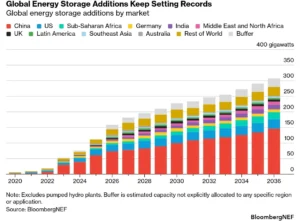
Ford is entering a market that is expanding at an extraordinary pace. According to BloombergNEF, global energy storage deployments reached about 307 GWh in 2025. The research firm forecasts worldwide deployments could rise to around 459 GWh in 2026 alone.
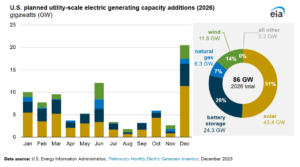
Meanwhile, the U.S. Energy Information Administration (EIA) expects the United States to add roughly 24 gigawatts (GW) of battery storage capacity in 2026. That would nearly double the record 15 GW added in 2025.
ezstandalone.cmd.push(function () { ezstandalone.showAds(132); });
Industry forecasts also show total U.S. battery storage capacity could exceed 600 GWh by 2030. The growth is being driven by several major trends:
- rising renewable energy installations,
- surging electricity demand from AI,
- grid modernization efforts, and
- increasing electrification across industries.
Battery storage is becoming essential because solar and wind power are intermittent. Electricity production changes depending on weather conditions and time of day.
ezstandalone.cmd.push(function () { ezstandalone.showAds(133); });
Storage systems help solve this issue by saving electricity when supply is high and releasing it later during periods of peak demand. This flexibility is becoming increasingly valuable for utilities and large electricity users.
AI Data Centers Are Creating a Massive Storage Opportunity
One of the biggest growth drivers for battery storage is the rapid expansion of AI infrastructure. Large AI data centers consume enormous amounts of electricity and require an uninterrupted power supply. This is creating growing pressure on electricity grids globally.
According to the International Energy Agency, global data center electricity use could more than double, from 415 terawatt-hours (TWh) in 2024 to around 945 TWh by 2030.
ezstandalone.cmd.push(function () { ezstandalone.showAds(134); });
AI workloads could become a major source of this growth. The IEA estimates electricity demand from AI-focused servers could rise by around 30% annually through the end of the decade.
Many data centers need faster power solutions and so, companies are now using battery storage systems. This helps them unlock power capacity without waiting years for new grid infrastructure. This trend is creating major opportunities for battery suppliers such as Ford Energy.
Tesla Still Leads the Market, But Rivals Are Closing In
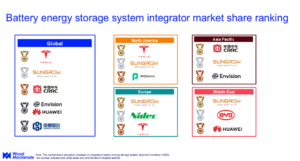
Tesla currently dominates the global BESS market through its Megapack business. Research firm Wood Mackenzie estimates Tesla held about 15% of the global battery storage integrator market in 2024. In North America, Tesla controlled roughly 39% of the market.
ezstandalone.cmd.push(function () { ezstandalone.showAds(135); });
Tesla’s energy business has also become increasingly important financially. The company reported energy generation and storage revenue of approximately $12.8 billion in 2025, up 27% year over year. Fourth-quarter storage deployments reached a record 14.2 GWh.
However, competition is increasing quickly.
Chinese energy storage supplier Sungrow Power Supply Co., Ltd. held roughly 14% of the global market in 2024, narrowing Tesla’s lead significantly. Other companies are also expanding aggressively into storage markets, including:
- Fluence Energy, Inc.,
- LG Energy Solution,
- General Motors Company, and
- Mercedes-Benz Group AG.
ezstandalone.cmd.push(function () { ezstandalone.showAds(136); });
Several automakers are now exploring stationary battery systems using both new and repurposed EV batteries. This reflects growing recognition that energy storage could become a major long-term business opportunity beyond vehicle manufacturing.
U.S. Manufacturing Incentives Create New Opportunities
Ford may benefit from a growing policy push for domestic battery production. Recent U.S. clean energy policies push companies to get battery materials and make products at home. This shift reduces reliance on imports from countries seen as “foreign entities of concern.”
Ford’s battery plants in Kentucky and Michigan support this strategy while helping customers qualify for tax incentives. The company is also focusing on lithium iron phosphate batteries, which are cheaper, safer, and widely used in stationary storage systems.
ezstandalone.cmd.push(function () { ezstandalone.showAds(137); });
Ford’s Energy Push Is Part of Its Climate Goals
Ford says the expansion into energy storage supports its broader sustainability strategy. The company aims to achieve carbon neutrality across its global operations no later than 2050. The carmaker has also committed to using 100% carbon-free electricity for manufacturing globally by 2035.
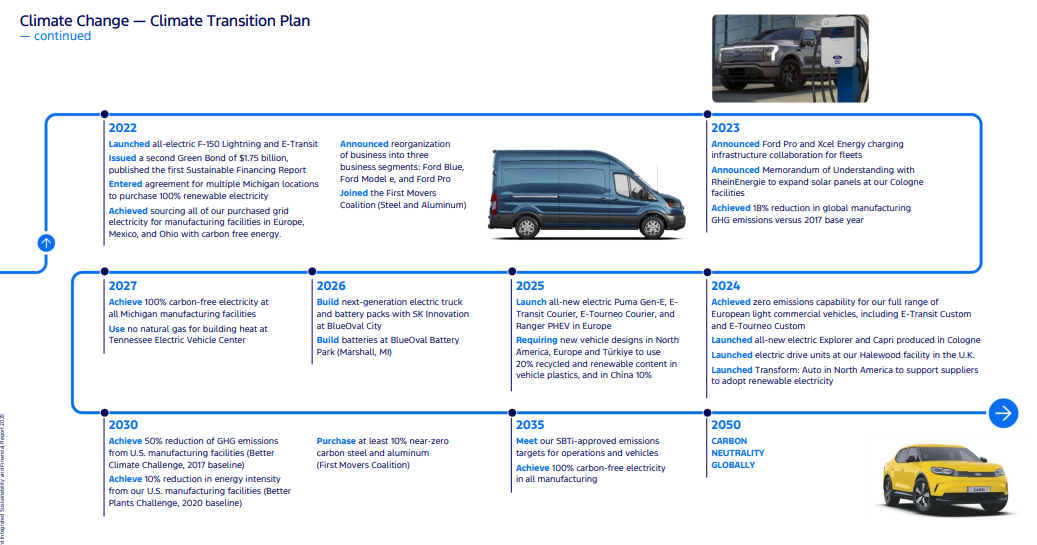
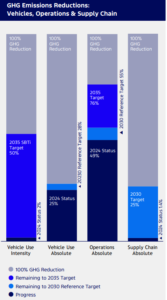
Ford’s latest sustainability report shows it cut operational greenhouse gas emissions by about 40% from its 2017 baseline. The company is boosting its use of renewable electricity in manufacturing. It is also investing heavily in battery recycling and cleaner supply chains.
Battery energy storage is becoming more important. It helps expand renewable energy use and keeps the grid stable. As renewable energy grows worldwide, big storage systems will be key. They help balance electricity supply and demand.
ezstandalone.cmd.push(function () { ezstandalone.showAds(138); });
Entering a High-Stakes Battle for the Future of Energy Storage
Ford Energy represents one of the company’s biggest strategic expansions beyond traditional automotive manufacturing.
The energy storage market is expanding quickly. This growth comes from AI infrastructure, more investments in renewable energy, and increasing electricity demand.
As grids update and electricity needs grow, battery storage is key for the global energy shift. Ford’s entry into the sector shows how traditional carmakers are evolving into broader energy and technology companies.
ezstandalone.cmd.push(function () { ezstandalone.showAds(139); });
- READ MORE: China’s One Month Lithium Battery Energy Storage Installations Beat America’s One Whole Year
The post Ford’s New Energy Business Targets Tesla’s Storage Empire, Sending Stock (F) Upward appeared first on Carbon Credits.


