
The British Broadcasting Corporation (BBC) has some excellent archival material about rural life and rural issues available on their YouTube channel. Some weeks ago, further down the British TV rabbit hole on YouTube, I discovered a long-running program hosted by a farmer, Jack Hargreaves, which I thought remained quite relevant.
Hargreaves was born in 1911 to a family with roots in rural Yorkshire. He went to school intending to be a veterinarian but took to technical agricultural writing during the hard economic times of the 1930s. Then came the war, where he was commissioned into the Royal Tank Core, eventually ending up on the staff of Field Marshal Bernard Montgomery as a communications professional. He continued in communications after the guns fell silent, at one time working as a communications specialist with the country’s National Farmers Union, while farming himself in the New Forest in southern England. He also launched a broadcasting career with Britain’s ITV.
The latter move saw the development of Out of Town – a program about rural life, history and culture. Think of it like Clarkson’s Farm, but with greater emphasis on history and the workings of broader community living. The idea, so Hargreaves has himself detailed, was to inform a largely disconnected public about a landscape and people which they would otherwise have little knowledge of, or engagement with.
Speaking to a reporter in the 1980s, Hargreaves stated, “I take the view that if people are going to argue about a problem they ought to know something about it.”
He continued: “The fact is, millions of people are talking about the countryside who don’t know anything about it…We want open minds about the countryside, and we want humility. We want the people who come into the countryside for the first time to realize they’re coming into an environment which takes a lifetime to learn about it and set out to learn it.”
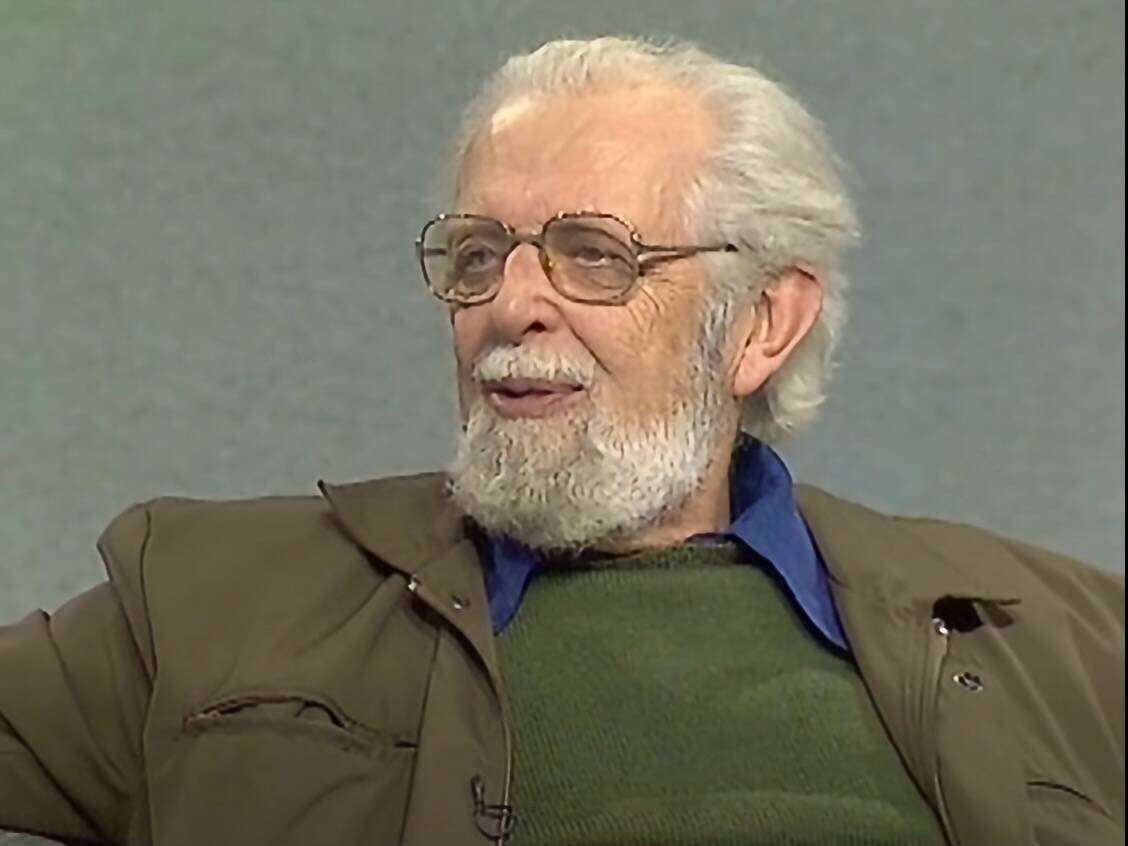
Jack Hargreaves. Photo: Rewind TV video screenshot via Facebook
Hargreaves stressed the value of walking – getting out of the vehicle to tramp across the countryside, getting to know the ground, its streams, lanes, and crucially, people. It was the best way, in his estimation, to get to know what things are and why they were that way.
Forty years later and more than an ocean away, Hargreaves’ mission in Out of Town really resonated with me.
Life in Canada is, for most of us, a high-RPM affair. We’re constantly running about between tasks, locations on the map, between screens and calls – all the things typical in a modern economy and society. For many, including those of us lucky enough to live and work in the countryside, our connection to landscape is more tenuous than it used to be.
I don’t say this to romanticize the past. It’s just a function of modern life. And, as time marches on, statistics show there are fewer people who live and work on the land. By consequence, opportunities for connecting with the landscape diminish. I would argue the impacts of this continued trend can be seen in legislation, and the ongoing (if not accelerating) loss of farmland and natural spaces. After all, why would someone worry about what happens to the fields around them, if they only see them as empty space?
To create rural experience, options exist
There are things we can do to reestablish connection, however.
As Hargraves argues, getting out into the countryside – walking the ground – brings knowledge and connection.
Regularly walking the fields and fencerows of rural Canada isn’t an option for a large segment of the population, obviously. But we can generate interest and appreciation in more people via other means. One of the reasons I’ve long argued for more on-farm ecological restoration initiatives – and the financial backing required to make them viable for the farming community – is to give more people more nature, to which they can connect.
There may be smaller-scale opportunities, too.
Rewilding or installing a wetland on a small piece of the farm might garner the attention and appreciation of birders. A sign near the fencerow indicating you’re working with scientists to study native pollinators, or at-risk species, could generate goodwill from passersby. Maybe planting a patch of sunflowers where people can stop to take a picture could brighten someone’s day. Even keeping a roadside produce or egg stand might be enough for someone to stop, appreciate the space they are in, and leave a few dollars in your pocket at the same time. All such things might be small in the individual, but they are, I would suggest, significant in the collective.
Though I can never know for sure, I’d like to think Hargreaves would have agreed.
The post Getting people into the countryside can create more empathy for rural life appeared first on Farmtario.


