
In a country better known for volcanoes and lava fields than fruit farming — or farming of any kind — an Icelandic startup is proving that geothermal energy could help reshape how and where food is produced.
At a greenhouse near Iceland’s famous Blue Lagoon geothermal spa, Ichigo Strawberries is using geothermal power, pure Icelandic water and controlled indoor growing systems to produce premium Japanese strawberries — a crop rarely associated with northern climates.
“Here, it is not so much the sun, but what is underground that drives the possibilities of food production and a circular economy,” said chief operating officer Kenichi Noda, during a visit to his facility as part of Iceland Innovation Week activities.
The company launched in 2023 after Noda spent months searching for a suitable location in Iceland, attracted by the country’s clean water and abundant geothermal energy.
Eventually, the team moved into a building that had sat abandoned since 2008, when a systemic financial collapse in Iceland drove the country into a severe recession. As a result, the facility was repurposed into a high-tech indoor strawberry farm powered by geothermal energy from the nearby power plant serving the Blue Lagoon area.
Icelandic advantage
The concept reflects a broader Icelandic approach to industrial clustering around geothermal resources where multiple businesses in a region co-locate to take advantage of underground heat and renewable energy.
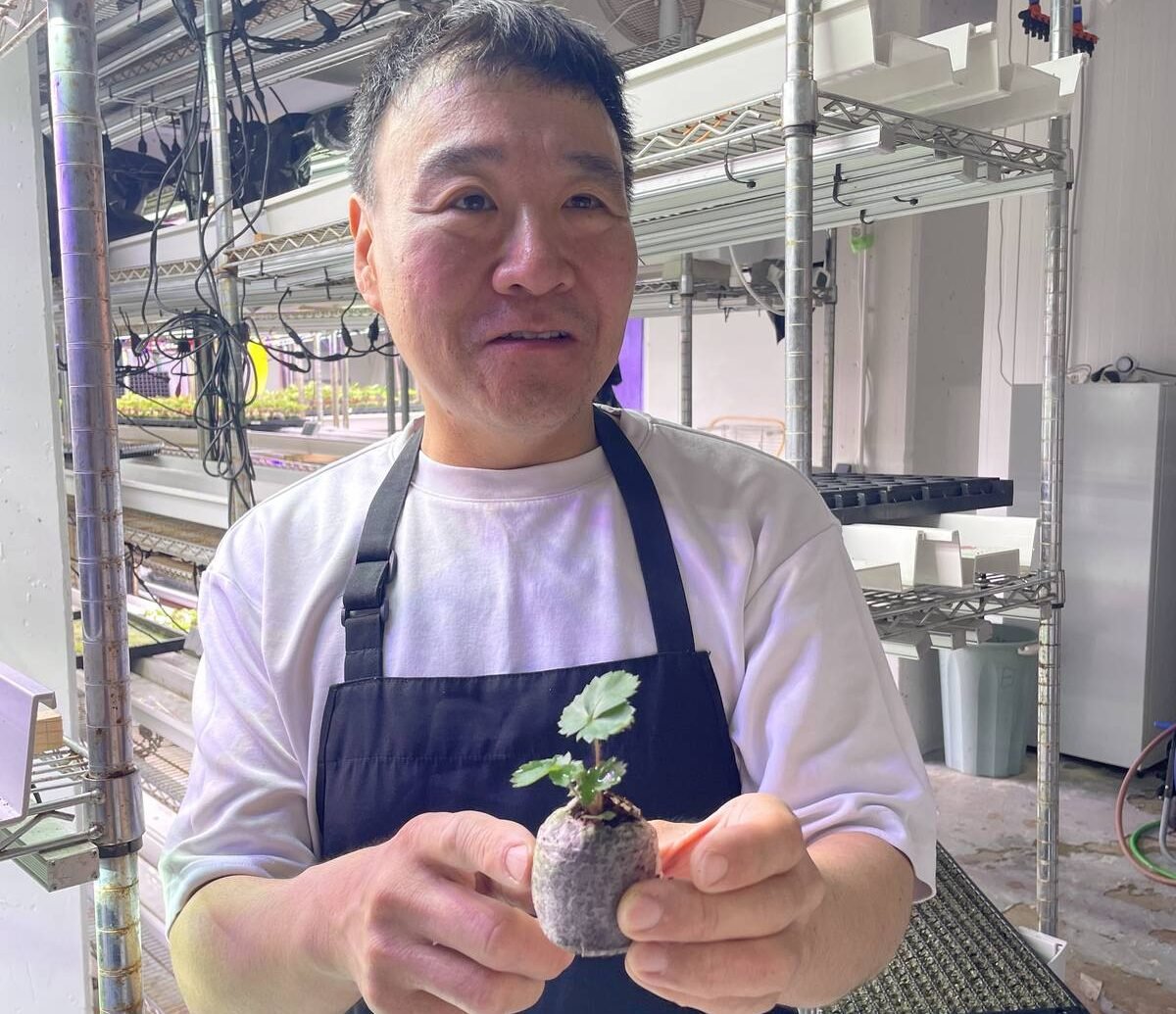
Inside the facility, the strawberries are grown in reused mushroom substrate and coconut fibre imported from Sri Lanka. Pollination comes from bees imported from the Netherlands.
The strawberries themselves are a premium Japanese variety known for their large size, sweetness and delicate texture — traits that Noda says also make them difficult to grow regardless of location.
Producing more than 160,000 tonnes of strawberries annually, Japan is the world’s 11th largest strawberry producer but ranks first globally for consumption. Japanese strawberries, or ichigo, are known for being exceptionally sweet with balanced acidity and a softer skin than strawberries commonly grown elsewhere.
READ MORE: Expanding strawberry varieties suitable for Eastern Canada
The farm began by importing seedlings from Japan, but last year, one of the shipments arrived carrying anthracnose, a fungal disease that devastates strawberry crops. Because they don’t use plant protection, Ichigo lost all its seedlings, wiping out production.
“The berries are very sweet and juicy, but weak against disease,” Noda said. “We couldn’t stop it.”
The experience forced the company to rethink its entire production system, and Ichigo now grows strawberries entirely from seed — a much slower and more technically challenging process. The first harvest from this new production is expected to begin in May.
While production remains small, the company is scaling quickly. Current monthly output is roughly 80 to 100 kilograms, but Noda expects production capacity to rise to 300 kg after May and approximately 450 kg per month by October.
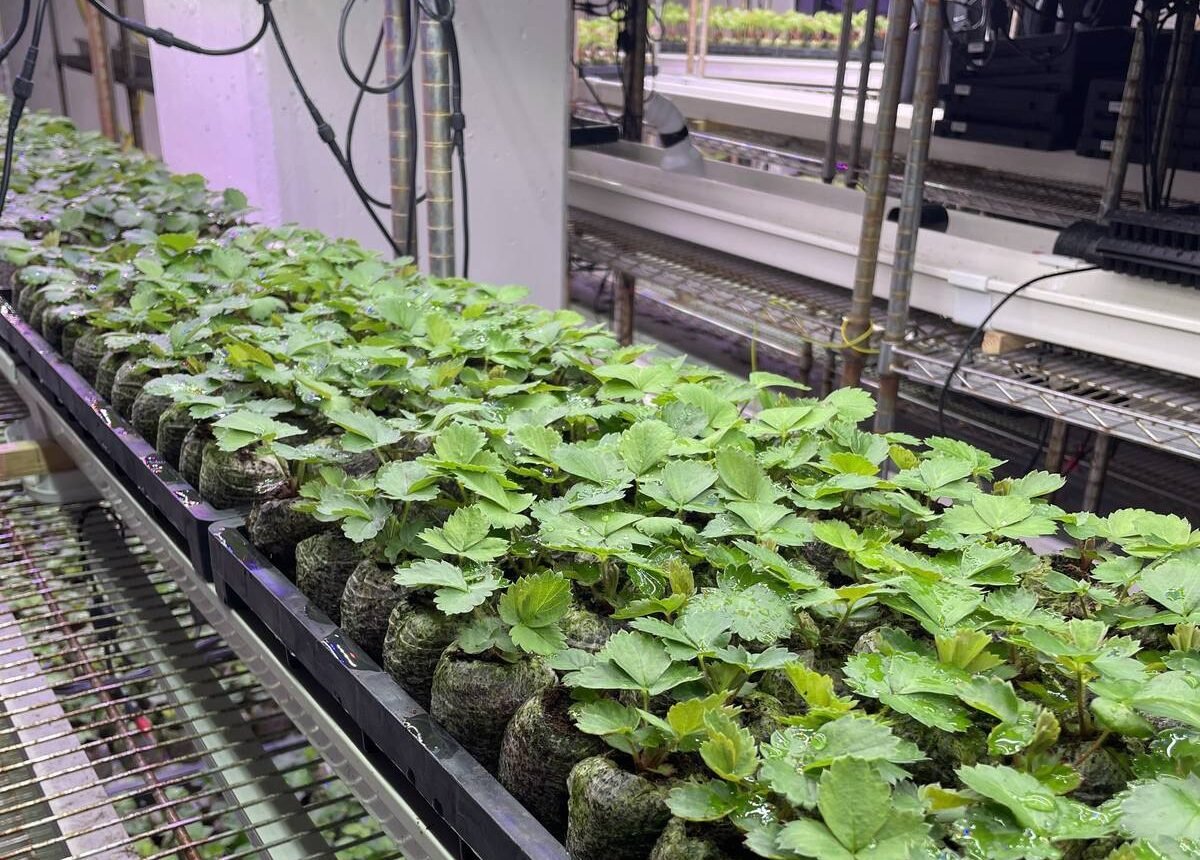
And long-term, his vision goes far beyond strawberries to other Japanese produce. Ultimately, he hopes Iceland can evolve into a food-exporting nation by leveraging its geothermal resources for controlled indoor agriculture.
“The dream is for Iceland to become a food exporting country,” Noda said. “But we need to create the market first, so premium products are the way to start.”
Broader vision
Beyond the Icelandic market, the company hopes to start exports to the United Kingdom, France and the Nordic countries, where some potential buyers have already expressed interest — particularly in the story around pure Icelandic water and energy.
Beyond premium fruit production, the project also points toward a broader conversation about food resilience and localized production systems, Noda added.
“Food security is a problem, but we can grow indoors. Weather doesn’t matter when you have air, energy and water,” he said.
For Iceland, geothermal energy has long powered homes, greenhouses and industry. Increasingly, it may also help power a new model of climate-resilient agriculture — one where the future of food production depends not only on fertile soil and climate, but on the renewable energy stored deep underground.
The post How geothermal energy transforms strawberry production in Iceland appeared first on Farmtario.


