
By Blair Shipp, ASA State Policy Communications Coordinator
When voters head to the polls Nov. 3, they will determine more than which party controls Congress. For soybean farmers, the 2026 midterm elections will also help determine who shapes federal agricultural policy over the next two years.
All 435 House seats and 35 Senate seats are on the ballot, with narrow margins in both chambers putting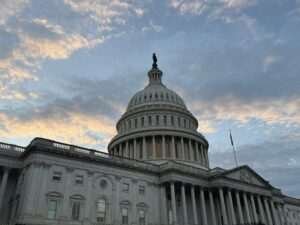 increased attention on competitive races. For soybean growers, several contests are particularly relevant because they involve current Agriculture Committee members, retirements, open seats, and lawmakers involved in agricultural policy.
One change is already certain. The top Democrats on both congressional agriculture committees are leaving Congress. Sen. Amy Klobuchar (DMN), ranking member of the Senate Agriculture Committee, is running for governor. Rep. Angie Craig (DMN), ranking member of the House Agriculture Committee, will also depart Congress after losing the Democratic primary for Minnesota’s open U.S. Senate seat. Their departures mean both committees will have a new top Democrat in the next Congress. If Democrats win control of a chamber, that lawmaker would be positioned to lead its agriculture committee as chair. If Republicans retain control, the top Democrat would serve as ranking member. Committee leadership on the Republican side could also change depending on election outcomes and decisions made within each conference.
Minnesota will see additional turnover with the retirement of Sen. Tina Smith (D-MN), another Senate Agriculture Committee member. Lt. Gov. Peggy Flanagan (D) and Michele Tafoya (R) are competing for the open seat.
Iowa will also see significant change. Sen. Joni Ernst (R-IA) is retiring, creating an open Senate seat and another departure from the Senate Agriculture Committee. Rep. Ashley Hinson (R-IA) and State Rep. Josh Turek (D-IA) are competing to succeed her.
Several House races in Iowa also involve lawmakers who work closely on agricultural policy. Zach Nunn (R-IA), a House Agriculture Committee member, faces state Sen. Sarah Trone Garriott (DIA) in the 3rd District. In the 1st District, Rep. Mariannette Miller-Meeks (R-IA) again faces Christina Bohannan (D-IA) after their 2024 race was decided by 799 votes.
Two more Iowa districts will have new representation. Hinson’s Senate campaign leaves the 2nd District open, where state Rep. Lindsay James (D) faces former state Rep. Joe Mitchell (R). Rep. Randy Feenstra (R-IA) gave up his 4th District seat to run for governor but lost the Republican primary. Chris McGowan (R) and former state Rep. Dave Dawson (D) are competing to succeed Feenstra.
Agriculture Committee membership is also a factor in Wisconsin. Rep. Derrick Van Orden (R-WI), a House Agriculture Committee member, faces Rebecca Cooke (D-WI) in a rematch for the 3rd District.
Other Senate contests will also draw attention. In Michigan, Abdul El-Sayed (D) faces Mike Rogers (R) for the Senate seat of retiring Sen. Gary Peters (D-MI). In Ohio, Sen. Jon Husted (R-OH) faces former Sen. Sherrod Brown (D-OH).
These are only some of the races soybean farmers will be watching. Regardless of which party controls Congress, new members, committee assignments, and leadership will shape debates over the farm economy, trade, biofuels, crop protection, taxes, and federal farm policy.
Once the ballots are counted, ASA will continue working across party lines with returning and newly elected lawmakers to ensure soybean farmers have a voice as the 120th Congress takes shape.
Disclaimer: ASA’s political action committee (SoyPAC) supports Congressional candidates who champion soybean farmer priorities, including all incumbent candidates referenced in this article.
The post Midterms Put Agriculture in the Spotlight appeared first on American Soybean Association.


