

FOR IMMEDIATE RELEASE
NOVEMBER 2, 2026
“Well Connected” proposes an ocean sanctuary network that would protect over a third of the Atlantic high seas while ensuring ecological connectivity and ecosystem integrity.
TORONTO, CANADA – A new Greenpeace International report shows that establishing a connected network of ocean sanctuaries in the Atlantic high seas would protect vital migration routes for marine species such as endangered leatherback turtles and humpback whales.
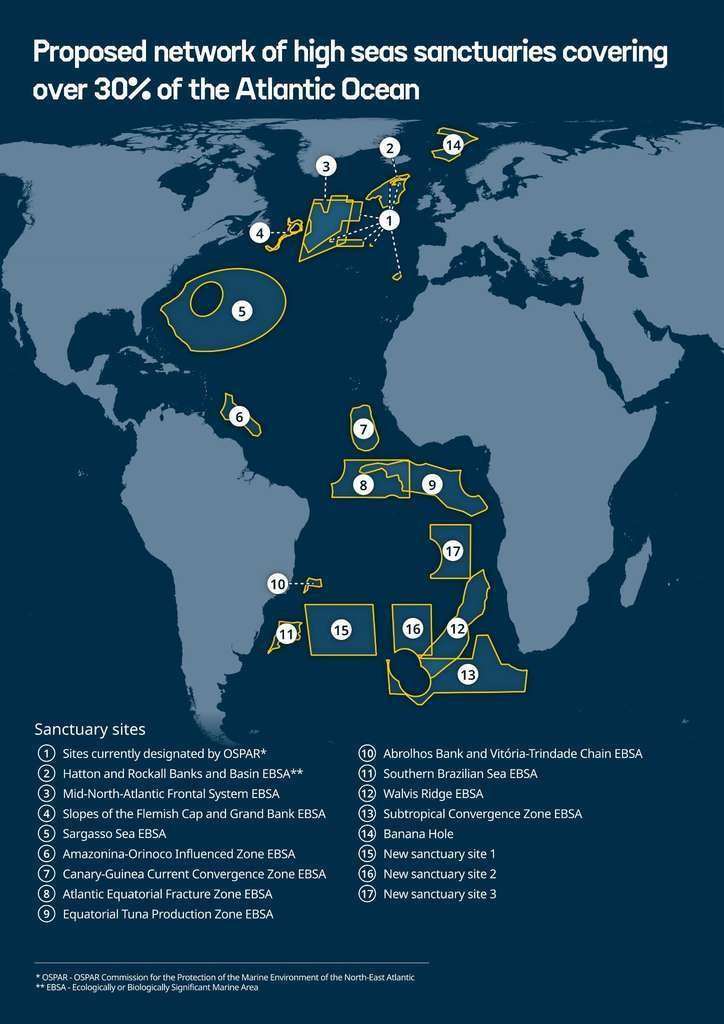
The report presents a concrete pathway to fully protect 31% of the Atlantic high seas through 17 proposed marine protected areas under the Global Ocean Treaty. The proposed network would connect several key biodiversity hotspots in international waters, shielding over 35% of industrial fishing danger zones for leatherback turtles and nearly 45% of ship-strike corridors for humpback whales.
Sien Van den broeke, Ocean & Biodiversity Campaigner at Greenpeace Canada, said: “Currently, there are no fully or highly protected areas in the Atlantic high seas, leaving nowhere free from industrial threats. Having a network of connected, fully protected ocean sanctuaries would make sure that incredible migratory species like whales and turtles are protected along their journeys, allowing them to travel, feed and breed safely.”
This publication comes as negotiations have concluded at the Biodiversity COP17 in Armenia. At this ‘stock-take’ CBD COP, the first official assessment on the progress towards the globally agreed targets showed that marine conservation is severely lagging behind terrestrial conservation. Delegates are returning with the urgent wake-up call to close the gap between commitment and action.
Creating networks of sanctuaries in the high seas would help governments meet the globally agreed target of protecting 30% of the world’s ocean. At the Commonwealth Heads of Government meeting (CHOGM) happening now, Canada has the opportunity to push this network approach to conservation as a means to advance this ‘30×30’ goal, which is also central to the Apia Commonwealth Ocean Declaration adopted at the previous CHOGM in 2024.
“As Canadian delegates travel back from the CBD COP and towards the Commonwealth Heads of Government meeting, this proposed network of sanctuaries is exactly the sort of solution governments urgently need to implement to have any hope of meeting biodiversity and ocean protection targets,” Sien added.
The report makes a clear case for fully protected, connected ocean sanctuaries that would stop industrial fishing and reduce shipping traffic from within their boundaries. Many current marine protected areas still allow for destructive industrial fishing, which prevents marine life from recovering and thriving.
The proposed areas include Ecologically or Biologically Significant Marine Areas (EBSAs), sites currently being considered by governments, and a number of new sites. All together, these sites form a network of protected areas covering over 31% of the Atlantic high seas; the percentage science tells us is necessary to ensure a thriving ocean into the future.
-End-
Note to editors:
The report “Well Connected” from Greenpeace International is available here.
For more informartion please contact:
Patou Oumarou
Communications Campaigner, Greenpeace Canada
patou.oumarou@greenpeace.org | 418 431 0263


