
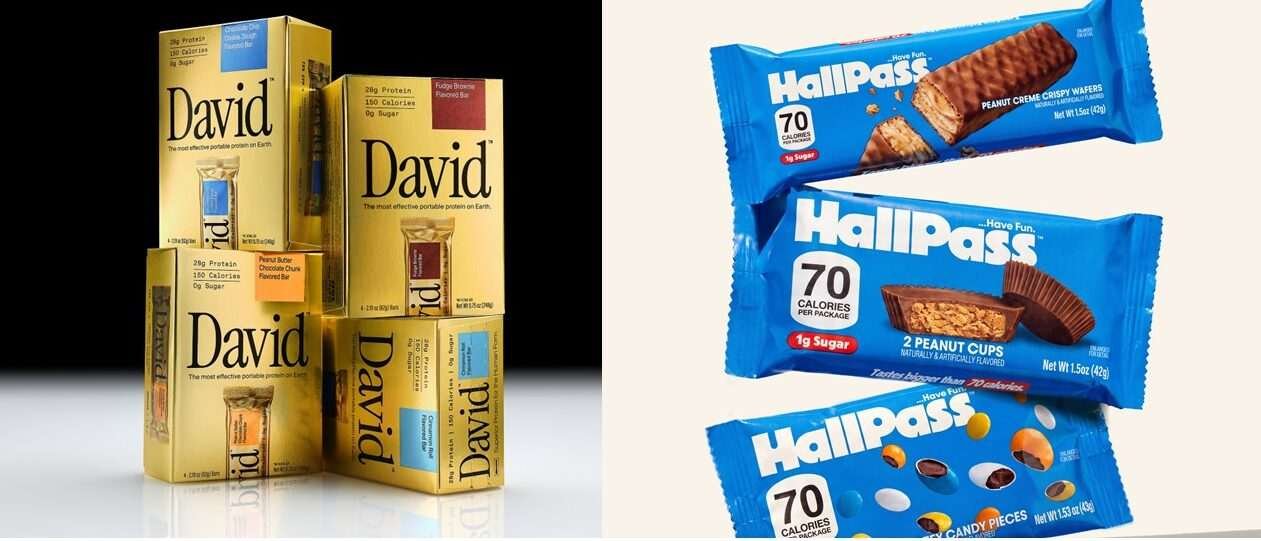
- David Protein maker Medici Brands has netted a $250 million Series B round with a $2.25 billion valuation as it moves into new territory with the launch of candy brand HallPass, dubbed the “Coke Zero of candy,” and a new brand of chips called Rowdy.
- The round was co-led by Greenoaks and Valor Equity Partners with participation from Medici CEO and RXBAR founder Peter Rahal, ICONIQ, and Imaginary Ventures. It follows a $75 million Series A round in 2025, which was used in part to acquire alt-fat ingredient EPG, the star ingredient in David and HallPass products.
“Two years ago, David Protein showed customers they no longer had to choose between great macros and great taste, and it became one of the fastest-growing CPG brands in America.” Neil Shah, partner, Greenoaks
‘We expect David to be profitable in 2026’
While a $250 million raise might seem hefty for a firm on track to generate more than $300 million in revenues this year from a standing start in 2024, Rahal told AgFunderNews that he “expects David Protein to be profitable in 2026,” and wants the fresh capital for “new product lines, new brands, and more innovation.”
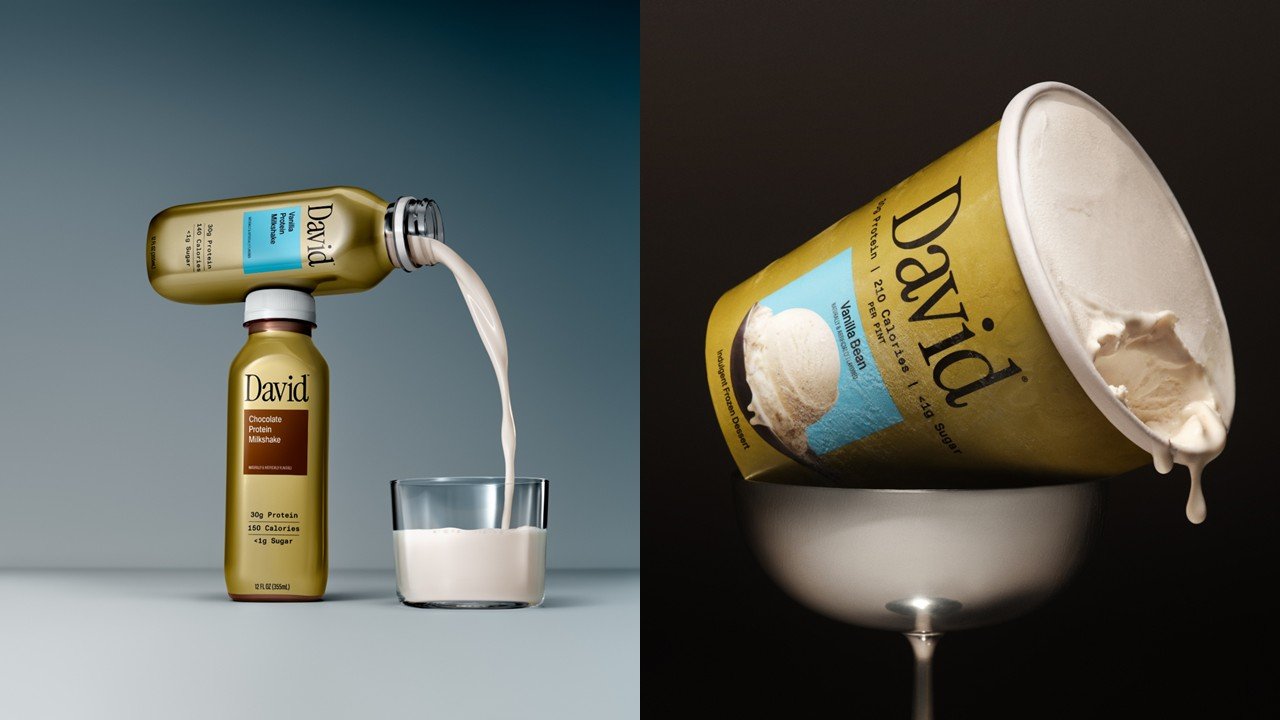
David specializes in products with a high percentage of calories from protein, with its Gold bar packing in 28 grams of protein into a product with just 150 calories. This is in part possible due to its use of low- and no-calorie sweeteners coupled with EPG, a patented ingredient that looks and functions like fat, but has a fraction of the calories as it is metabolized differently.
The brand, started out direct-to-consumer, has rapidly built a presence in bricks & mortar retail with listings in 35,000 stores including Walmart, Target, and Costco. It expanded into frozen desserts in July and ready-to-drink protein shakes in August.
HallPass (tagline: “Permission granted”) also utilizes EPG, but is built around a slightly different low-calorie, low-sugar proposition, said Rahal.
“People want great-tasting candy with fewer calories and less sugar, without paying a premium. HallPass hits all three points, and hence appeals to both the current candy consumer and the lapsed shopper who has left the category because the existing options no longer meet their needs.
“We are very excited to be partnering with Walmart for this launch and they will be the vast majority of our distribution day one. We are also rolling out HallPass in the NYC and LA markets across independent retailers as well as on our own DTC site in tandem to the national launch at Walmart.”
Rowdy, the second new brand, will focus on chips.
Ultra processed foods?
David is using several ingredients that might not belong in Grandma’s kitchen cupboard from EPG to sucralose, allulose, and maltitol. However, its success demonstrates that consumers will embrace so-called “ultra-processed” foods if they see a clear benefit, claimed Rahal.
“We are not interested in telling people to stop eating the foods they love,” he added. “We want to improve public health by making those foods smarter: lower calories, less sugar, no compromise on taste or experience. If we can do that across categories, better nutrition becomes easier by default.”
While some commentators have taken issue with the lengthy list of fat and sugar replacers deployed in its wares, David is hitting three boxes that many consumers are looking to tick when they shop for snacks, he said: “Highlighting protein, calories and sugar has been the most effective [marketing strategy].”
Asked whether its products would likely be caught up in state and federal definitions of “ultra-processed’ foods, Rahal said: “The whole market will get caught up.”
High protein, low calories
According to Rahal, the protein trend shows no sign of abating, with most people shopping for protein looking for “the most protein with the least amount of calories,” David’s core proposition.
“The protein to calorie ratio concept is a really powerful message. People want protein; they value protein and their price elasticity is [less] sensitive when it comes to protein, because it’s [seen as] the most valuable macronutrient.”
For GLP-1 consumers, meanwhile, protein is also top of mind said Rahal.
EPG litigation
The firm—which is still embroiled in a high-profile legal spat* with some former users of EPG—has been steadily increasing manufacturing capacity of the alt-fat, which Rahal is now pitching to large CPG companies as part of a new b2b strategy.
The judge handling the case has yet to rule on the third amended complaint in the case. However, Lighten Up Foods—one of three litigants that had accused David Protein of anticompetitive behavior—recently decided to settle its claims with David, with each party agreeing to bear its own legal costs.
Lighten Up founder Blake Sanburg, who previously told us that he had spent $40k and almost a year developing a chicken dipping sauce utilizing EPG before being abruptly denied access to the ingredient, said the parties had resolved their differences.
In a TikTok video announcing the move, he said: “A couple months back, I got a call from Peter Rahal… of course, I was very surprised to see his name come across my phone. But we talked for a little bit, and he asked me to come to New York City so we could discuss things further.
“After talking to him for a few hours, he offered me a supply agreement so I could continue and start back up my sauce again. Of course, I signed it, and I’m so proud to announce that we are so back, and the sauce is officially coming.”
Defiant Chocolate: EPG is ‘not freely available to everyone’
The voluntary dismissal of Sanburg’s claim has no effect on the claims of the other two plaintiffs, OWN Your Hunger and Defiant Chocolate.
The legal battle over access to EPG has been raging for over a year and highlights how access to specialized ingredients can make or break startups.
As security of supply for EPG became mission critical following its explosive growth, David acquired EPG maker Epogee last May. As supplies were limited, it cut off access to other customers, three of which filed a lawsuit accusing David of excluding competitors and creating an artificial monopoly.
Several other former Epogee customers also gave sworn statements outlining the harm they suffered after losing access to EPG.
What is EPG?
- EPG (esterified propoxylated glycerol) is a fat that contains 0.7 calories per gram, compared with 9 calories for regular fat.
- It’s not Olestra: Unlike Olestra, which had a lower melting point (and messy side effects) or fat replacers made from sugars, gums, starches or fibers, EPG functions like fat because it’s made from fat, says Epogee.
- Low-calorie: As EPG is resistant to lipase, an enzyme that breaks down fat in the body, hardly any of its calories are released.
- Labeling: EPG can be listed on food labels as ‘EPG (modified plant-based oil)’
- How it’s made: Epogee splits plant-based oils such as canola into glycerin and fatty acids, inserts a food-grade link, and reconnects them.
*The case is OWN Your Hunger, Lighten Up Foods, and Defiant Foods vs Linus Technology (trade name: David Protein), Epogee, and Peter Rahal, filed in the Southern District of New York on June 2, 2025. Case: 1:25-cv-04544
Further reading:
Endgame looms in EPG antitrust fight as David Protein urges judge to toss case for good
The post ‘One of the fastest-growing CPG brands in America…’ David Protein owner hits $2.25bn valuation on $250m Series B appeared first on AgFunderNews.


