
Ontario is fortunate to have resilient agricultural support systems that evolve and continue to thrive long after their original intended purpose.
Agricultural societies were created to help share agricultural techniques and technologies, and quickly became a vehicle for the celebration of rural and agricultural life through fairs.
A plaque in the Niagara region says the area hosted the first agricultural society, formed in 1792. It’s believed to be the first agricultural organization in what became Canada.
It only lasted until 1805, but the group hosted the first rural fair in Ontario in 1799.
The model spread quickly throughout Upper Canada, and by the 1820s, there were numerous fairs and regular meetings of agricultural societies.
Ontario’s agricultural societies continue to do their work, with the Ontario Association of Agricultural Societies representing 210 of the organizations in the province.
Their size and scope vary dramatically. Most are small, volunteer-run organizations that manage local fairs, raise some money and invest it in their communities.
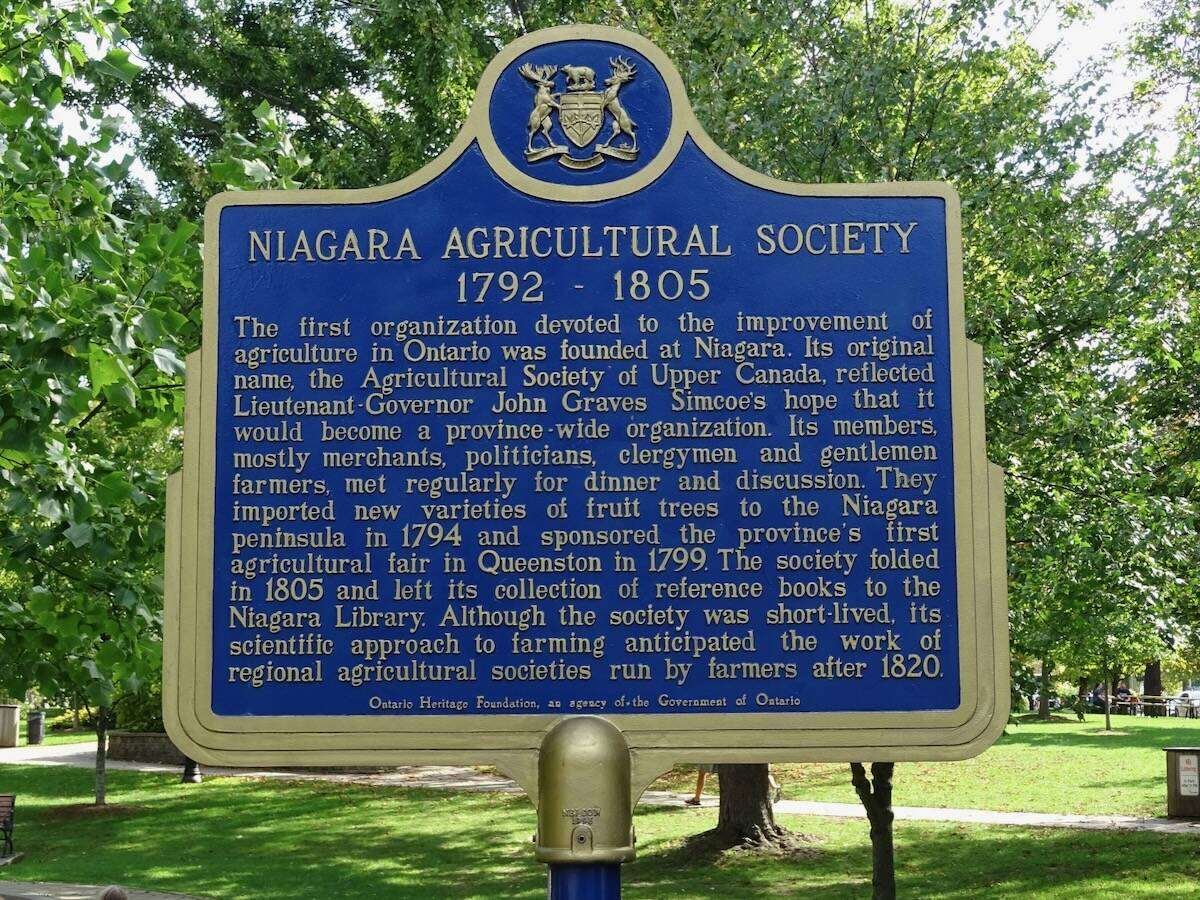
The Ontario Heritage Foundation’s plaque at Simcoe Park at Niagara-on-the-Lake commemorating the Niagara Agricultural Society. Photo: Spudgun67/Wikimedia Commons – creativecommons.org/licenses/by-sa/4.0/deed.en
Local fairs are an important institution, allowing farmers and their families to gather, crops and vegetables and livestock to be entered into competition and to celebrate rural life.
Mandates evolve and re-evolve
Few of today’s agricultural societies have the mandate to specifically support the technological advancement of farmers and farming.
There are a group of agricultural socieites in the province which have grown to be large entities, usually tied to a venture into horse racing decades ago, which has led to leases with casinos and some significant revenues.
Some of those organizations are refocusing on their agriculture roots, and that’s been good news for the agriculture sector, resulting in facilities, funds and help for entrepreneurs.
I’ve interacted with two of the largest examples of this over the past month.
The Western Fair Association has refocused on its agricultural roots, despite its location in the middle of London, and its facilities that include a large sports complex, racing and hosting a casino.
It opened The Grove a couple of years ago, a remaking of the old buildings it once used for the Western Fair Farm Show into an incubator for food and agriculture technology businesses.
There are meeting spaces at The Grove, which host events like the first Canadian AgRobotics and AI Summit, held a few weeks ago.
The Grand River Agricultural Society, or GRAS, has also refocused on its agricultural roots, building the Grandway Events Centre at its Elora site. The Grandway has become a popular place to host agricultural events due to its proximity to Guelph.
The GRAS board of directors is populated by numerous farmers and others in the agriculture sector.
They are making investments in some agricultural technology companies and host events like the recent fifth Spark agricultural technology event.
Western Fair and GRAS aren’t the only ones who have followed this model.
However, many of the other 210 agricultural societies are stretched to keep what they do going in their communities.
If you’re reading Farmtario, there’s likely an agricultural society near you. They’re doing good work, but they need your help.
The post Ontario agricultural societies refocus on their farming roots appeared first on Farmtario.


