
What We’re Watching
A full bin is not a marketing plan
Ontario corn: Limited DON issues, but prices have plunged
Soybeans and meal: Down hard with South America on deck
Wheat: Prices have collapsed to the summer lows
Livestock: Cattle jittery; hogs weak
Why It Matters: Ontario farmers face a cost-price squeeze. Crop prices have plunged. Livestock prices are down. Yet diesel remains expensive and interest rates are up. A silver lining? Corn quality issues are limited.
Kernel of Wisdom: A full grain bin is not a marketing plan
Harvest pressure is weighing on Ontario corn and soybean prices. Holding some grain may make sense if South American weather concerns trigger a rally between mid-December and mid-February.
Markets often make a seasonal low in December. Attention then shifts to crop development in South America. Weather issues in Brazil often provide some price support in late December or January. That’s a good reason to keep some grain in reserve, particularly if you made some sales at attractive prices this summer.
But hope is not a marketing plan. Storage costs money. More importantly, markets can fall further than expected because of speculative selling and other factors.
Have a plan. Waiting for an opportunity makes sense. Waiting indefinitely does not. Avoid holding all your grain while corn, soybean and wheat prices remain in a downtrend.
Corn: Weak despite resilient energy markets
December crude oil futures recently topped US$100 a barrel before backing off to the mid-90s. The initial Iran supply shock has given way to sustained constraints. China is rebuilding inventories, boosting global prices as a U.S.-Iran truce remains elusive.
High crude prices are keeping fuel costs elevated. London wholesale prices for ULS diesel are near C$2 a litre. Expensive diesel is not new, of course. These reports have talked about it for months.
Meanwhile, December corn futures have fallen more than US$1 since early September to US$4.41 a bushel. Strong energy prices have offered little support.
The speculative selling noted in our Oct. 21 report has continued. Managed-money net longs fell to 81,000 contracts on Oct. 27, from about 246,000 two weeks earlier. Liquidation has been so severe that it would be normal to see a pause soon.
Harvest pressure remains in effect. Ontario’s corn harvest was 24 per cent complete as of Oct. 28, according to Grain Farmers of Ontario. The U.S. harvest was 74 per cent complete as of Nov. 1, according to the USDA, up from 60 per cent a week earlier.
There is some good news. Ontario’s 2026 ear mould and DON survey from OMAFA in collaboration with Grain Farmers of Ontario and OABA found 77 per cent of samples tested below 2 ppm. If you’re interested in the details, see the report on Field Crop News.
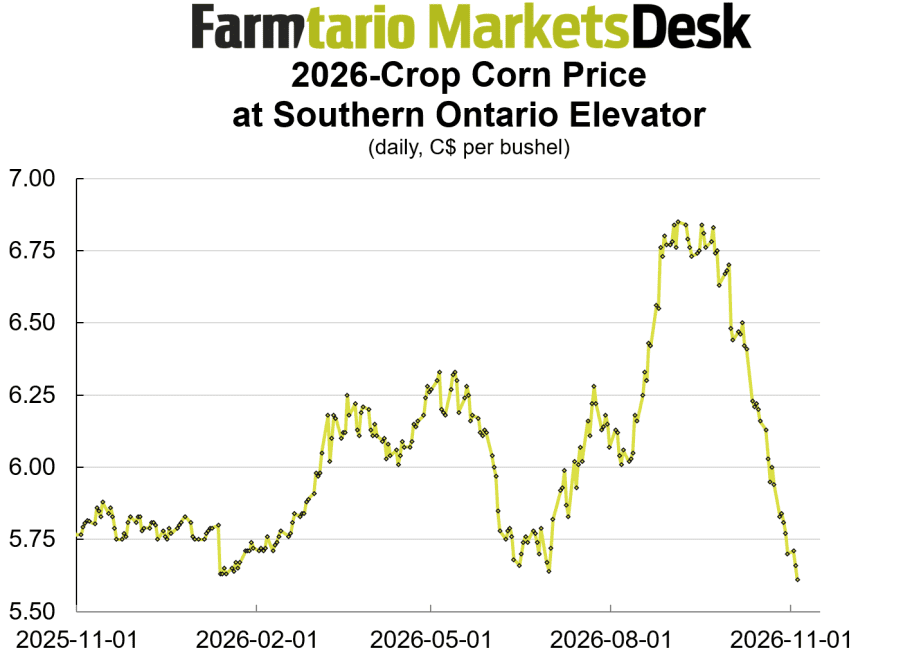
Ontario corn prices have collapsed.
Soybeans: Sliding as focus shifts to Brazil
November soybean futures are around US$11.93 a bushel, down US$1.40 since mid-September. The trend is down.
There is some good news. Seasonal pressure is waning. Ontario’s soybean harvest is nearing completion. The U.S. harvest was 88 per cent complete Nov. 1, according to the USDA, 4 percentage points ahead of normal.
Meanwhile, China is buying U.S. soybeans, and Jerry Klassen expects stronger soybean exports from Ontario. South American crop prospects are the next test, with Brazil’s growing season just getting started.
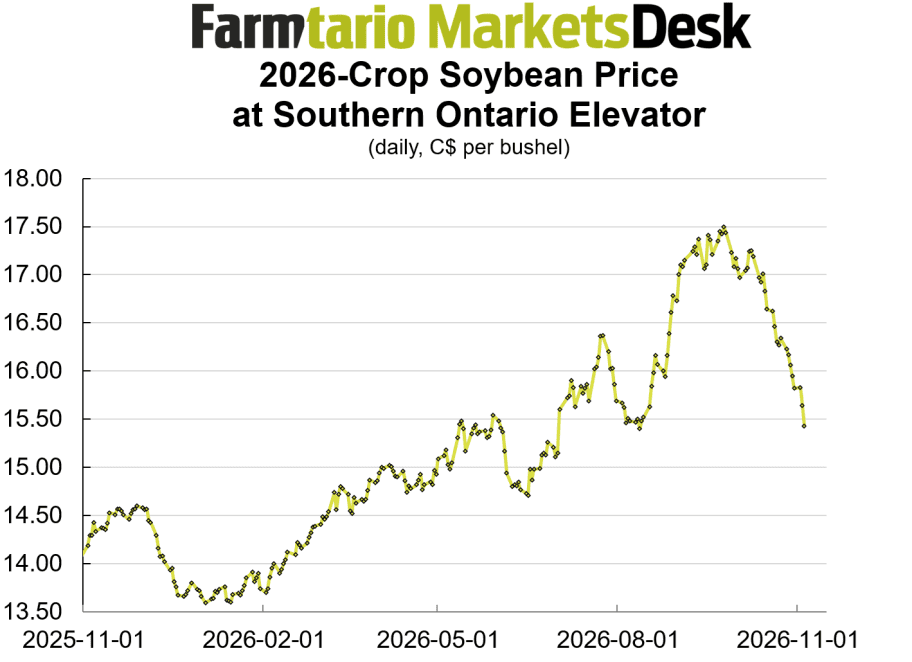
Ontario soybean prices are weak.
Wheat: Sell-off wipes out summer rally.
Nearby December Chicago wheat, the benchmark for Ontario cash soft red winter, has fallen from nearly US$8 a bushel in early September to US$6.
New-crop July 2027 futures are around US$6.22. That’s down US$1.75 since early September and in line with its summer low.
Talk of negotiations to end Russia’s war against Ukraine has weighed on wheat prices despite continuing Black Sea shipping disruptions.
In the U.S., winter wheat is off to a good start. Planting and emergence were both near normal as of Nov. 1, according to the USDA’s weekly crop progress report.
Ontario’s winter wheat crop is in good shape heading into dormancy. It faces a long road to harvest next summer, but we won’t really know much until spring. This leaves local prices focused on global developments and futures. Current signals are weak.
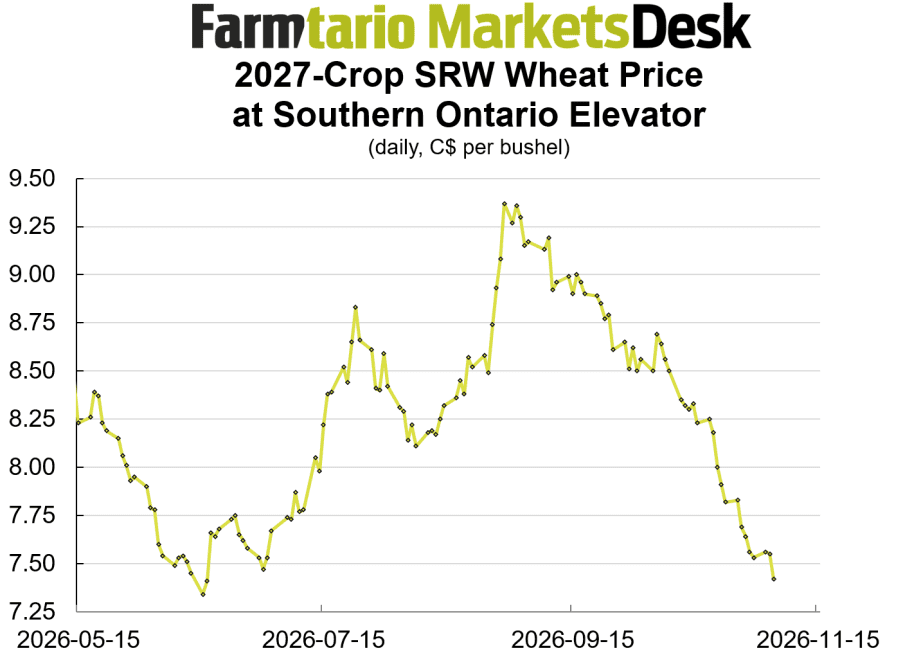
Prices for wheat to be harvested next summer have dropped.
Canadian dollar and interest rates: Small steps up
The Bank of Canada raised its policy rate a quarter point to 2.5 per cent on Oct. 28. That was the first increase since July 2023.
A rate increase seemed unlikely until very close to the announcement. But expectations shifted as high crude prices and stronger economic growth raised concerns that inflation could become entrenched.
The Canadian dollar has bounced to 71.76 cents US. This looks like a short-term recovery, rather than the start of a major bull trend.
Even so, the combination is unwelcome. A firmer dollar weighs on Ontario basis values, while higher interest rates increase the cost of operating loans and of storing grain.
Cattle: Tight supplies, nervous buyers
Cattle supplies remain tight, but weakness in U.S. stock markets is raising concerns about demand for higher-priced beef.
December live cattle futures have fallen US$13 in a week to US$218 per hundredweight.
November feeder cattle futures are near US$334, retreating after a September and October rally.
Hogs: Still searching for a bottom
December lean hog futures are US$58 per hundredweight. Weak pork demand, seasonal supplies and speculative selling continue to weigh on prices.
February futures are around US$63, May US$76 and June US$85 per hundredweight.
The market still anticipates a recovery heading into the summer of 2027, although expectations for its magnitude have been reduced.
Soybean meal: Buying opportunity emerging
December soybean meal futures have fallen to around US$316 per short ton after heavy losses over the past three weeks. This collapse puts it near the bottom of its range of the past year.
With prices under intense pressure, buyers may have an opportunity to add to coverage soon. The current trend is very weak, but meal could rebound in December and January, particularly if there’s any weather threat to Brazil’s soybean crop.
The next Markets Desk Letter will be published Nov. 18.


