
The United States/Israel-Iran war has resulted in higher oil prices. Corn and soybean prices have been pulled higher by crude oil due to the energy component in the demand equation.
Ontario wheat prices reached 52-week highs as the market incorporates a risk premium due to the uncertainty in production. Statistics Canada said Ontario farmers plan to increase corn acres by 5.4 per cent this spring; soybean acres will be similar to last year.
The world is no longer comfortable with past stock levels of grains and oilseeds. The ongoing Russia/Ukraine conflict, escalating tensions in the Middle East, and China’s heightened frustration over Taiwan have major importers increasing stocks for food security.
Quick look:
Soybeans: Ending stocks have been at historic lows in Ontario.
Corn: Ethanol plant bids have hit three-year highs.
Wheat: Ontario winter wheat planting in 2025 was down versus the previous year.
Soybeans
Ontario farmers plan to seed 2.9 million acres of soybeans this spring, unchanged from last year, according to Statistics Canada. Using an average yield of 50.6 bushels per acre, production has the potential to come in at four million tonnes, up from the 2025 output of 3.6 million tonnes. The year-over-year increase in production comes on the heels of historically low ending stocks in Ontario.
Commercial stocks in Ontario are declining, and the market will function to encourage imports moving forward. Bids from the domestic crusher in Ontario need to be $0.50-0.75 per bushel to higher to attract supplies from south of the border. Domestic crush margins are at three-year highs, so there is breathing room for stronger cash bids.
On the world market, Brazil’s soybean harvest progress has moved past the halfway mark. Argentine farmers will begin harvest in the latter half of March and move into high gear during April. Brazilian soybean offers in export position are US$50 per tonne discount to U.S. origin.
U.S. farmers are expected to increase soybean acres by four to five per cent this spring, according to the USDA. That increase may have influenced Ontario farmers rotational plans.
Soybean futures reached 18-month highs during the first week of March. While the futures markets surged, basis levels deteriorated. This was largely fund buying. As of March 10, we estimated that the non-commercial position in the soybean futures was near 250,000 contracts, which is a historical high. When the speculative trade is this large, the market tends to decrease.
This week, we’re advising farmers to increase sales by 10 per cent, bringing total sales to 80 per cent for the 2025 production. We’ll save the final 20 per cent increment until the upcoming crop is more certain. When we see Canadian imports from south of the border increase, this will be the top in the Ontario soybean market.
Corn
Ontario farmers plan to plant 2.3 million acres of corn this spring, Statistics Canada estimated. This is up from 2.2 million in 2025. Using a traditional abandonment rate and an average yield of 174.2 bushels per acre, production has potential to reach 10 million tonnes, up from the 2025 crop of 9.5 million tonnes. The higher corn acres come at the expense of lower canola and spring wheat acres. Farmers are clearly responding to market signals.
Bids from ethanol processors are reaching three-year highs. Buying interest from feedlots and elevators sourcing for the export market have not increased to the same extent. To reiterate from our previous issue, Ontario corn ending stocks are expected to drop to historical lows at the end of the 2025-26 crop year. The market is functioning to ration demand by trading at a premium to the world market.
Canadian crop year-to-date corn exports for the week ending March 1 were 398,100 tonnes, down from last year’s number of 1.2 million tonnes. Northern European feed grain markets continue to be saturated with domestic wheat supplies.
Despite the rally in the corn futures market, export offers have only risen by US$2-4 per tonne. U.S. corn FOB the Gulf was quoted at US$225 per tonne while Brazilian corn was valued at US$226 per tonne FOB Paranagua.
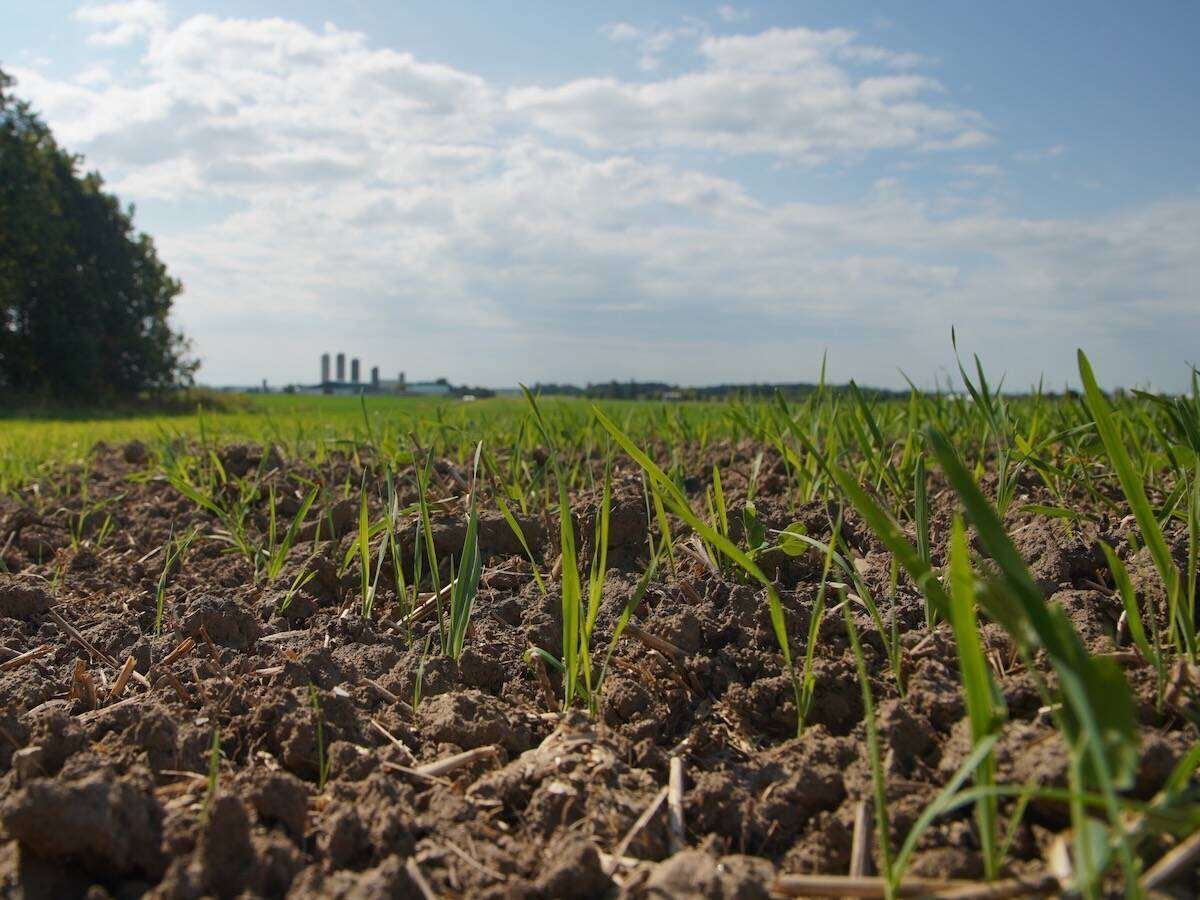
The seeding of Brazil’s safrinha corn crop is moving into the final stages. Total Brazilian corn production is expected to finish in the range of 130 million-132 million tonnes, down from the 2025 output of 136 million tonnes. Conditions are favourable in Brazil, but we’re still expecting drier conditions to develop due to ‘La Nina’. Argentine farmers have started harvesting their record corn crop, which is expected to reach 53 million tonnes, up from last year’s output of 50 million tonnes.
U.S. farmers are expected to seed 94 million acres of corn this spring, down from 98.8 million last year. Missouri, Nebraska, Illinois and Indiana are experiencing drier conditions heading into the spring seeding period. This is favourable for seeding, but timely rains will be needed or the corn market is moving significantly higher. The world cannot afford a problem with the U.S. corn crop.
This week, we’re advising farmers to increase sales by 10 per cent bringing total sales to 80 per cent for the 2025 production.
Wheat
Ontario farmers planted 1.12 million acres of winter wheat last fall, down 64,000 acres from the fall of 2024. We continue to project an Ontario winter wheat crop of 2.5 million tonnes, compared to last year’s output of 2.9 million tonnes.
Ontario farmers are only expected to plant 43,000 acres of spring wheat versus 62,800 acres last year. This is a modern-day historical low.
U.S. hard red winter wheat was offered at US$281 per tonne FOB the Gulf on Friday, while U.S. soft red winter was quoted at US$263 per tonne. French soft wheat was offered at US$245 per tonne FOB Rouen. Russian 12.5 per cent protein was quoted at US$250 per tonne FOB the Black Sea. Ontario soft red winter was quoted at US$265 per tonne FOB St Lawrence port.
Conditions in Russia have improved over the past month, and the crop will come out of dormancy in fair condition. We’re factoring in a minor year-over-year decrease in Russian and Ukrainian wheat production. The ongoing war will be a significant factor determining export potential.
In Europe, the winter wheat crop in the northern regions has come out of dormancy earlier than normal due to warmer temperatures. Conditions are drier in parts of Germany, Poland, Hungary and Czechia. European wheat production will be down from last year, but it’s hard to put a number on the crop size at this time.
The winter wheat crop in the U.S. southern Plains needs rain. There are major concerns in Oklahoma, Texas and southern regions of Kansas. If the seasonal April rains do not materialize, there is a serious problem with the hard red winter wheat.
This week, we’re advising farmers to sell 20 per cent bringing total wheat sales to 80-90 per cent. We need to be selling into this recent strength. The U.S. winter wheat crop will be down from last year, but once harvest begins the market will come under pressure.
The post Ontario farmers to plant more corn in 2026 appeared first on Farmtario.


