
What We’re Watching
Corn: Prices stabilize as harvest pressure wanes.
Soybeans: El Niño raises eyebrows as focus shifts to Brazil.
Canadian dollar: Weakness offers some support to the Ontario basis.
Hogs: Futures forecast moderate recovery after cash collapse.
Kernel of wisdom: Know what you’re waiting for.
Why It Matters: Ontario grain prices have steadied after a hard fall. However, a cost-price squeeze persists. Farmers can use this report as a tool to maintain perspective as they ponder sales, storage and feed-buying decisions.
Kernel of Wisdom: Know what you’re waiting for
Ontario crop prices turned down in late summer and fell sharply. Many farmers focused on harvest, ignoring the price weakness. A post-harvest rally is possible, not assured. Before locking the bin and committing to long-term storage, have a plan. Set a target. Determine the factors most important to getting there. Set a date to review your plan. If you need to alter your approach and manage risk or generate cash flow, do it. Good farm marketers are agile. Markets change. You should too.
Parting thought: It’s not all about futures. Ask what could impact the basis. Both affect cash prices. If you want clarity on the relationship, here is a short explanation of basis and cash bids.
Corn: Heaviest seasonal pressure over
In Ontario and the U.S., harvest is well advanced. Seasonal pressure is easing. Futures are pricing in a gradual recovery ahead. Ontario prices vary, but deferred bids are generally above the cash market.
The USDA tinkered with its supply-demand forecasts on Nov. 10, which put a floor under prices. The U.S. corn yield is now estimated at 179.6 bushels an acre. That reversed some of the October increase that pressured prices. 2026-27 U.S. ending stocks came in at 1.76 billion bushels, down 91 million from October.
Energy prices are easing gradually. This remains a supportive factor in the mix for corn demand – and an unfortunate cost burden for farmers. London Wholesale Price for ULS diesel is C$1.80 per litre.
South American weather will be a major factor for prices in December/January. It’s early, but concerns about this year’s El Niño are percolating.
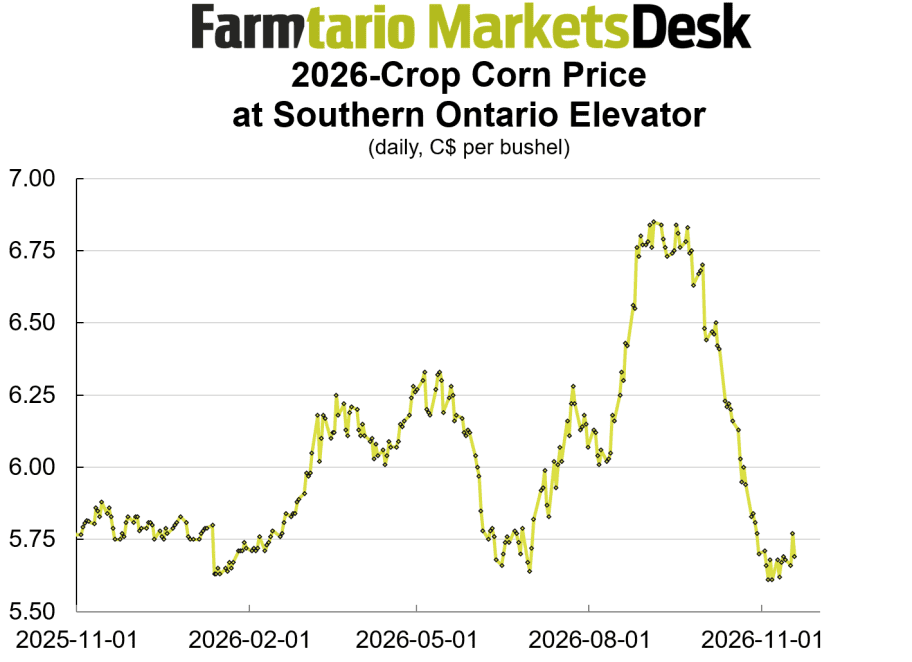
After Ontario cash corn prices hit a one-year low, Brazil’s weather will affect the strength of any post-harvest rebound.
Soybeans: Watch China and Brazil
The USDA clipped its U.S. supply forecast. 2026-27 U.S. soybean ending stocks are set at 300 million bushels, down 15 million from October. That helped prices to stabilize after a hard fall.
Donald Trump is meeting Chinese leader Xi Jinping at the ongoing APEC summit. Expectations for anything new are low, but the market will be sensitive to indications that existing agricultural commitments will be honoured.
Brazil will be the key factor moving prices in December/January. The soybean crop there is off to a decent start, with planting generally ahead of normal and uneven rainfall. A crop scare could set up selling opportunities in Ontario. Not assured, but a critical watch point.
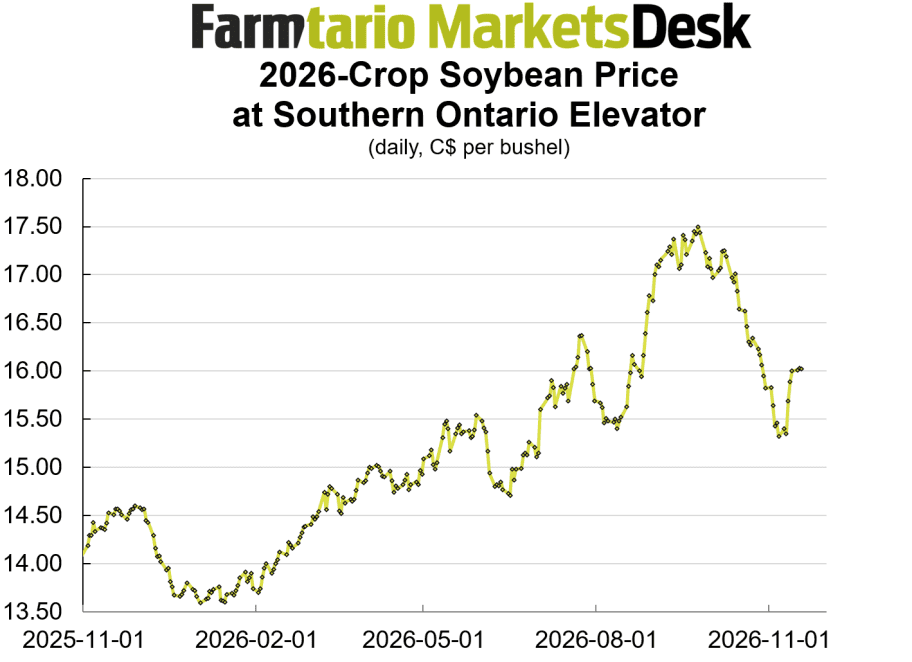
Ontario cash soybean bids are recovering after a collapse from September highs. South American weather will drive what happens next.
Wheat: In a hole, likely to follow the broader crop markets into January
Chicago soft red futures fell with corn and soybeans. Peace in Ukraine is elusive, but so is fresh bullish news for grain markets.
Like corn, wheat often turns higher between now and January. There’s often uncertainty tied to the release of the USDA’s first winter wheat seeded area estimate in mid-January. Cold weather scares on the Plains are possible too.
South America matters less for wheat than corn or soybeans. Still, if crop concerns lift those markets, wheat can follow. Just be careful paying high storage charges indefinitely. A case can be made for a rebound, but it has been slow to materialize.
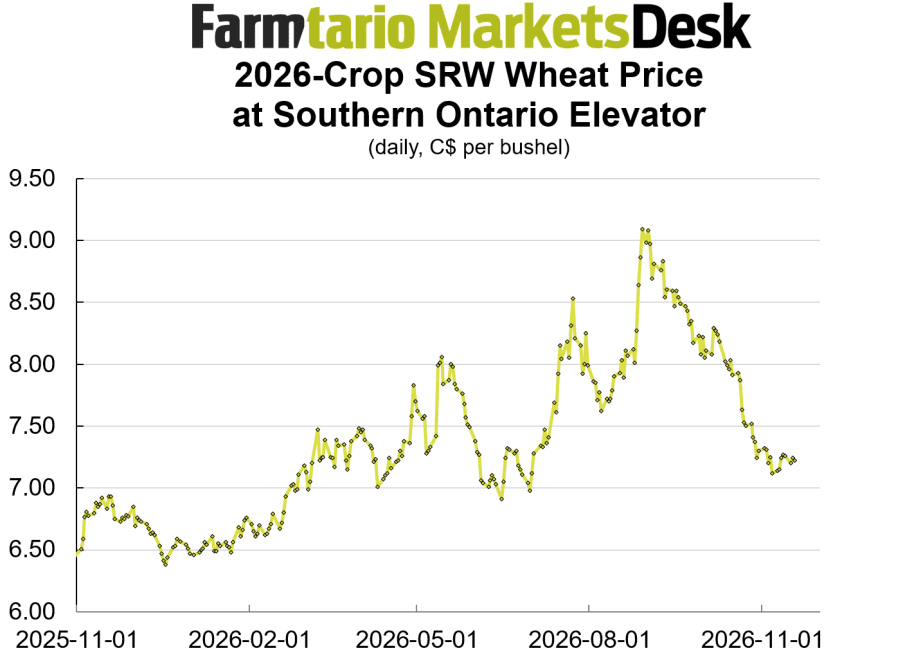
Ontario cash wheat bids remain far below September highs, despite some recent stability.
Canadian dollar and interest rates: Headed in opposite directions
The Canadian dollar is under 70 cents US, nearly 4 cents below its early-year highs. Support from an October interest rate increase is gone.
For currencies, everything is relative. Money rotating into the American dollar is undermining the Canadian dollar.
On balance, Ontario farmers benefit from a lower Canadian dollar. It supports local crop and livestock values (the basis). Unfortunately, it also increases input costs. Meanwhile, higher interest rates make operating loans more expensive and raise grain carrying costs.
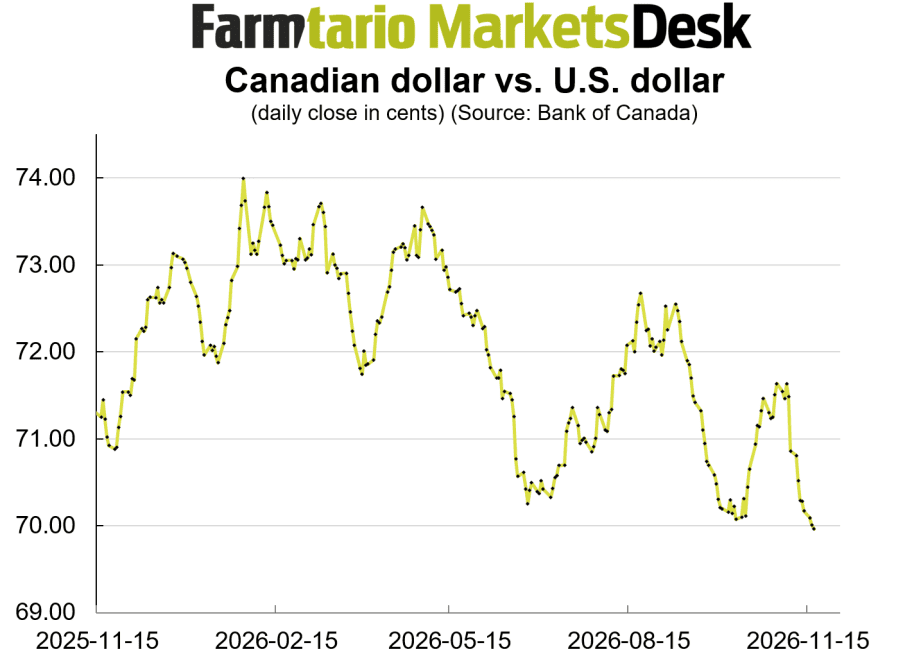
Over the past year, the Canadian dollar has swung between 70 and 74 cents US. The general trend is down.
Cattle: Tight supply, increasing volatility
Historically tight cattle supplies are supporting prices. However, live and feeder futures have moved into wide, choppy ranges over the past few months.
Rebuilding of the North American herd is a slow process. Even so, the process is underway and will continue in 2027, assuming weather on the Southern Plains cooperates. Demand is relatively inelastic, but higher supplies over time could reduce price buoyancy.
Hogs: Seasonal slide deepens.
Cash hog prices have fallen sharply from summer highs. December lean hog futures are US$53 per hundredweight, compared with roughly US$58 for February and US$81 for June.
The market expects cash to bottom in mid-December before starting a gradual recovery. This is the message from futures, not a guarantee. Watch for a firmer cash index into January to confirm a low. The current trend is down.
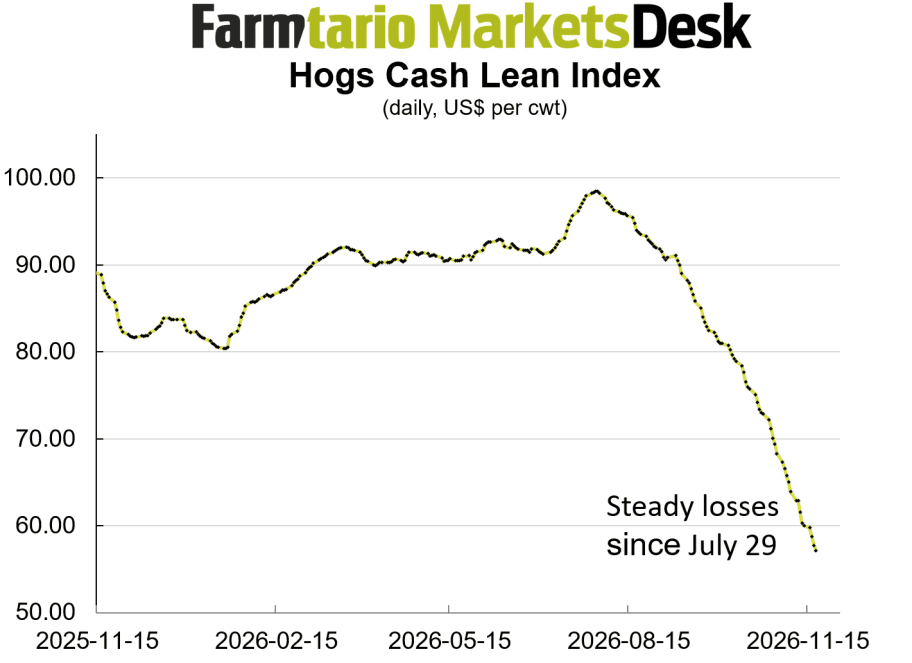
The cash hog index has fallen from the US$90s to the US$50s per hundredweight. The timing of any recovery is central to hog marketing decisions.
Soybean meal: Some stability after a decline.
Expect meal futures to follow soybeans from here. If the Canadian dollar stays weak, it will put a floor under Ontario prices.
For buyers, staged purchases limit timing risk while covering some needs against a potential rebound. The South American growing season brings considerable uncertainty.
The next Markets Desk Letter will be published on Dec. 2.


