
Ontario corn and soybean seeding progress is lagging year-ago levels because of extensive precipitation. Statistics Canada’s March 31 stocks report was considered supportive for the Ontario soybean basis but slightly bearish for the corn basis. The wheat market is coming under pressure. The U.S. hard red winter wheat harvest will move into high gear in early June. At the time of writing, crude oil prices were under pressure as the war risk premium evaporated. This was causing fund liquidation in grain and oilseed futures.
Quick look:
Soybeans: Supplies on the decline, while acreage on the rise.
Corn: High fertilizer prices result in acreage trim.
Wheat: War risk premium eroding on prolonged war fears.
Soybeans
Statistics Canada’s recently released report on crop stocks as of March 31 had Ontario on-farm soybean supplies at 176,000 tonnes. This was down from the March 31, 2025, figure of 896,000 tonnes but in line with our pre-report estimate of 170,000 tonnes. The Ontario soybean market continues to ration demand by trading above world values. Ontario domestic crushers will need to import about 150,000 tonnes of soybeans from March 31 through July 31.
The Ontario soybean crush pace in the final third of the 2025-26 crop year will be down sharply from the same period of 2025. Ontario soybean supplies are historically tight and margins favour canola rather than soybeans. Canola margins reached record highs in late April.
Statistics Canada will release the results of its June acreage survey on June 30. We’ve increased our soybean acreage estimate for two main reasons. Fertilizer prices are at or near historical highs, which favours soybeans over corn. Second, the later seeding period may cause some farmers north of Toronto to switch intended corn acres to soybeans. We’re now forecasting an Ontario soybean crop of 4.1 million tonnes, up from the 2025 output of 3.6 million tonnes.
In the U.S., farmers are facing difficult economics for crop inputs, although seeding progress is right on schedule with the exception of Michigan. The U.S. Department of Agriculture’s March acreage survey had soybean acres at 84.7 million. We could see this number increase to 86 million in the June acreage survey set to be released June 30. Using a trend yield of 53 bu./acre, production would reach 123 million tonnes, up from the 2025 crop of 116 million tonnes.
The Argentine harvest has wrapped up, and the soybean crop is estimated in the range of 50 million to 53 million tonnes, relatively unchanged from last year’s output of 51 million tonnes. Brazil’s final tally for the soybean crop is expected to be around 181 million tonnes, up from last year’s crop of 172.5 million tonnes. All major exporters of soybeans will have larger crops in 2026, which will weigh on the market.
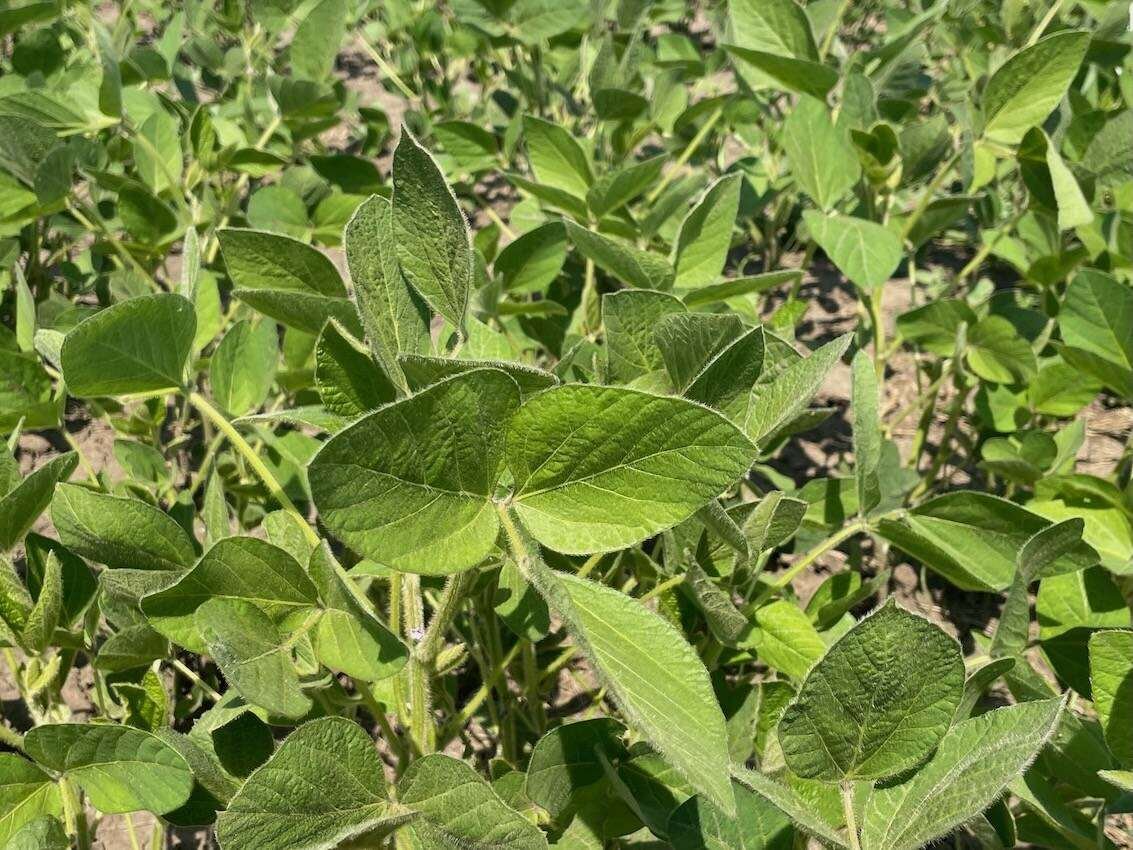
High fertilizer prices are expected to favour soybean acres over corn. Photo: Dave Bedard
This week, we’re advising farmers to sell the final 10 per cent increment of their 2025 production. We’re advising farmers to be 10 per cent to 15 per cent sold on their expected 2026 output.
Corn
Ontario on-farm corn stocks as of March 31 were 2.5 million tonnes, according to Statistics Canada. This was up from the March 31, 2025, figure of 2.4 million tonnes and above our estimate of 1.8 million tonnes. Ontario corn exports were down sharply from year-ago levels, which was anticipated; however, domestic usage was lower than expected, which was a surprise to the trade. We view this stocks report as bearish for the Ontario corn market.
We’ve trimmed our 2026 acreage estimate for Ontario corn because of higher fertilizer prices and the larger-than-expected March 31 stocks number. If trend yields materialize, the Ontario corn crop has the potential to reach 9.8 million to 10 million tonnes, up from the 2025 crop of 9.5 million tonnes.
In the U.S., we’re expecting farmers to seed 84 million acres of corn this spring, down from the USDA estimate of 95.3 million acres and down from the 2025 area of 98.8 million acres. Using an average yield of 182 bu./acre, U.S. production has the potential to finish near 406 million tonnes, down from the 2025 crop of 432 million tonnes.
The year-over-year decrease in acreage will cause the market to be extremely sensitive to weather and crop developments. During the 2025 growing season, the U.S. experienced greenhouse conditions across the country, resulting in above-trend yields. This year, the U.S. Drought Monitor shows an extreme drought developing in Nebraska. Given our demand projections, the market cannot afford a crop problem during the growing season or U.S. fundamentals will become extremely tight for the 2026-27 campaign.
Earlier in spring, we were forecasting a year-over-year increase in Brazilian corn output, but we’re now expecting a year-over-year decline of 3 million to 5 million tonnes. The states of Parana, Goiás, Sao Paulo, Minas Gerais and Mato Grosso do Sul have experienced drier conditions during the latter part of pollination.
We’ve advised Ontario farmers to be 90 per cent sold on their 2025 production. Be patient on additional sales.
Wheat
Statistics Canada’s March 31 stocks report had Ontario on-farm stocks at 146,000 tonnes, down from the March 31, 2025, figure of 261,000 tonnes. Ontario on-farm wheat stocks will drop to historical lows at the end of the 2025-26 crop year. This may be supportive for the Ontario wheat basis, but the world wheat market has changed from two weeks earlier. Ontario wheat prices have been hovering at two-year highs.
At the time of writing, the U.S. had presented a peace plan to Iran. The wheat futures market had incorporated a war risk premium, but this risk premium is now eroding, similar to the crude oil market. Wheat shipments were disrupted to Persian Gulf countries and other major importers had stepped up coverage. It now looks like shipments should resume over the next month. Countries that extended coverage have their demand requirements covered, at least for the short term. Demand appears to be easing on the world market.
The post Ontario’s planting delays loom over corn, soy markets as wheat faces pressure appeared first on Farmtario.


