
A Waterloo-region engineer is developing a small, battery-powered tractor designed to tackle one of the biggest challenges facing field vegetable growers: controlling weeds.
Werkr Tractors’ driver-optional tractor can be operated by a person or computer, with the longer-term goal of using cameras and artificial intelligence to recognize crop rows, steer through the field and control a cultivator around growing plants.
The technology is being developed with support from the Canadian Agri-Food Automation and Intelligence Network (CAAIN) and researchers at the University of Waterloo.
Founder Stan Baer has spent much of his career developing electric motors and controls for small vehicles and equipment. His interest in agriculture began through friend Angie Koch and her organic community-supported agriculture business, Fertile Ground Farm.
As Koch’s farm expanded, Baer helped her find a Farmall 140 tractor for mechanical weed control. Its offset design gave the operator a clear view of the crop rows and cultivator, and Baer noticed that weeding required relatively little engine power.
“I began wondering whether modern electric components could be used to build a machine for the same job,” he said.
Drawing on his experience at Waterloo-area electric vehicle technology company Accelerated Systems Inc. (ASI), Baer built a battery-powered prototype and has since built a second tractor and spun the project into Werkr Tractors.
From the beginning, he designed the controls so commands could come from either an operator or a computer, providing a platform that could eventually operate autonomously.
That concept took a significant step forward when Baer received funding for a project to develop a smart autonomous weeder.
Werkr Tractors partnered with University of Waterloo graduate researchers working in machine vision to begin teaching the tractor to perform tasks normally handled by an operator. To grow crops like lettuce, carrots and radishes, the team built a seeder for the tractor so it could plant straight rows.
Cameras collected images as the crops emerged and grew and as the tractor travelled through the plots cultivating weeds and generating data to train a computer vision model. The goal was to teach the system to steer through crop rows and raise and lower the cultivator as needed, replicating some of the decisions an operator makes while weeding.
The project also highlighted what Baer believes is a missing piece in agricultural robotics: an affordable, durable machine to carry the cameras, computers and other technology needed for autonomous operation.
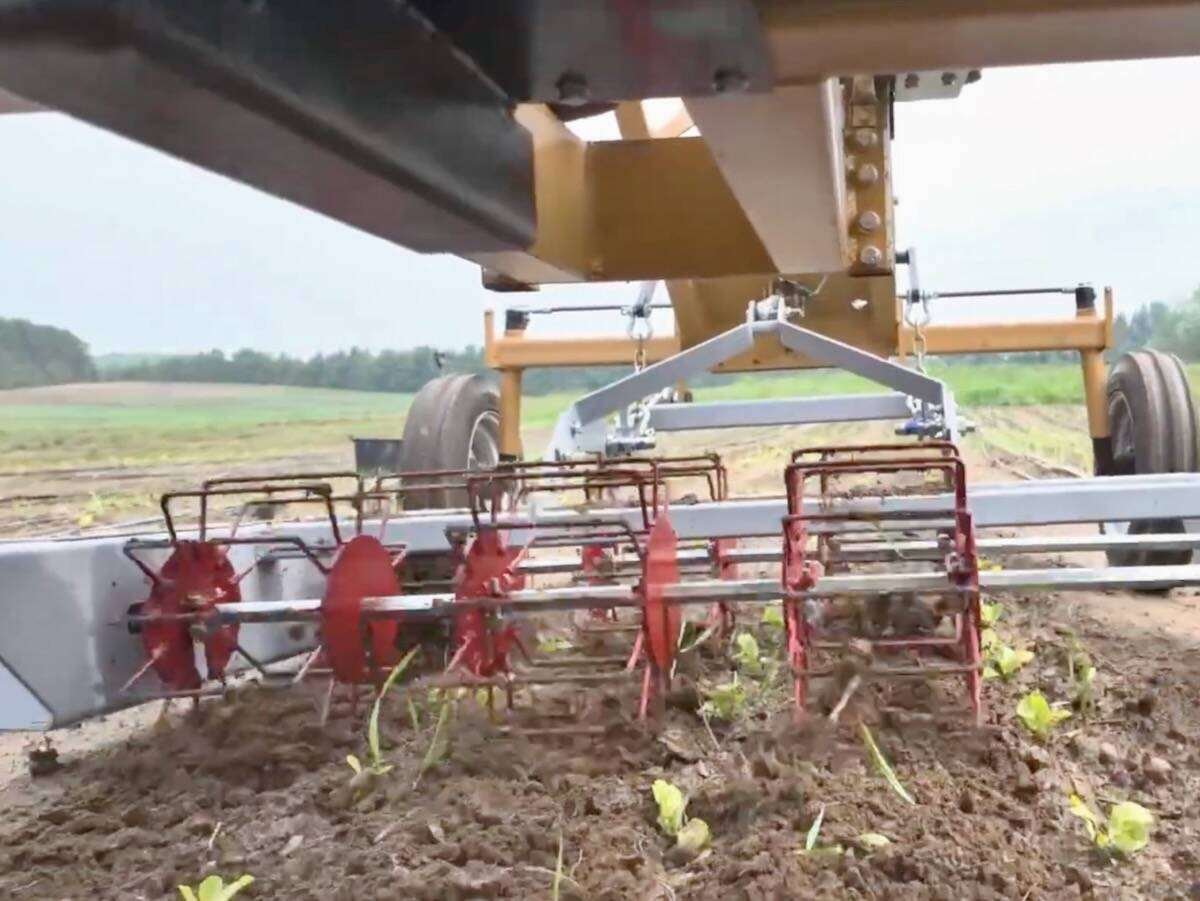
“What doesn’t exist right now is the robust, low-cost electrical platform for all that software to live on,” he said.
Rather than trying to develop a fully autonomous machine capable of handling every field operation, Baer wants Werkr Tractors to provide that platform and allow its capabilities to expand as autonomous technology develops.
Battery power is particularly suited to cultivation, Baer said, because weeding doesn’t require the sustained high power needed for operations such as heavy tillage. Batteries can be swapped to extend operating time, and a range extender could eventually be added for longer jobs.
The same platform could also support other automated field work, including crop scouting, monitoring and targeted spraying.
Interest so far has come primarily from organic and specialty crop growers, including farmers looking to reduce their dependence on seasonal labour. Baer has also heard from growers in Australia, where he says limited labour availability is generating interest in agricultural robotics.
With the CAAIN project wrapping up, Werkr Tractors’ next challenge is moving the technology beyond prototypes and research plots.
To do that, Baer is looking for agricultural and business partners to help commercialize the technology and continue development of an affordable, dependable electric platform while building the smarter weeding technology on top of it.
“The idea of AI weeding is totally doable,” Baer said.


