
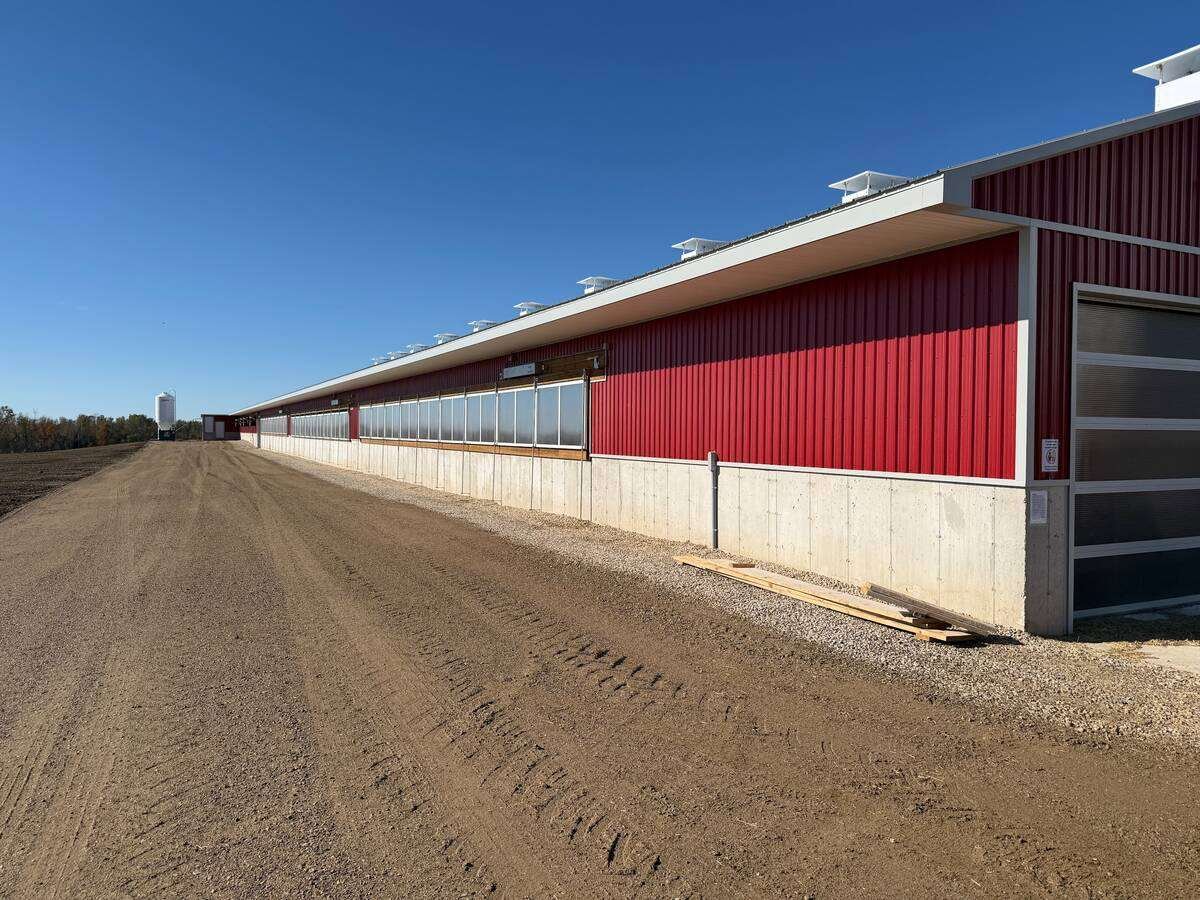
Upper Maitland Specialty Foods’ new hog barn is bedded with straw and draws on influences from both traditional hog barns and dairy facilities.
Alley scrapers and gutter cleaners like those in free-stall and tie-stall dairy barns, along with an overhead straw-bedding delivery system, make visiting Upper Maitland’s sow gestation and farrowing areas unique in today’s hog sector.
WHY IT MATTERS
Public access to some farm types is rare but can provide opportunities to attract future employees.
Upper Maitland Specialty Foods, owned by Stewart Skinner and Jessica Kelly, and Steve and Emily Veldman, supplies hogs to Niman Ranch, the certified humane pork production arm of giant American poultry and niche protein producer Perdue Farms.
On Thanksgiving weekend, Upper Maitland opened its doors to the community, allowing about 320 people to visit the barn, a rare opportunity in the biosecurity-strict world of hog production.
Getting visitors through the door
Skinner told Farmtario during an interview tour that he worked with his veterinarian, Clint Lichty, of South West Ontario Veterinary Services, to create visitor protocols.
Visitors were marshalled through a Danish entry system that included fully disposable coveralls and footwear. A Danish entry creates a physical and psychological break between entering and exiting the barn, defining a dirty and clean area.
Skinner hosted the open house so community members could see a working pork operation. Attendees included families from town, tradespeople who worked on the project and wanted to see it in action, and other interested industry people.
Why a town of newcomers matters
“Jessica, my wife, had a conversation with two people. They’re both livestock truckers. He’s like, ‘We’ve backed up to barns for decades, but no one’s invited us in to see it.’”
Listowel has become a bedroom community for the Waterloo Region, and more people with limited rural area experience are now making their homes next to farms.
Skinner says he expects that about 50 per cent of the new people living in Listowel and even in the tiny nearby community of Trowbridge are first-generation outside of a city.
That’s a potential source of employees, which are critical to Skinner’s system, which requires more manual labour than conventional hog farms.
“We want those kids to come in and see the farm and say, ‘Man, that looks kind of cool.’
“When I went to the guidance counsellor in Grade 10, you were not told to look in your backyard for opportunity,” says Skinner, who is passionate about local economic development.
More dairy barn than pig barn
The barn, located near Listowel on a farm his family rented for years before purchasing it in 2021, is the first Skinner has built from scratch with his production system in mind. Other barns in his system have been retrofitted to humane standards.
The facility can house 550 sows, farrow to wean.
“Basically, this barn is more like a dairy barn than a pig barn,” says Skinner.
Much of the barn design is built around managing straw for bedding, a requirement of the Niman Ranch system.
Straw in at the ceiling, manure out at the back
Straw is forked onto a silage conveyor and delivered to another conveyor that moves the straw down the centre of the barn’s ceiling. The straw is then distributed across the front of the pens as it drops off the conveyor.
Three to five large square bales of straw will be processed each week and blown into a forage wagon, yet to be set up in the barn, which will then distribute the straw onto the conveyor.
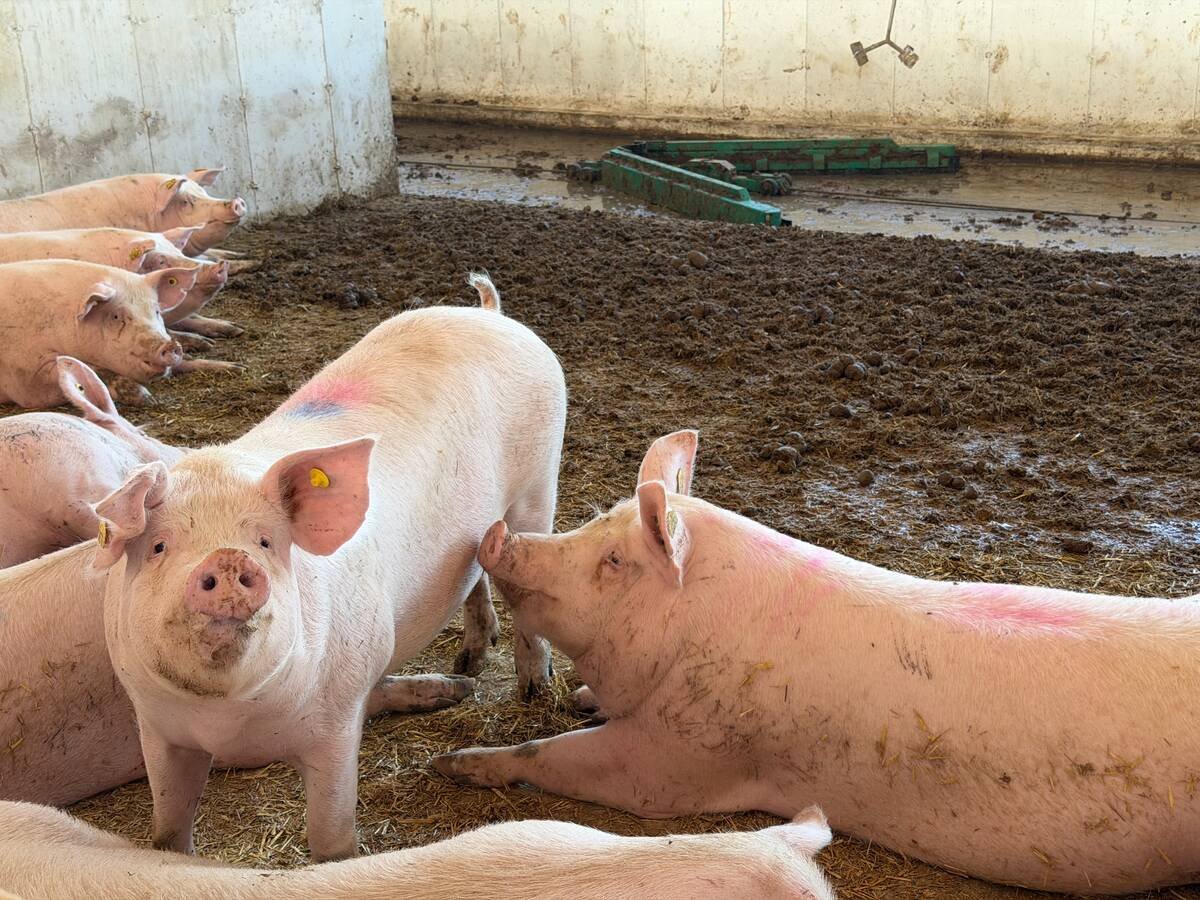
At the back of the pens is a step-down to an alley scraper that moves the manure out. The manure must be manually scraped into the alley.
“Our hope and our dream is that a lot of the straw gets eaten before it makes its way to the back.”
What the sows do with it
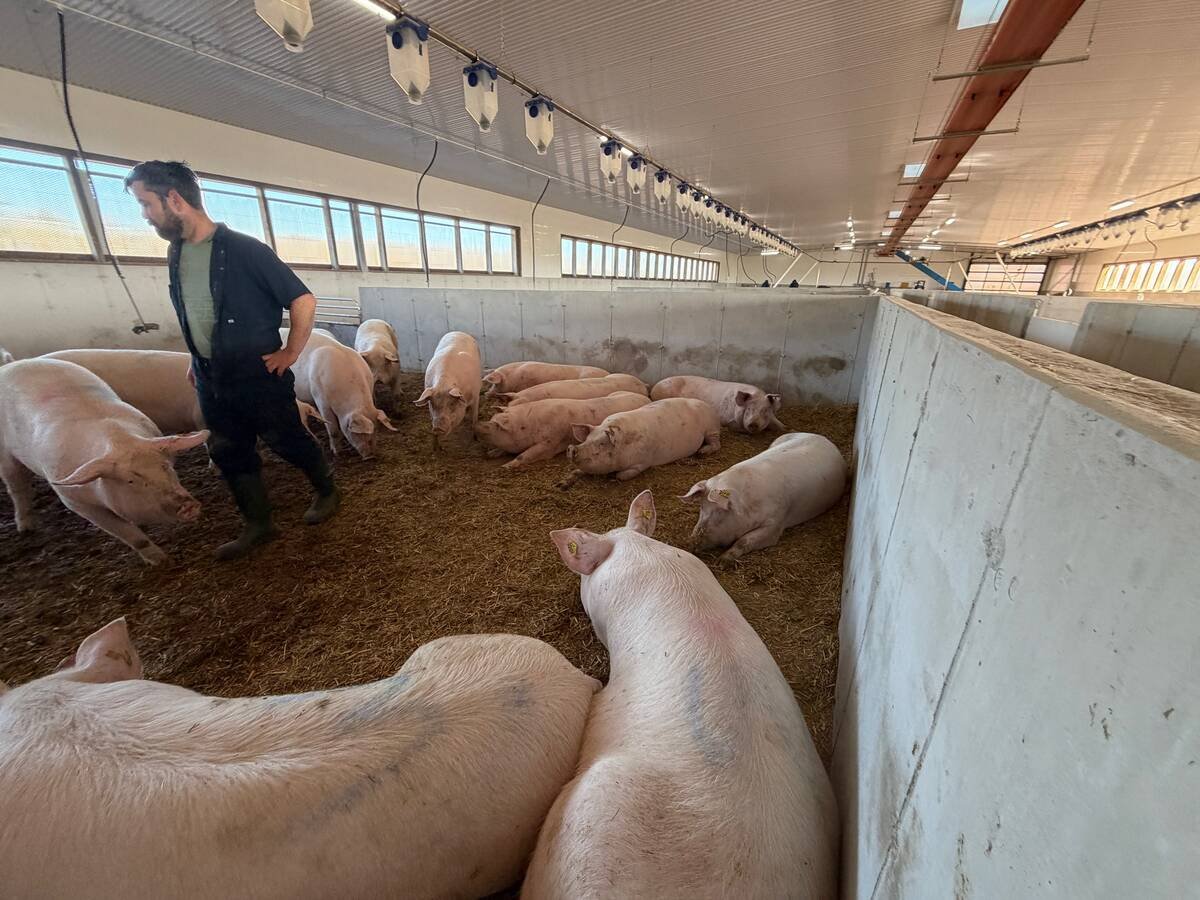
Straw drives the extra expense of the barn, but also creates a different atmosphere than other hog barns, says Skinner, who, with his wife, Jessica, were named the 2024 Ontario Outstanding Young Farmers.
The sows play with the straw and root around in it. He says he sees them interacting differently with straw depending on its origin.
“We use our organic rye straw, which is rye, but also God’s biodiverse mix of weeds. The amount of foraging they do in that product is wild.”
Moving away from organic
Niman Ranch is moving away from organic hog production, and that means Skinner will as well.
“There’s lots of different ways you can do it, but it’s more expensive no matter what.”
Skinner’s under no illusions that his system can provide pork for the masses at prices expected at the supermarket. But there are specialty markets where people will pay more for pork with a certain story, and his system is built to supply that market.
Breeding without stalls
During the Oct. 20 interview, it’s peak breeding day, and in-heat sows at the front of the gestation barn are animated and noisy, compared to the much quieter back of the barn where pregnant sows mingle and lie down.
A group of three workers moves among the sows, working together to get sows bred using artificial insemination without sow stalls.
That’s the way they’ve bred sows for years in most of their barns, says Skinner.
“It’s all like it’s a team approach. Multiple people in the pen.”
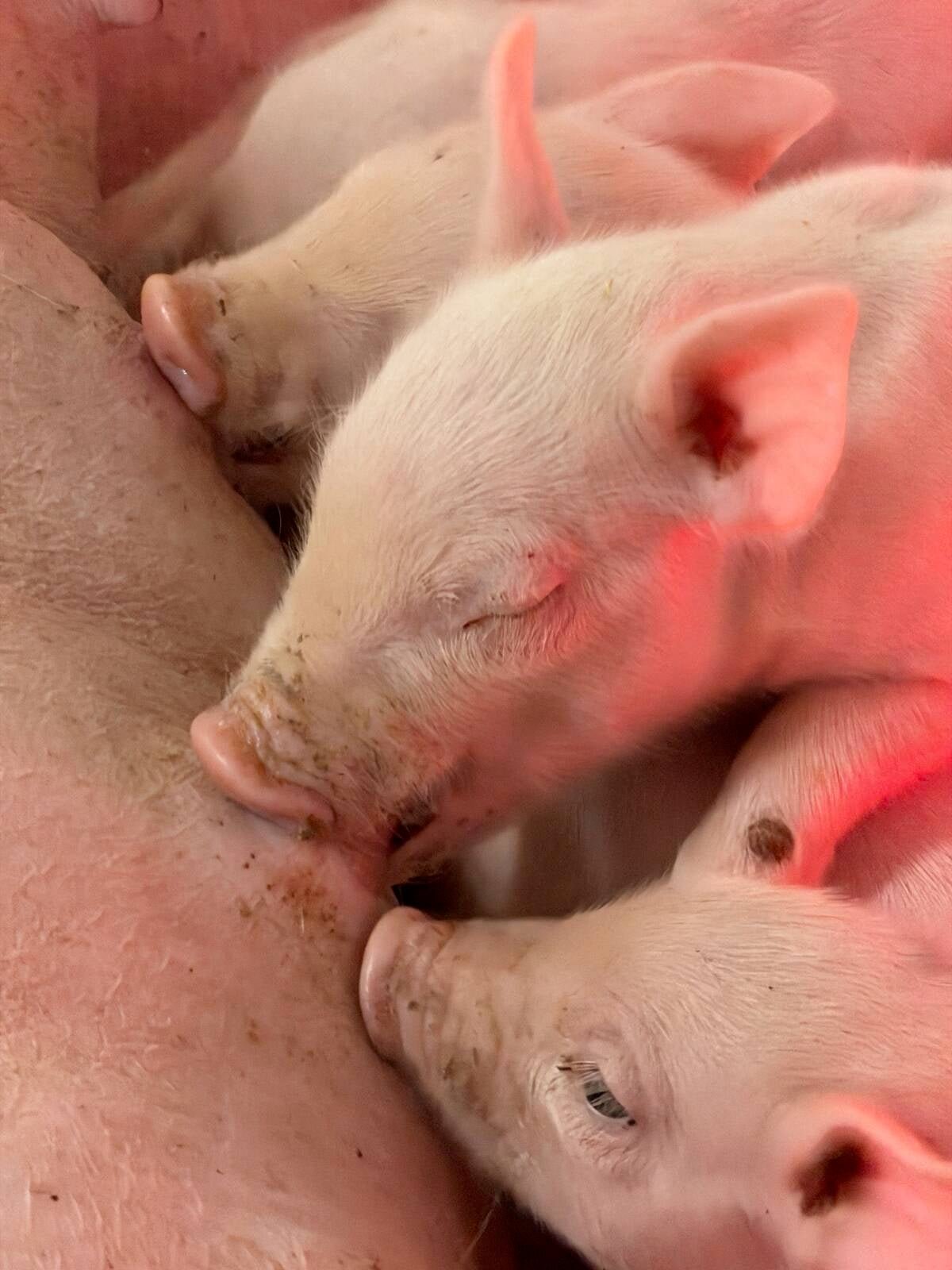
The farrowing area is raised higher than the gestation barn, and manure is managed at the back of each area. Sows get 84 square feet to farrow and raise their piglets without crates, and cleaned straw, purchased in bags, is used for bedding. Preweaning mortality is higher without a crate to protect the piglets, says Skinner. The Niman Ranch farrowing area design includes a warmed covered area where piglets can congregate safely.
A small world of specialty pork
Skinner, an economist by training, has steered the pork production system started by his parents, Larry and Nancy Skinner, toward specialty production.
The world of specialty pork is small in North America, he says, with the major players being Canada’s DuBreton, Niman Ranch, Lynch Livestock and Villari Brothers.
“That’s by and large it for that specialty market,” he says.
Skinner has sold his pigs to a variety of the players, but is now tied into Niman Ranch, mostly sending weaner pigs south to be finished in the United States. They continue to finish some of their own pigs, including a small number for local markets.
The Niman Ranch model includes sow farms mostly owned by Amish and Mennonite farmers in Pennsylvania, with about 7,000 sows. The pigs are finished by crop farmers who run the pigs in hoop houses in the U.S. Midwest and use their hog operations to add value to the corn they produce.
Skinner’s happy that Perdue continues to be privately owned; he’s not sure he’d fit well in a publicly traded company.
“I’ve been learning all about corporate stuff. I’ve never been a part of a giant conglomeration.”


