
The United States’ Sept. 29 ban on Canadian dairy products could have far-reaching consequences for Ontario’s dairy goat sector.
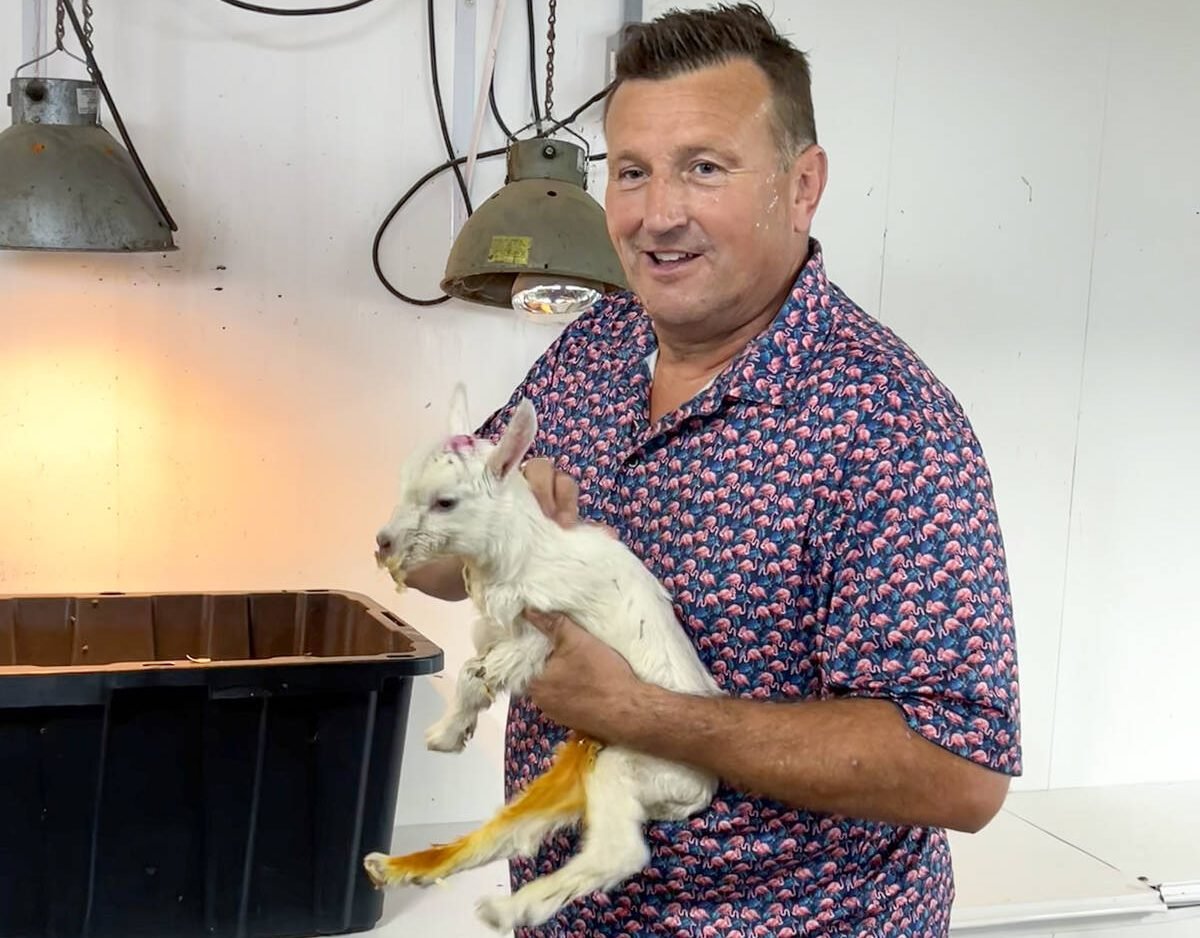
“Approximately two-thirds of Ontario goat milk is for the U.S. market as finished product or raw fluid milk,” said Ed Donkers of Donkers Family Farm, which milks 1,000 goats. “Right now, that’s our biggest concern. If our milk gets banned completely, I’m out of business in a month. Completely.”
Ontario represents 90 per cent of national goat milk production and generates about $200 million in annual economic activity, Donkers said.
“If we didn’t have that (trade) issue right now, the goat industry is in a very, I think, a very positive place,” he said. “The price point is right, and everything seems to be going well.”
Statistics Canada’s 2024 data show Ontario’s 198 licensed dairy goat operations produced 62 million litres of goat milk, with today’s production tracking at 3.8 per cent above previous years.
In 2021, the province held 58 per cent of Canada’s dairy goat herd, while average production rose 71.1 per cent from 184,000 litres per farm in 2017 to 314,000 litres in 2024.
Marketing board
“We just got marketing board status or are working on it. To be honest, I’m glad,” Donkers said, adding he wishes the bid was successful a decade ago. “Right now, we’re being reactive versus proactive.”
The Ontario Farm Products Marketing Commission approved Dairy Goat Farmers of Ontario’s bid to form a milk board in June, but it’s still completing the process to become active.
Lindsay Dykeman, general manager of the Ontario Dairy Goat Co-operative, was part of Dairy Goat Farmers of Ontario’s organizing committee.
She said impact on the dairy goat sector is provincial, but with Ontario holding 90 per cent of the dairy goat population and production, “we really need to lead on the federal side … because there’s no other province that’s going to do it for us.”
In a joint statement, Dykeman and Kevin Weaver, goat dairy industry senior manager for Gay Lea Foods Co-operative Ltd., said producers face increased cost pressures and market uncertainty.
Government support
The statement indicated producers, processors and distributors are working together to preserve established markets and maintain demand, but said prolonged disruption could put farm income, processing capacity and rural jobs at risk.
“We have engaged with our federal and provincial governments on these issues, advocating for temporary producer supports and the creation of business risk management tools that reflect the sector’s ongoing exposure to trade volatility,” read the joint statement.
Michele Bowering, chair of Ontario Goat, spoke with federal agriculture minister Heath MacDonald during Canada’s Outdoor Farm Show and said he didn’t realize dairy goats were collateral damage in the current tariff dispute.
Goat milk falls under the dairy HS codes despite not being supply-managed.
Bowering also attended the commodity meeting with Sam Oosterhoff, Ontario’s new ag minister, at the International Plowing Match and Rural Expo.
“The more you can talk to (agriculture ministers) and educate them on (the dairy goat sector), the better your chances are,” she said.
Eventually, something has to give, said Dykeman; until then, the industry is working to manage volumes and limit the impact to producers.
Production modification
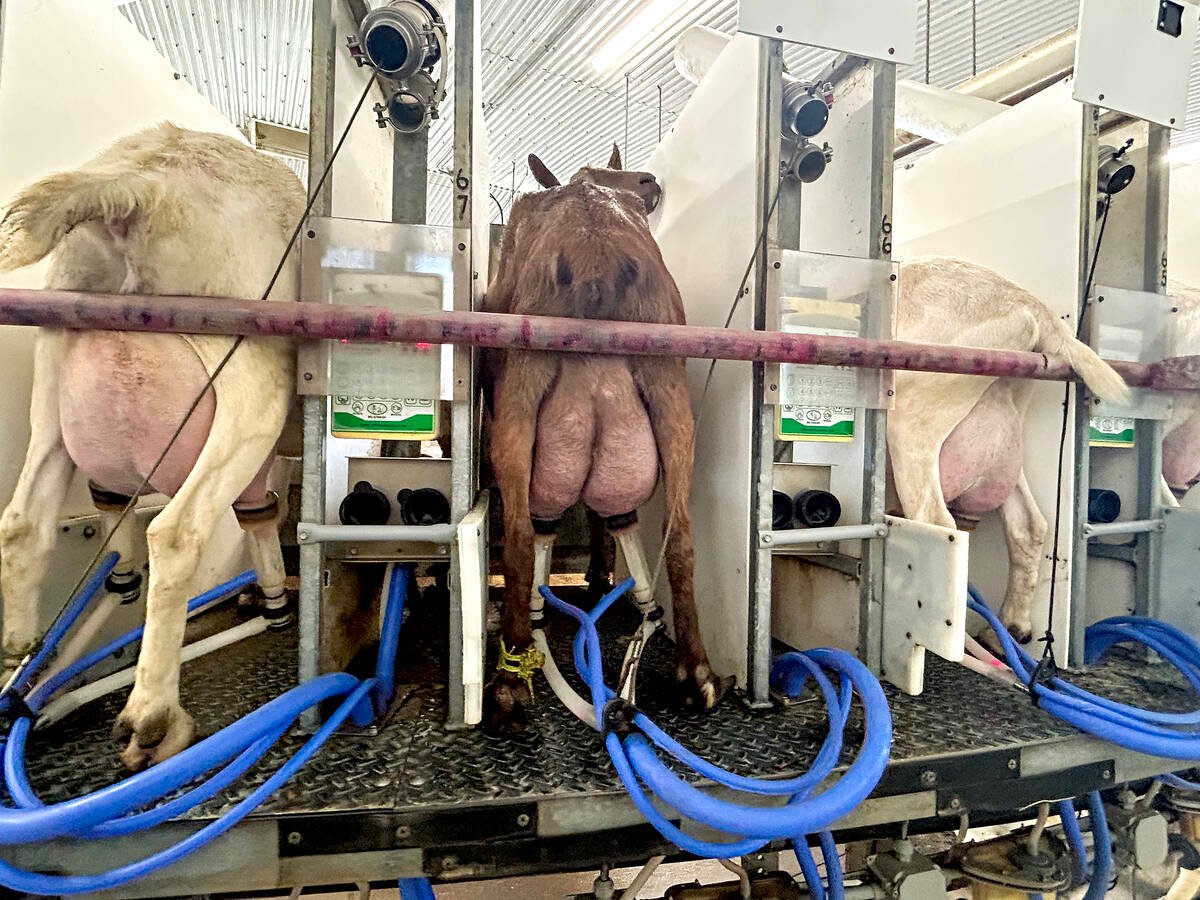
Unlike the cow dairy industry, most goat milk producers use extended lactation with goats milked for two or three years before being bred back, Dykeman explained.
She anticipates some producers will cull older animals and breed sooner to manage milk volumes in the short term. The co-op won’t take on new producers when volumes are tight, but Dykeman said it is seeking new processors and processing opportunities for goat milk.
“There isn’t an easy alternative for where we can ship these large amounts of milk volumes. Processors that ship to the States, I’m sure, are trying to keep their product on the shelf,” she said. “To a certain point, they are going to have to manage those tariffs and whether they can spread that through the value chain through their distributor and the processor and the raw materials. Because once that shelf space is lost, it’s mighty hard to get it back.”
Export products
Mariposa Dairy Ltd. is one of Canada’s largest goat cheese producers and the third-largest in North America, employing 200 people and processing more than half of Ontario’s goat milk through six production lines.
It exports 80 per cent of its products to the United States, including private-label certified kosher and halal cheeses, fresh chèvre, feta and aged cheeses under the Celebrity and Lenberg Farms brand names.
In August, the company received a $6.5 million repayable loan from FedDev Ontario for a $19.5 million expansion, including a $5 million building and $14 million for automated processing, packaging and shipping technology.
“FedDev Ontario’s funding has been instrumental in accelerating our automation journey, enabling us to invest in world-class manufacturing and shipping automation technologies that enhance efficiency, strengthen competitiveness and support long-term growth,” co-owners Bruce and Sharon Vandenberg said in a press release.


