
A Q&A with Vishnu Chaudhari, M.Eng., P.Eng., Sr. Research Engineer, Mechanism & Applied Research at CarbonCure
A recent peer reviewed study from MIT has shed new light on exactly what happens, at the molecular level, when CO₂ is introduced into concrete. The findings offer scientific confirmation of something CarbonCure has long understood through practice: that CO₂ mineralization does more than sequester carbon. It actively improves the concrete itself.
We sat down with Vishnu Chaudhari, Senior Research Engineer at CarbonCure, to break down what the study found, why it matters, and how it can advance production of lower carbon concrete. You can read the full MIT study here.

Can you explain in simple terms what this MIT study set out to prove, and why it matters?
When CO₂ is added into cement paste, how it changes cement hydration has historically been hard to see. The reactions occur very quickly and involve short-lived phases that are difficult to observe directly. MIT’s unique, in situ Raman microspectroscopy setup allowed researchers to watch those short-lived phases continuously over the first 24 hours after mixing.
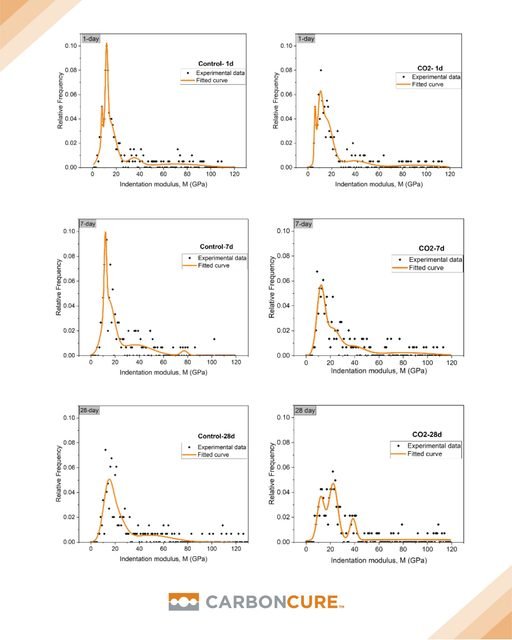
What they found was significant. The study directly observed that CO₂ positively alters the early hydration pathway, triggering a three-stage reaction that ultimately results in a more uniform binder structure. Rather than disrupting cement hydration, the CO₂ temporarily redirects the early reactions before conventional hydration continues, leaving behind a denser and more interconnected microstructure.
What does that validation mean for the industry?
This study provides a missing piece. By capturing the chemistry in real time, it confirms that CO₂ mineralization does more than permanently store carbon. It actively influences the early development of the cement microstructure. Independent validation from MIT also provides additional confidence for customers and stakeholders who rely on peer-reviewed science to inform their decisions.
How important was MIT’s involvement in this research?
Having MIT scientists, specifically Admir Masic’s team at MIT’s Concrete Sustainability Hub, lead this work advanced our visibility of this molecular activity while delivering findings with tremendous integrity and credibility. MIT is a world-renowned engineering institution, and its research conveys unbiased, rigorous scientific validation. The unique Raman spectroscopy capability developed at MIT enabled observations that were simply not possible using conventional experimental techniques. That distinction matters because it means the findings are not just confirmatory. They are genuinely new.
Is there a competitive advantage here for producers who adopt CarbonCure early, and what does that look like?
The new research gives producers stronger scientific evidence to support conversations with concrete producers, civil engineers and project owners. When a specifier or developer brings scrutiny or asks precise questions about concrete performance or environmental claims, producers can now point to this rigorous, third-party research that backs up what they are delivering.
The study confirms that CO₂ becomes permanently embedded in the concrete. Why is that so significant to the market right now, especially as carbon credit standards tighten?
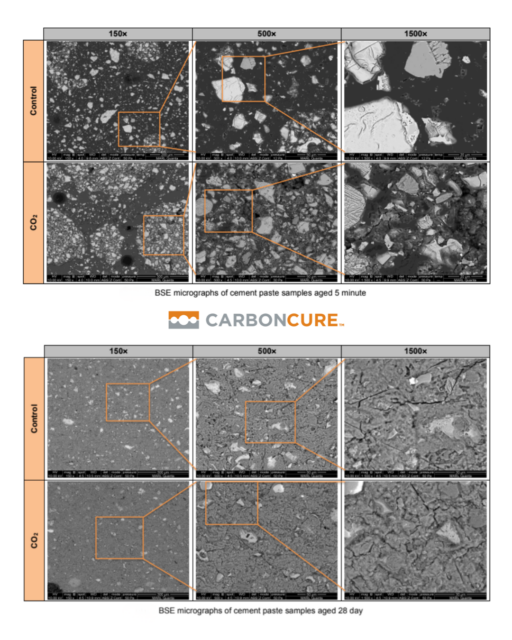
The study showed visual evidence that, when hydration kicks in, the hydration products form around already dispersed nanoparticles, locking them into the microstructure for the full lifespan of the concrete structure, which can stand for centuries. As carbon accounting and verification standards become more stringent, having direct scientific evidence of permanent mineralization becomes increasingly important for market confidence and carbon credit integrity.
How do findings like this hold up when developers, architects, or project owners start inquiring about environmental claims?
This provides independent scientific evidence that directly supports CarbonCure’s environmental claims. CarbonCure also has several other publications in this domain that collectively prove the permanence and performance of mineralized CO₂. For instance, the study shows a silica gel scaffolding and then an interconnected binder, a mechanism we can demonstrate with images and spectra. That level of transparency substantiates our environmental claims as verifiable fact.
If you had to summarize what this research means for the future of low carbon concrete in one or two sentences, what would you say?
This work transforms CO₂ mineralization from something we knew worked into something we now understand at the molecular level. That deeper understanding will help accelerate innovation and broader adoption of carbon utilization technologies like ours to support demand for green building materials.
—
CarbonCure develops carbon mineralization technologies for the concrete industry that enable producers to reduce their environmental footprint while improving the performance and efficiency of their mixes. Research like this MIT study reflects our ongoing commitment to science-backed innovation and the kind of transparency the industry needs to move forward with confidence. To learn more about CarbonCure and the technology behind it, get in touch today.
The post What a New Study from MIT & CarbonCure Researchers Reveals About CO₂ in Concrete appeared first on CarbonCure Technologies Inc..


