

Selecting the right material for commercial trash and recycling cans is one of the most important decisions when designing a waste management system. The material determines durability, maintenance requirements, appearance, and long term cost. In commercial buildings, campuses, parks, hospitality environments, and municipal spaces, the choice of bin material can influence everything from cleanliness and user behaviour to lifecycle cost and sustainability performance.
The four most common materials used for commercial waste and recycling containers are stainless steel, aluminum, plastic, and HDPE. Each has distinct advantages depending on the environment, traffic level, aesthetics, and operational requirements of the facility.
This guide explains how each material performs in real world commercial environments and provides examples of containers available through Recycle Away.
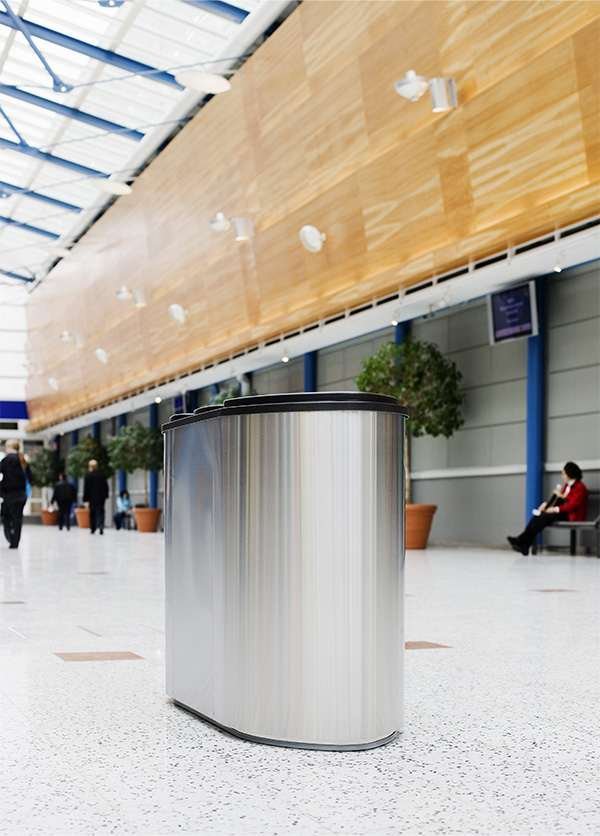
Stainless Steel Commercial Trash and Recycling Cans
Stainless steel is widely considered the premium material for indoor commercial recycling and waste containers. It combines durability, corrosion resistance, and a modern aesthetic that fits high visibility spaces.
Stainless steel contains chromium, which forms a protective surface layer that prevents corrosion and rust. This makes stainless containers resistant to moisture, spills, and cleaning chemicals commonly found in commercial environments. Unlike many plastics, stainless steel surfaces are non porous, meaning they do not absorb stains or odors.
Because of its appearance and durability, stainless steel is commonly used in corporate offices, airports, hotels, convention centers, and high end retail spaces.
Advantages of stainless steel bins include long service life, resistance to corrosion and odors, easy cleaning and sanitation, and a polished architectural appearance that complements modern interiors.
Stainless steel bins are ideal for locations such as lobbies, cafeterias, meeting spaces, airports, shopping centers, and corporate campuses where aesthetics and durability are both priorities.
Example stainless steel recycling containers from Recycle Away include:
These containers are designed for single stream, two stream, and multi stream recycling systems and are commonly used in corporate and public environments where appearance matters.
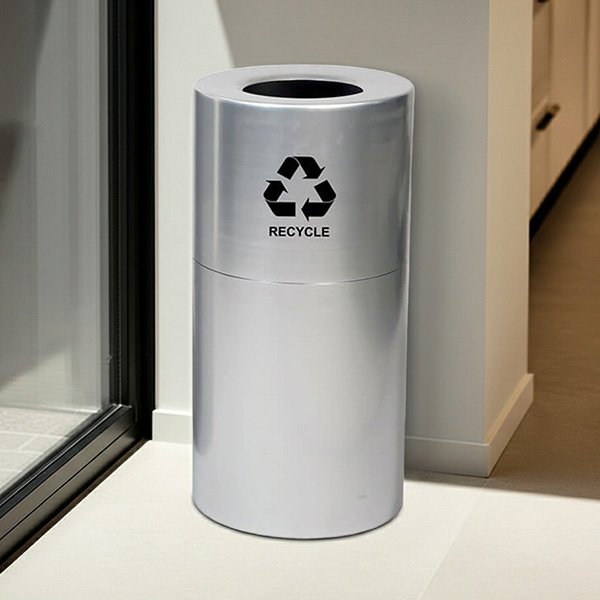
Aluminum Commercial Recycling Containers
Aluminum recycling bins provide a balance between durability and weight. Aluminum containers are significantly lighter than stainless steel while still offering strong corrosion resistance.
Because aluminum naturally forms a protective oxide layer, it performs well in environments with humidity, spills, or cleaning chemicals. This makes aluminum bins popular in convention centers, stadium suites, shopping malls, and office buildings where a polished metal appearance is desired without the heavier construction of stainless steel..
Aluminum containers also support sustainability goals. Aluminum itself is highly recyclable, and recycling aluminum saves substantial amounts of energy and resources compared to producing new metal. Recycling aluminum can reduce water consumption and air pollution dramatically compared to manufacturing new aluminum..
Advantages of aluminum containers include lighter weight construction, corrosion resistance, modern appearance, and strong durability for indoor commercial environments..
These aluminum containers are commonly used in arenas, stadium suites, corporate buildings, malls, and convention facilities where durability and aesthetics are both important..
Plastic Commercial Trash and Recycling Cans
Plastic bins are one of the most widely used materials for waste and recycling collection due to their affordability and versatility. Commercial grade plastic containers are lightweight, impact resistant, and easy to move and service.
Plastic bins are commonly used in offices, schools, warehouses, manufacturing facilities, and utility spaces where the appearance of the container is less critical than functionality.
Advantages of plastic containers include lower upfront cost, lighter weight for easier handling, strong resistance to dents and impacts, and wide availability in different colours and sizes.
Plastic recycling bins are frequently used for deskside recycling, back of house waste collection, and centralized recycling stations in offices and institutional environments.
Example plastic recycling container categories available from Recycle Away include:
Plastic bins are especially useful when large quantities of containers are needed across a facility such as classrooms, cubicles, dorm rooms, or production floors.
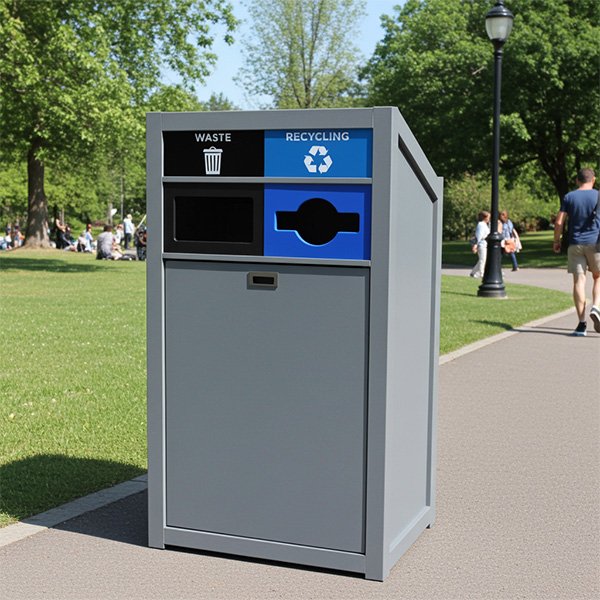
HDPE Outdoor Recycling and Trash Containers
HDPE, or high density polyethylene, is one of the most durable plastic materials used in commercial outdoor waste containers. HDPE containers are designed to withstand weather, UV exposure, temperature fluctuations, and heavy public use.
Because of its strength and flexibility, HDPE is widely used in parks, stadiums, campuses, and public streetscapes where containers must resist cracking, fading, and environmental wear.
HDPE containers are also often manufactured with recycled plastic content, which helps support sustainability goals and circular material use.
Advantages of HDPE bins include extreme durability in outdoor conditions, resistance to UV damage and fading, impact resistance, and low maintenance requirements.
HDPE recycling bins are commonly used in outdoor parks, recreation areas, municipal streetscapes, stadium concourses, and campus outdoor spaces.
Examples of HDPE based outdoor recycling bins available through Recycle Away include:
These containers are designed for high traffic environments and can withstand heavy daily use without significant maintenance.
How to Choose the Right Material for Your Facility
Selecting the best material depends on several operational factors.
Indoor architectural spaces often benefit from stainless steel or aluminum containers that match interior design and provide a polished appearance.
Back of house areas such as kitchens, janitorial closets, or maintenance areas typically benefit from plastic bins due to their lower cost and ease of handling.
Outdoor environments require materials that resist weather and heavy public use, making HDPE and heavy duty outdoor plastics ideal choices.
Facilities with strong sustainability or ESG goals may prioritize containers made with recycled materials or highly recyclable metals such as aluminum and stainless steel.
Maintenance teams should also consider cleaning requirements, liner compatibility, and how easily bins can be emptied or serviced.
Why Material Choice Matters for Waste Management Performance
The material of a recycling or trash container influences more than durability. It also affects how people interact with the system and how efficiently the program operates.
High quality containers improve user participation, reduce contamination, and help waste stations remain clean and functional over time. Durable materials also reduce replacement costs and maintenance needs.
In well designed waste systems, containers are selected not only for appearance but also for the environment in which they operate and the behavior of the people using them.
Commercial trash and recycling cans are a long term infrastructure investment. Choosing the right material ensures that containers perform well for years while supporting operational efficiency and sustainability goals.
Stainless steel provides premium aesthetics and durability for high visibility indoor spaces. Aluminum offers a lighter metal option with a modern appearance. Plastic bins provide affordable and versatile solutions for offices and institutional environments. HDPE containers deliver the strength and weather resistance needed for outdoor public spaces.
By understanding the strengths of each material and matching them to the environment where they will be used, facilities can create waste and recycling systems that are durable, efficient, and visually integrated into the space.
Explore the full range of commercial recycling and waste containers at Recycle Away to find the right solution for your facility.


