
Fertilizer used to be boring.
Farmers, who use it to produce crops that keep people fed, are big fans, and fertilizer quietly paid a lot of bills where it was produced, including, of course, potash in Canada.
Now it’s at the centre of global geopolitics, no longer a simple commodity, but a strategic asset in a giant political chess game.
The question is, what commodity will be the next pawn, and how will it affect farmers’ ability to predictably make a living?
In Ontario, farmers have had to compete as one of the only jurisdictions with tariffs on Russian nitrogen. While grain farmers are quick to express concern about Russia’s actions in the world, our competitors did not put a tariff on the nitrogen that helps feed people.
U.S. President Donald Trump recently threatened to import potash from close Russian ally, Belarus. It was a nonsensical suggestion meant only to try to pressure Canada and its significant supplies of potash sent to the U.S.
Trump’s war with Iran has also increased fertilizer prices. Reuters reports that about 30 per cent of global fertilizer moves through the Strait of Hormuz, where Iran is slowing or blocking ship movement.
All those factors drove up fertilizer prices, hitting farmers who already have little control over some inputs or the prices of the commodities they produce.
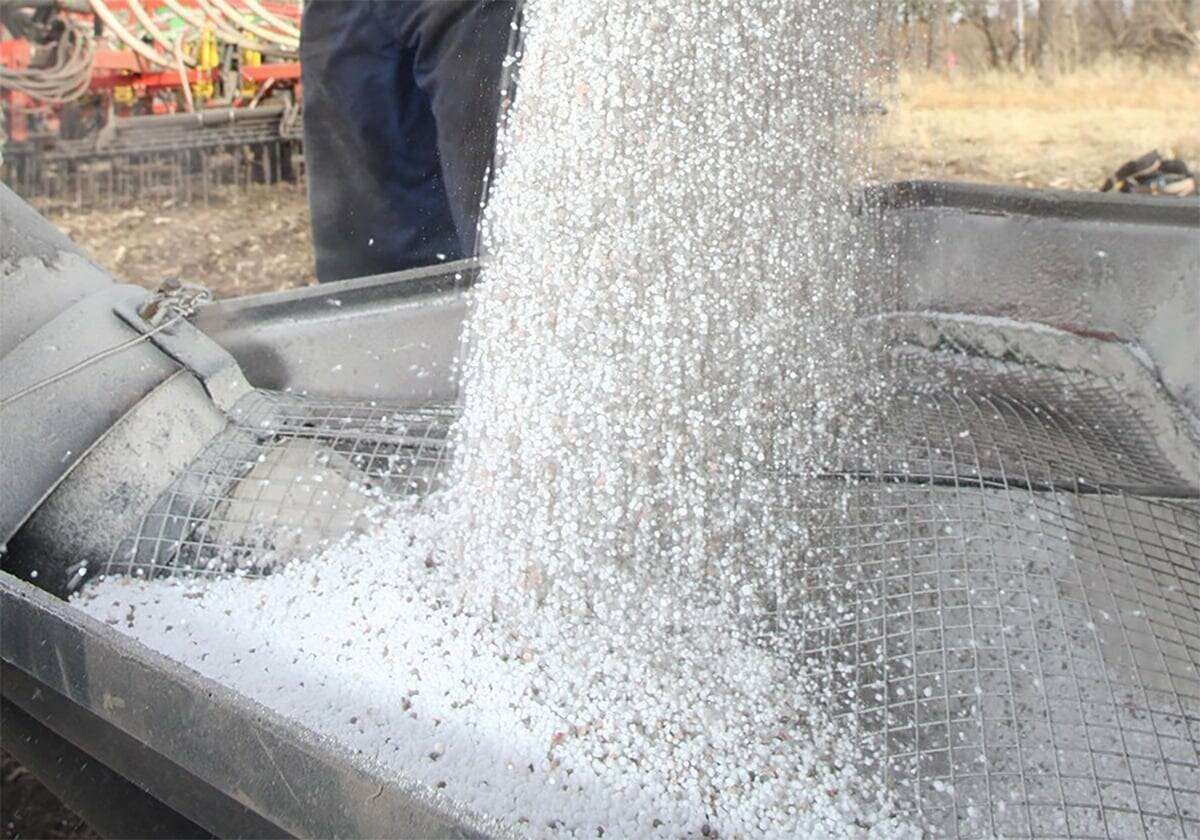
Urea is poured into a fertilizer hopper. Photo: File
The now-entrenched interference in fertilizer markets makes me wonder which formerly boring commodity will become the next strategic asset.
For years, oil has been a strategic asset for Canada and many other places in the world. When oil is used as a pawn, the price is driven up and hits farmers hard. Despite Trump trying to create market signals by importing diesel from Russia, the price of diesel, integral to farm operations, is at record highs.
Could the movement of food commodities be next? The tariffing of food has largely been avoided in the U.S.-Canada trade war, other than dairy products during the most recent decline in relations.
However, others have argued that Canada, as a food commodity-rich country, should use our food production as a strategic asset.
There’s danger in that because Canadians rely significantly on imports of some food products. Messing with commodities is one thing, but restricting food flows is another.


