
Most Ontario grain corn must be dried for storage, resulting in substantial and variable costs for farmers.
Access to natural gas drives how most corn is dried, but some are looking at alternatives, such as biomass dryers and heat pumps.
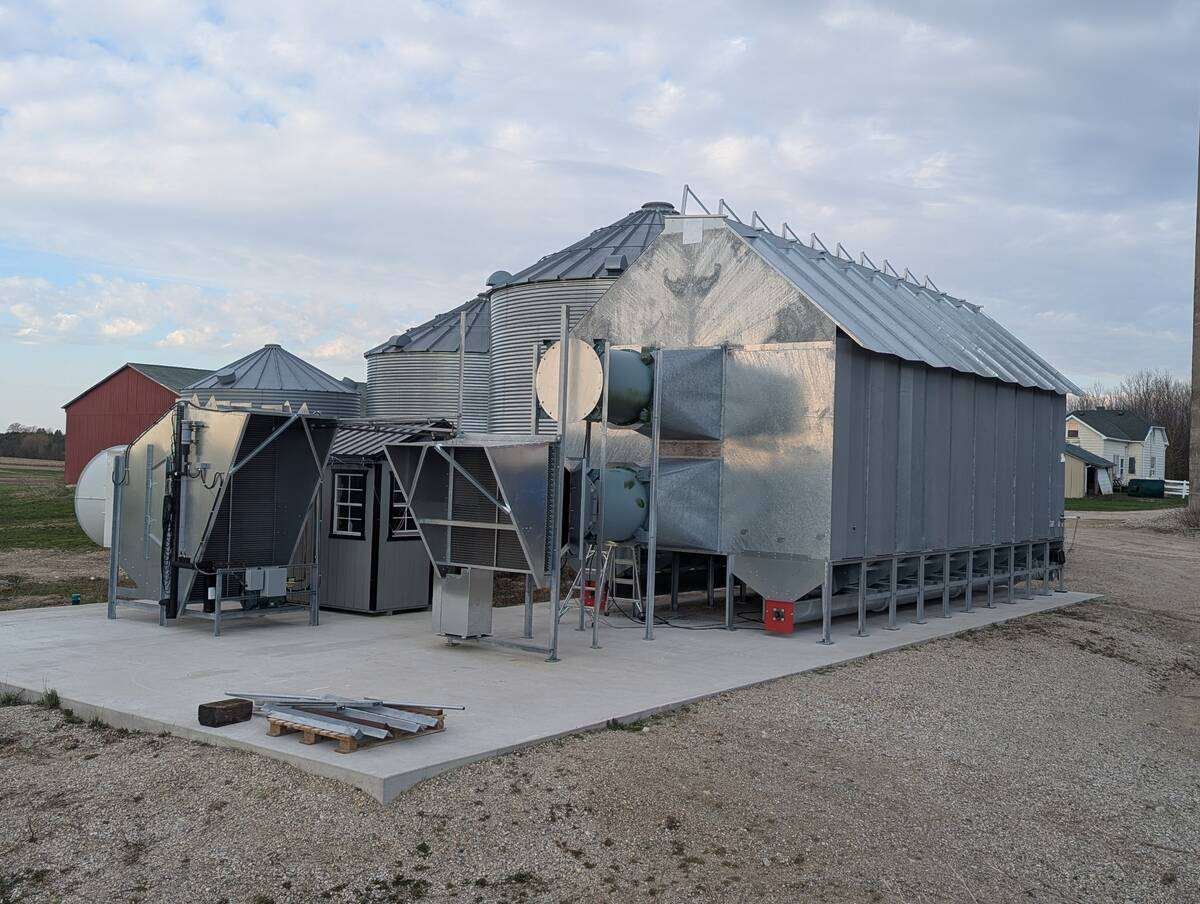
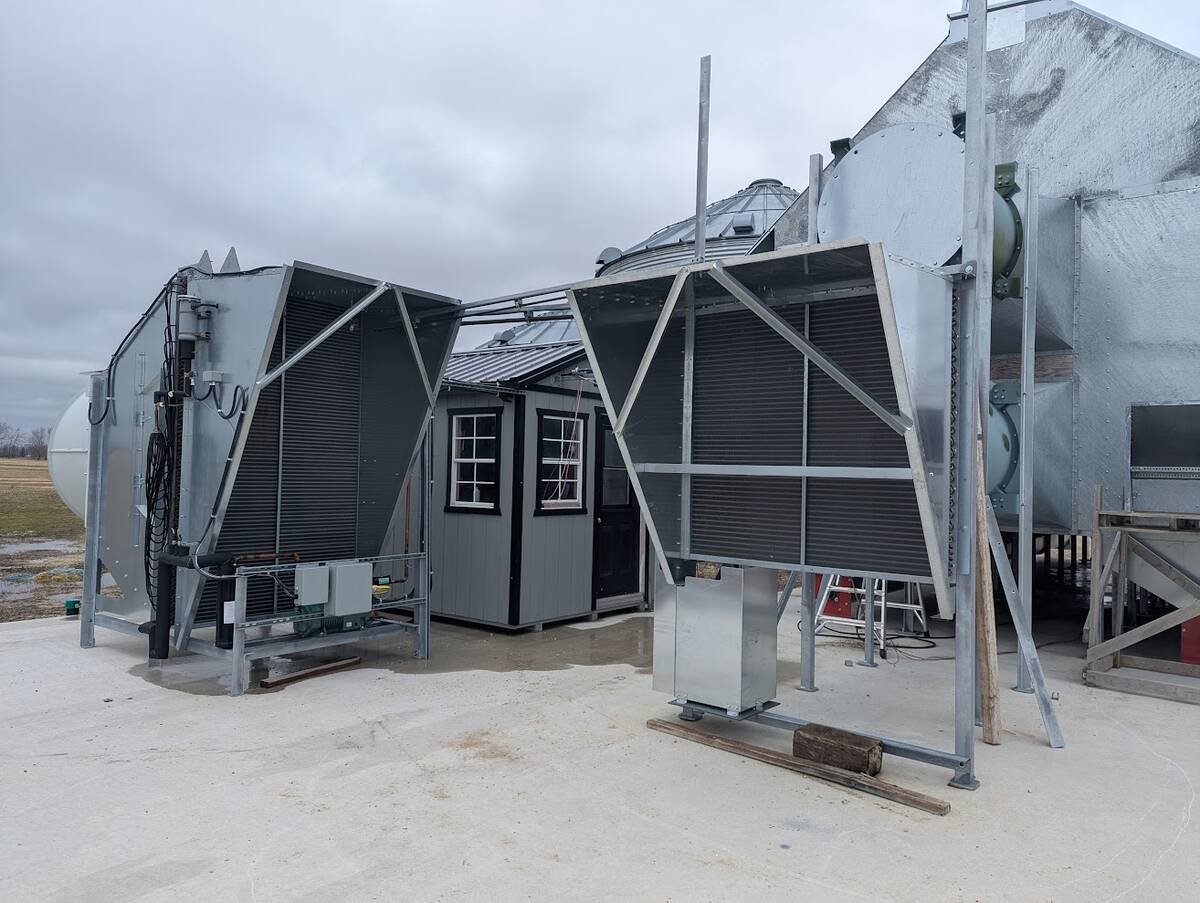
At S&M Dineen Farms near Kenilworth, Ont., a different approach is taking shape. The farm adopted heat pump technology for grain drying, using refrigeration systems to recover and transfer heat.
The process offers a potential alternative to conventional drying methods, with the promise of lower energy consumption and greater control over drying temperatures.
Traditionally, farms left corn standing in the field and, at one point, corn cribs dotted the landscape for open-air drying.
Greg Dineen, co-owner of S&M Dineen Farms, said he explored several options before switching to a heat pump.
“Natural gas isn’t too bad, but propane is expensive. Both fuels are imported to southern Ontario and Quebec from the U.S. and potentially subject to tariffs and export restrictions,” Dineen said, noting that both are emissions-intensive when burned.
He said occasionally propane supplies can be sluggish or disrupted when demand is high, or trucking and railway disruptions occur. Natural gas is not available everywhere, Dineen explained, adding that even when connection is possible, some location suppliers will not provide gas for dryers because of the high demand on local pipeline networks.
Energy consumption
Low energy consumption was one of the biggest draws of heat pump technology for Dineen.
“The process is slower than conventional drying but very low energy, so it makes the most sense to do large slow batches. It is also very low-cost, so we tend to start harvest earlier just to spread out work and limit the risk of being caught by snow,” he said. “We’re on the edge of the Dundalk Highlands in a pretty short growing season region, so corn moisture tends to be higher and snow arrives a little earlier.”
The exact figures on energy savings and operating costs are still being compiled.
“It’s tough to put numbers to grain drying because it changes with dryer type, settings, weather and crop condition. For drying corn from 25 per cent to 15 per cent you would likely be looking at something like $16 per dry metric tonne given average weather and this year’s price for propane and typical dryer energy use,” Dineen said, noting that this figure accounts for “some electricity but mostly propane.”
Compared to elevator drying
The cost of drying corn at an elevator would be about $24 per dry metric tonne, but he said the comparison is not entirely fair because the elevator provides additional services.
“You can just unload and go again without another thought,” he said.
Data for the farm’s heat pump dryer are still being collected, said Dineen, with current estimates based on operating costs of $1 to $5 per dry metric tonne for the same reduction in moisture content, from 25 per cent to 15 per cent.
“It’s looking like $2 to $4 will be the most practical range for it. Emissions are generally less than one per cent of conventional since we use only electricity and Ontario’s grid is mostly nuclear and hydro, which are low emissions,” he said. “Ontario and Quebec are big producers of electricity as well, which means drying is with domestic rather than imported energy.”
Low and slow
So far, Dineen said, grain quality has been better with heat pump drying because the lower temperatures prevent kernels from cracking, even when corn is dried from 50 per cent moisture content. He said moisture consistency is still being assessed as the design continues to be refined.
“Germination is always preserved, which has led to a lot of volunteer corn around the dryer at times, which I still find a strange sight,” he added.
Dineen said moving to heat pumps was not without challenges. Sourcing components during the COVID-19 pandemic required considerable effort and government programs designed to encourage this type of agricultural innovation have fallen short.
Government programs
“The Agricultural Clean Technology [ACT] program research and innovation stream appears to be written for this exact type of work, but it disallowed manufacturing activity. That was about 70 per cent of our cost disallowed just to start,” he said. “I examined some workarounds with a program rep, but we ended up deciding we wouldn’t succeed. I ultimately abandoned the application since it looked like 10 per cent support for a large amount of hassle.”
Dineen will share information on how the system can be integrated into other farm operations at the Southwest Ag Conference in January.


