

In 2016 Canada put in place a moratorium on offshore oil and gas drilling in the Arctic. It was a recognition that Arctic waters have “irreplaceable value” to Indigenous people, local communities, and Arctic wildlife. It also acknowledged that the conditions in Arctic waters are extremely challenging and commercial activities need to be “consistent with national and global climate and environmental goals”.
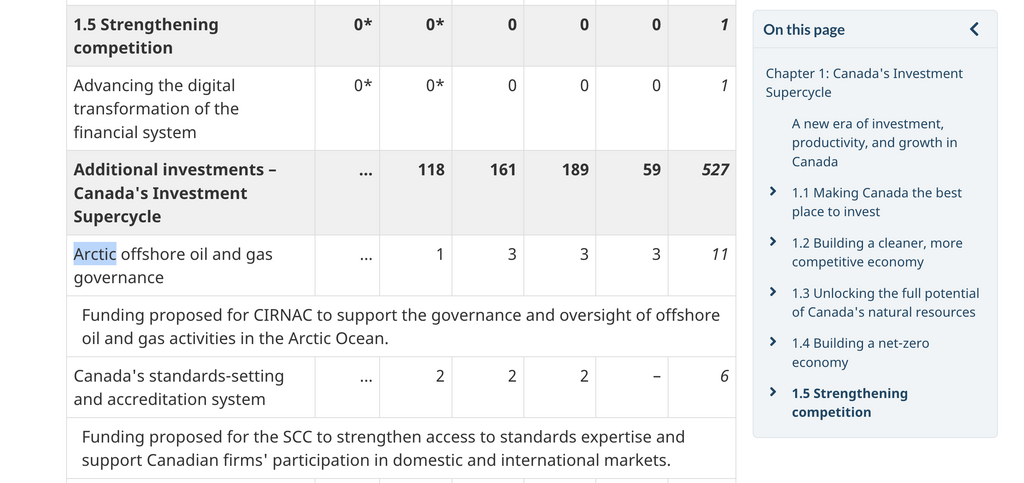
Then last week the Carney government released their latest budget titled “Masters of our Destiny” (no relation to Masters of the Universe, unfortunately). Buried deep inside this massive budget document, as reported by the Toronto Star, was a line item assigning $11 million over four years “to support the governance and oversight of offshore oil and gas activities in the Arctic Ocean.” Further reporting confirmed that this was indeed a signal that the moratorium could be lifted, although Prime Minister Mark Carney later responded to journalists that no decision had been made.
Ready to speak out? Join us in standing up against the rollbacks and attacks on environmental protections. Call for our elected leaders to reject Bill C-39 right now!
The Arctic offshore drilling moratorium is a good decision we need to defend
There are so many reasons that this moratorium is important to uphold. The Arctic ecosystem, and the communities and wildlife who rely on it, are already under threat. The Arctic is feeling the impacts of climate change faster than anywhere else on the planet. Increased industrial activity, like oil and gas exploration and drilling, would add to those threats. In order to avoid catastrophic warming of the planet, we need to stop extracting more oil and gas. Agreeing to oil and gas drilling in Arctic waters is agreeing to accept more terrifying climate impacts, damage, and deaths across the planet. Arctic waters are also a harsh environment, making an accident or spill extremely challenging to respond to, much less clean up.
Finally and maybe most importantly, we do not need to take the risks involved in offshore drilling in the Arctic. Renewable energy technologies are safer, cheaper, and faster to build now. Renewables are taking off in countries that used to rely heavily on oil and gas imports for their energy needs. Renewables are more accessible and scalable to meet different kinds of energy needs, whether that’s in remote Northern communities or major cities and towns.
Canada should not join Trump in his “race to the bottom”
Back in 2016 the Canadian Arctic offshore drilling moratorium was announced in a joint statement with the United States. President Obama, at the time, announced large swathes of U.S. Arctic waters as off limits to oil and gas development. Curiously, just a few months before the Carney government’s hint at the lifting of Canada’s Arctic offshore drilling moratorium, the Trump administration had already announced its intention to rollback the Obama era restrictions on Arctic offshore oil and gas development, as part of Trump’s “unleashing American energy” agenda.
Trump has pulled the U.S. out of the Paris Climate Agreement and is famously and publicly against climate action, whether that’s building large scale renewable energy or the adoption of electric vehicles. Canada, under PM Carney, has rolled back so much of our climate action legislation that Newsweek recently put Carney ahead of Trump in a list of climate “heretics” or leaders who once publicly advocated for climate action policies and now do the opposite (Carney was #2 to Trump’s #3).
Canada hasn’t pulled out of the Paris Climate Agreement, but we are violating it by rolling back climate action and supporting massive expansion of fossil fuel exports. While we fail to meet our global climate commitments, we are claiming to be on track to our global partners. Our Prime Minister has put a lot of his political capital and high profile press appearances into cheerleading for a new oil pipeline to B.C.’s coast and he has said repeatedly that Canada should become an “energy superpower”. Now, as the Trump administration more brazenly clears the way for Arctic offshore drilling, we see a quiet indication, buried in a massive budget document, that Carney may be intending to go there too.
We will not stand up to the Trump regime by imitating them. We should not want Canada to “compete” with the United States by “racing them to the bottom”. By lowering our standards, weakening our environmental protections and violating our commitments to fight climate change, to protect workers rights, and uphold Indigenous rights. Yet that is the path the Carney government is on right now.
Speak out!
Join us in speaking out against these rollbacks and race to the bottom. Right now, we’re taking a stand against Bill C-39, which would further weaken environmental protections, speed up approvals for destruction projects and treat nature like a sacrifice zone. Add your voice today!


