
Through USDA’s Food for Progress program, ASA’s World Initiative for Soy in Human Health program helped strengthen Cambodia’s aquaculture sector while building lasting commercial ties that support demand for U.S. soybean meal. Although the Commercialization of Aquaculture for Sustainable Trade (CAST) Cambodia project has concluded, its results continue to shape the country’s aquaculture industry, while also helping U.S. soy venture into other sectors. That success means WISHH is continuing its work in Cambodia by leveraging both USDA and checkoff funds.
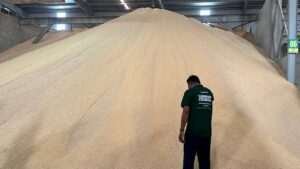
Cambodian Aquaculturist Association Director of Operations observes M’s PIG’s
soybean meal that is ready for feed formulation.
Early Success
Recognizing that Cambodia receives nearly 76% of its protein intake from fish, WISHH saw there was an opportunity in linking trade to a stronger aquaculture value chain that could increasingly rely on U.S. soy for feed. Through CAST training programs, fish producers adopted more structured feeding practices, better pond construction, and increased yield while reducing fish loss. These improvements help fish farmers achieve better growth rates and production efficiency while reinforcing the value of high-quality feeds formulated with soybean meal.
CAST also introduced new technology to the country. For example, solar drying domes helped reduce food waste. Typically, fish are dried outside on tables where they are exposed to the sun and food safety hazards. Solar drying domes reduce food spoilage and waste while protecting fish from the elements during Cambodia’s rainy season. Additionally, floating cages and in-pond raceway systems improved fish health and enhanced efficiency. Ten feed-selling companies were trained in proper aquaculture practices, emphasizing the role of quality feeds in fish performance. The project also helped launch the Cambodian Aquaculturist Association, which now brings together more than 1,300 producers, feed companies, and other stakeholders to advance modern aquaculture practices and industry collaboration.
As training expanded, adoption of improved production practices accelerated. Prior to the project, only about 3% of fish producers obtained certificates of Good Aquaculture Practices (GAqP), which enable producers to sell into premium markets. Through CAST, that figure rose to 51%, with 63 producers earning GAqP certification.
U.S. Soy’s Continued Role in Cambodia
CAST also helped build new institutional demand for fish through partnerships with the USDA McGovern-Dole International Food for Education and Child Nutrition Program, implemented by the World Food Programme and partners. Cambodian government purchases of fish for school nutrition programs are helping establish long-term markets for aquaculture production, reinforcing demand for the quality feeds needed to sustain it.
Feed producers who procure U.S. soy now play a key role in the country. Manufacturers such as AgriMaster Feed Mill are purchasing U.S. soybean meal to produce feeds sold across Cambodia. Major feed producer M’s PIG has also expanded into aquaculture while continuing to grow its feed production capacity, illustrating the broader opportunities emerging across Cambodia’s livestock and feed industries.
“Projects like CAST show how strategic partnerships can build lasting markets for U.S. soybean farmers,” said WISHH Executive Director Gena Perry. “By helping farmers and feed companies adopt better practices and high-quality feeds, we’re creating demand that benefits producers overseas and soybean growers here at home.”
WISHH’s work is now extending into other sectors in the country. Kirisu Dairy, Cambodia’s first modern dairy operation, uses 120 tons of soybean meal to feed its dairy cows. In a similar progression to its aquaculture industry, as the country begins to increasingly consume milk, its reliance on U.S. soy for dairy feed may grow. WISHH will be there every step of the way. It has already worked with employee Senghong Khlit to provide insights into feed management and quality. As aquaculture continues to boom, dairy could provide the next frontier of trade in the country for U.S. soybean farmers.
With ongoing support from USDA programs and soybean checkoff investments, WISHH is continuing to collaborate with Cambodian aquaculture, dairy, and poultry industry leaders to expand production, strengthen feed systems, and deepen the commercial ties for U.S. soy.
The post Successes from WISHH’s CAST Project Pave Way for Future of U.S. Soy in Cambodia appeared first on American Soybean Association.


