
Nevada just shattered its March statewide high temperature record by 6 degrees, which is a ‘72 miles per hour in a school zone’ kind of margin. And it happened during the hottest 11-year stretch in 176 years of recorded temperature tracking.
A mid-March heat wave in the American West pushed temperatures in Laughlin, Nevada, to 106°F, far above the previous March record of 100°F. The fact that this happened in March is alarming, especially since it coincided with a near-total collapse of the region’s snowpack. This sets the stage for an early and possibly severe wildfire season. The heat also fits a troubling trend confirmed by the World Meteorological Organization last week: 2015 through 2025 have been the 11 warmest years ever recorded on Earth.
Usually, temperature records are broken by small amounts. What happened in Nevada last month was very different. Some places broke monthly high temperature records by as much as 8 degrees. Reno had seven days above 80°F in March, compared to the previous record of just two days. “It’s not just that we broke monthly records,” said Nevada State Climatologist Baker Perry, “but it’s by how much we broke the monthly records, and not just in one place.”
A Snow Drought That Wasn’t in the Forecast
The heat wave didn’t hit a typical winter landscape. Nevada was already experiencing what Perry calls an unprecedented snow drought. Even though winter precipitation was close to normal and there were big storms in mid-February, warm, moist air arrived soon after. This caused what the National Weather Service called the second-highest single-day snowmelt ever recorded in the eastern Sierra, only surpassed by flooding in 1997.
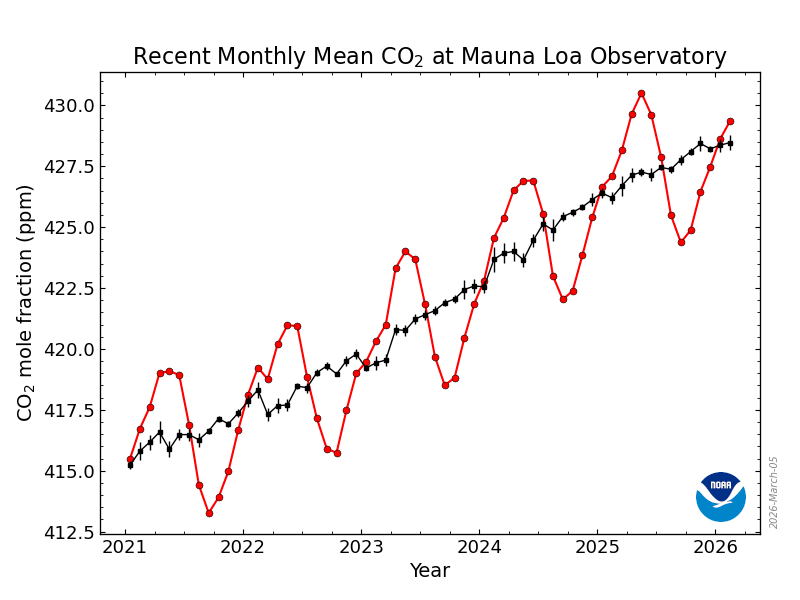
Normally, snow melts slowly through April and May, but this year it happened all at once in late February and early March. SNOTEL monitoring stations across Nevada show the impact clearly: 70% of sites in northern and central Nevada now report zero inches of snowpack. That’s not just low—it’s gone. The incidence of drought is closely correlated with rising atmospheric CO2 levels recorded at the Mauna Loa Observatory in Hawaii, which is threatened with defunding by the Trump Administration.
What worries scientists most is the combination of these events. “To have these two unprecedented, exceptional events happening at once is a combination that is particularly concerning,” Perry said.
What This Means for Fire Season
Wildfire risk isn’t only about heat. It depends on the sequence of conditions leading up to fire season, and this year’s setup is especially dangerous.
The snowmelt and early rains caused plants to grow weeks ahead of schedule. This early growth creates lots of fine fuels. As these plants dry out over the spring—now with less moisture from snowpack—they become the kindling that can fuel fast-moving fires.
Truckee Meadows Fire Protection District Division Chief August Isernhagen said the early green-up could lead to conditions we haven’t seen before as fire season approaches. He urged people to be even more careful than in recent drought years.
“The majority of our starts, and nearly all of our catastrophic fires are human caused,” Isernhagen said in a statement from the University of Nevada, Reno.
Mountain forests face another challenge. Dawn Johnson, Warning Coordination Meteorologist at the NWS in Reno, explained that losing snowpack this early means heavy timber can become drought-stressed much sooner than usual, turning it into a fire hazard months earlier than normal. A cooler storm pattern expected in early April might bring some relief, but experts warn it may be too little, too late to make a real difference.
Eleven Years. No Exceptions.
The Nevada heat wave wasn’t an isolated event. It happened during the longest stretch of global heat ever recorded.
The WMO’s State of the Global Climate 2025 report, released on March 23, confirmed that every year from 2015 to 2025 is among the hottest ever recorded. Depending on the data, 2025 was either the second- or third-warmest year since records began, with temperatures about 1.43°C above pre-industrial levels. Atmospheric CO₂ reached its highest level in 2 million years, and ocean temperatures set a new record for the ninth year in a row.
UN Secretary-General António Guterres put the streak in stark terms: “When history repeats itself eleven times, it is no longer a coincidence. It is a call to act.”
The report also introduced a new measure called Earth’s energy imbalance (EEI). This tracks the difference between the energy the planet receives from the sun and the energy it sends back into space. In 2025, EEI was at its highest since records began in 1960. Surface temperatures, which get most of the attention, only show about 1% of the planet’s extra heat. Over 91% is absorbed by the oceans, which have taken in the equivalent of about 18 times the world’s total annual energy use each year for the past 20 years. EEI gives a clearer picture, showing that the planet is becoming more out of balance.
“In 2025, heatwaves, wildfires, drought, tropical cyclones, storms and flooding caused thousands of deaths, impacted millions of people and caused billions in economic losses,” said WMO Secretary-General Celeste Saulo. She added that the changes driven by human activities “will have harmful repercussions for hundreds — and potentially thousands — of years.”
What’s happening in the Western U.S. matches the WMO’s global findings perfectly. The report highlighted major glacier loss in 2025 along North America’s Pacific coast. These events aren’t separate—they’re both signs of the same warming trend, just showing up in different ways and times.
“We seem to be entering this new era where temperatures will be significantly higher than what they were ten years ago,” said climate scientist Sarah Perkins-Kirkpatrick of Australian National University. She explained that the changes of the past three years can only be explained by climate change.
What About the Cold in the East?
This is where things get both surprising and important.
If you live in the Northeast, Midwest, or Southeast, 2025 might not seem like a record-warm year. Some parts of the eastern U.S. have had cold snaps and severe winter weather that made national news. So how does that fit with 11 straight years of record global heat?
This actually makes sense in climate science. Climate change doesn’t warm every place at the same time. Instead, it disrupts atmospheric patterns like the polar vortex, which usually keeps cold air over the Arctic. As the Arctic warms much faster than the rest of the planet—about four times the global average, according to NOAA—the polar vortex weakens and shifts, letting cold air move into areas that don’t usually get it.
In other words, the same forces causing record heat in Nevada are also behind the unusual cold in the eastern U.S. These aren’t opposites—they’re both results of a destabilized climate system. Weather feels local, but our climate is shared. When the West is hot in March and the East is cold, both are signs of the same disrupted system.
What You Can Do
- If you live in the West, check current wildfire risk conditions through the National Interagency Fire Center and understand your local evacuation routes and readiness steps before fire season peaks.
- Lower the risk of starting fires. Most wildfires are caused by people, so be extra careful during high-risk times. Don’t have campfires during bans, avoid dragging chains on your vehicle or trailer, and make sure your equipment doesn’t create sparks.
- Support climate policy at both the state and federal levels. Reach out to your Congressional representatives. The WMO data shows the trend is clear. The decisions we make now will shape how severe fire seasons are in the future.
- Cut your home’s carbon footprint by using energy efficiently, choosing cleaner transportation, and making changes to your diet. One person’s actions won’t solve the global problem, but when many people make changes, it can have a real impact on emissions.
- If you live in the eastern U.S., don’t let cold winters make you ignore climate data. Pay attention to what’s happening across the country—the same atmosphere connects us all.
Related Reading on Earth911
How to Prepare Your Home for Wildfire Season
The post The West Is Burning Before Summer Even Starts, and It’s No Accident appeared first on Earth911.
- Source: https://earth911.com/earth-watch/the-west-is-burning-before-summer-even-starts-and-its-no-accident/


