
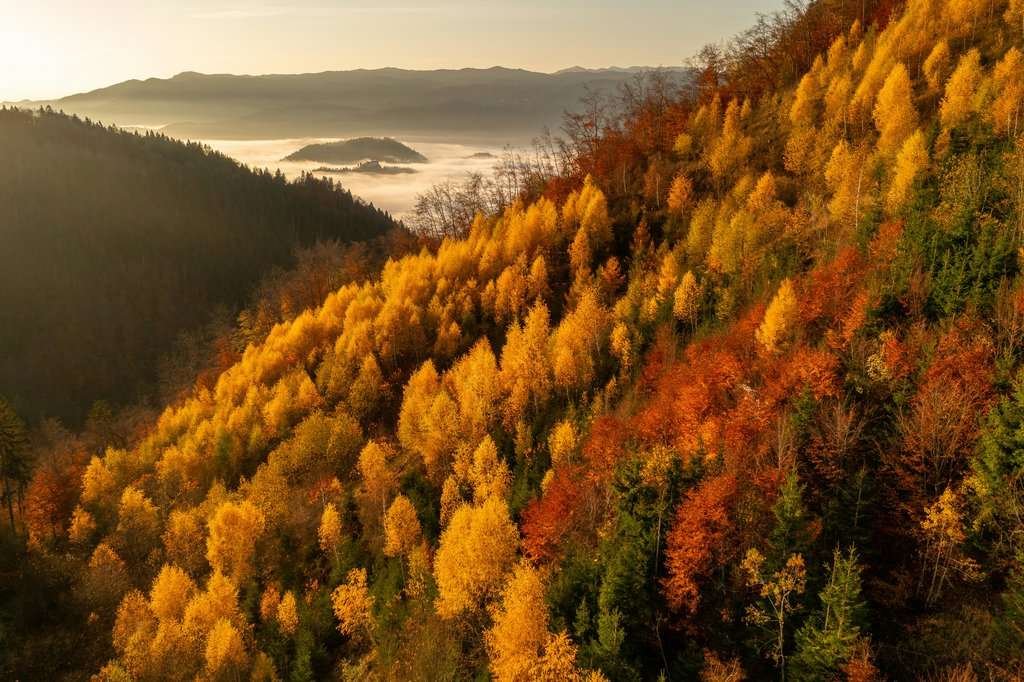
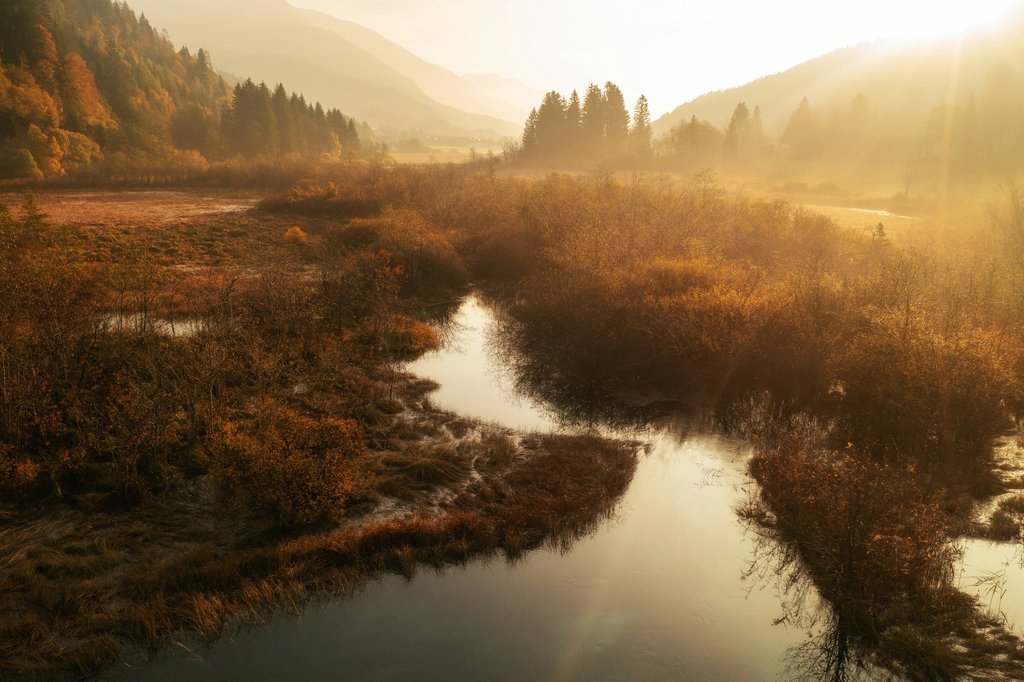
November has a way of quieting things. Here in the Mission Mountain Valley of western Montana, leaves are down, the light comes in low, and the land settles into something that looks, from the outside, like rest. It is the season when gratitude gets its own holiday, when we are asked to pause and take stock of what has carried us through the year.
I have been thinking about what carries us. And the more time I spend in this work, the more certain I become that the answer has been outside the window all along.
At the Biomimicry Institute, gratitude is not an abstraction. It is the posture the entire practice is built on. Biomimicry begins with the belief that nature is not a warehouse of raw materials but a library of wisdom, 3.8 billion years in the writing. You cannot do this work without being changed by that belief. You start out looking for solutions and you end up, somewhere along the way, learning how to live.
The story we usually tell
When people first encounter biomimicry, they usually meet it as a design discipline, and a dazzling one at that. A bullet train reshaped by a kingfisher’s beak. Adhesives inspired by gecko feet. Fog-harvesting surfaces patterned on the Namib desert beetle, which pulls drinking water out of dry coastal air. The deep-sea glass sponge, whose lattice of brittle fibers teaches engineers to build strength from fragile things. The prairie, whose deep perennial roots are quietly reshaping how we grow food. These stories are real, and they matter. They are proof that when we ask nature how, the answers are elegant, efficient, and already field-tested across deep time.
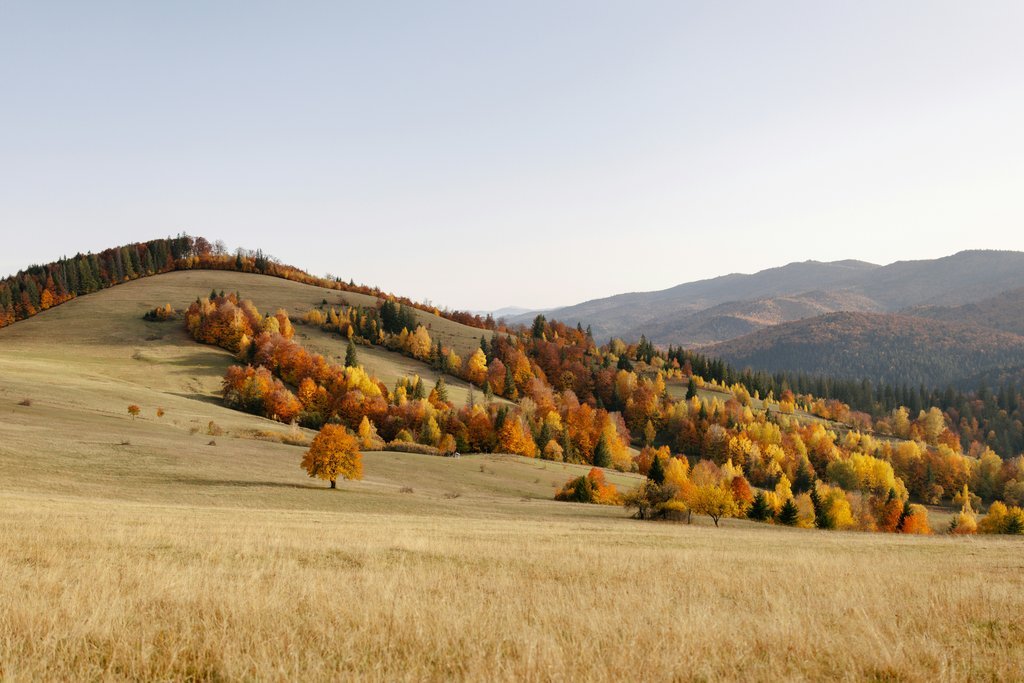
But if we stop there, we have only read the first chapter. Because the same living world that can teach us how to build a better blade or a kinder material has just as much to say about how to be a steadier, more honest, more whole human being. The strategies are not only physical. They are emotional, relational, even spiritual, if we are willing to look that closely.
I am grateful for the engineering marvels. I am more grateful for the quieter lessons underneath them.
Asking nature a different question
There is a question at the heart of this practice: how would nature do this? We ask it of water and heat, of structure and strength. It is a question that has never once come back empty.
Lately, I’ve been pondering a different version of the question: How does nature rest? How does nature grieve? How does nature begin again after loss? How does nature hold on, and how does it know when to let go?
These are not scientific questions in the usual sense. But they are not sentimental ones either. I should be honest here: I am not a scientist. I am a communicator, the one who carries these stories from the researchers who uncover them to the people who need them. Maybe that is why I feel comfortable asking nature the questions a lab might not. Every organism alive today descends from an unbroken line of ancestors who faced scarcity, disruption, injury, and change, and found a way through. And that unbroken line does not stop at the forest’s edge. It runs through us. Whatever season I am facing, something older than me has already weathered it.
That is still biomimicry. We are simply widening what we mean by a problem worth solving. Burnout is a problem. Grief is a problem. The feeling of being too small against challenges too large is a problem. And nature, it turns out, has prior art on all of it.
What the living world keeps teaching me
On rest. This month, the cottonwoods along the river let everything go. Every leaf they spent the summer building, released without ceremony. It looks like a loss, but is actually preparation. Beneath the bark, a winter tree is doing some of the most intelligent work of its life: drawing its sugars down into its roots, hardening every cell against the cold, keeping count of the chill it needs before spring is worth believing. There is a word for this, and it is not laziness. It is dormancy, and nothing about it is passive. I need this lesson every November. Like most of us, I was taught to treat rest as a reward for finishing, and the list is never finished. The bare tree tells me otherwise. Rest is not what comes after work. Rest is the work, the quiet season that makes every growing one possible. Nature has never once apologized for a restful winter.
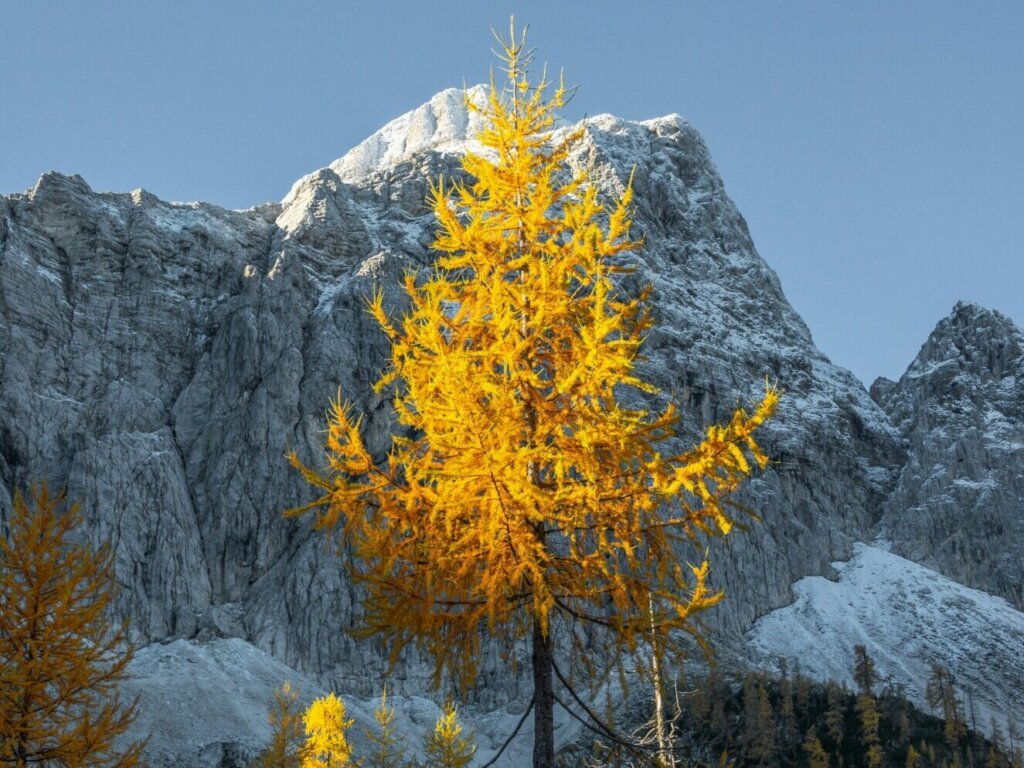
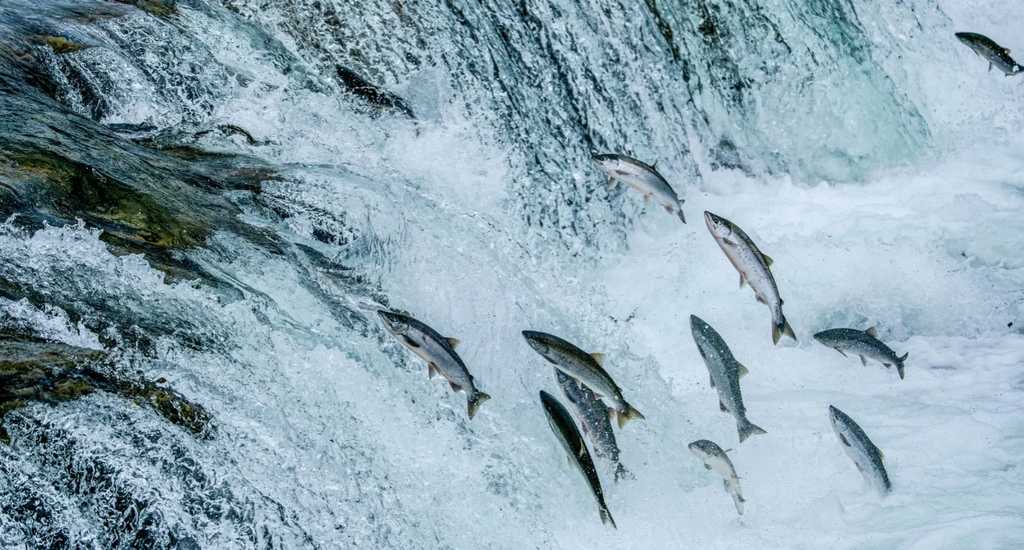
On grief and renewal. Every autumn, in rivers west of here, salmon finish a journey that costs them everything. They swim against the current, spawn, and die. And the river does something remarkable with that ending: it feeds. Eagles, bears, insects, entire watersheds live on what the salmon leave behind, ocean nutrients carried hundreds of miles inland, turning up in the wings of songbirds. Loss, in the living world, is never the end of the story. It is the beginning of an inheritance. I think about this when grief visits my own life. Nature does not rush its decomposition, and it wastes none of what love and loss leave behind.
On resilience without armor. Moss has no bark, no thorns, no height. When drought comes it does not fight; it dries to a crisp and waits, sometimes for years, then greens within hours of the first rain it receives. The octopus crosses a predator’s ocean with no shell at all, surviving on awareness and adaptability instead. Nature’s resilience is rarely about becoming impenetrable. It is about staying supple, keeping reserves, and trusting that disturbance and renewal travel together.
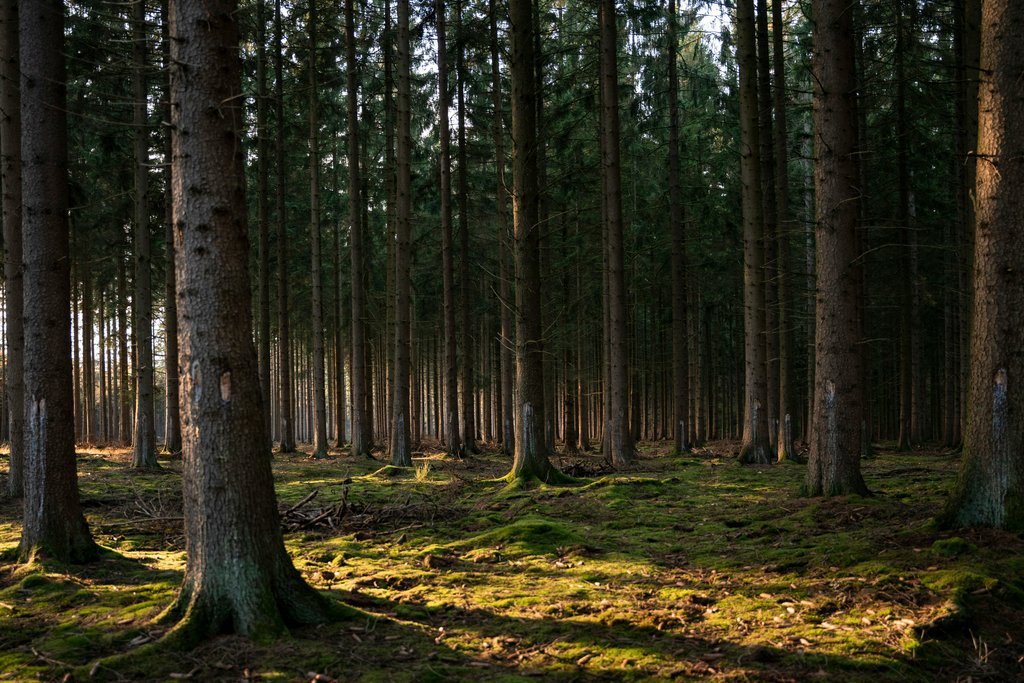
On belonging. Perhaps the deepest lesson. Beneath every forest floor runs a network of roots and fungi trading carbon, water, and warning signals. The trees we admire for standing alone have never once been alone. Interdependence is not a weakness nature tolerates; it is the architecture of survival itself. For those of us who were taught to equate self-reliance with strength, the forest offers a gentler truth. Asking for help is not a departure from nature’s way. It is nature’s way.
Gratitude as a practice, not a season
Here is where gratitude stops being a holiday and becomes a discipline.
In nature, nothing takes without giving back. The bee is paid in nectar and pays in pollination. The aspen feeds the elk that fertilizes the meadow that holds the water that sustains the aspen. Ecologists call it reciprocity. I have come to think of it as gratitude made physical: thankfulness expressed not in words but in returned care.
If nature is going to be our mentor, for our materials and our buildings and also for our weary, hopeful inner lives, then gratitude asks something of us. The living systems teaching us how to rest, grieve, bend, and belong are themselves under strain. We are losing species, forests, and wetlands at a pace that should stop us mid-sentence. Every ecosystem that disappears takes its lessons with it, including the ones we have not yet learned, the ones we may someday need most.
This is what I mean when I say that protecting nature is not separate from caring for ourselves. We are not saving something out here. We are keeping the library open.
An invitation
So this season, alongside whatever gratitude you offer around your own table, I want to offer a small practice. Go outside, wherever outside is for you, and find one living thing. The old pine at the edge of a field. The creek that runs cold under the ice. A hawk working a fence line. Or, if pavement is your landscape, the moss growing in the old stone wall, that street tree up the block, or the weed in the sidewalk crack that nobody planted and nothing discouraged.
Ask it the question we ask every day in this work: how do you do that? How do you keep going? And then stay long enough to notice that something in you already knows the answer, because you are not a visitor to this system. You are a member of it, made of the same stubborn, generous, improbable life.
That, I think, is the deepest gift biomimicry has given me. Not the innovations, though I love them. The belonging. The daily reminder that we come from a world that has been solving the problem of how to live, and how to live together, for 3.8 billion years, and that it is still willing to show us.
All we have to do is be grateful enough to ask. Quiet enough to listen. And brave enough to protect the teacher.
The post What Nature Knows About Being Human appeared first on The Biomimicry Institute.


