
An idea borrowed from small cassava farms in Cameroon could help Canadian potato growers turn waste into revenue.
Inspired by mobile cassava starch processors used in West Africa, Quebec startup ExclusiVert has adapted the concept for Canadian conditions, creating a mobile starch extraction unit that travels from farm to farm to process unsold potatoes into starch for bioplastics, paper manufacturing and other industrial products.
WHY IT MATTERS
Cull potatoes have little value for many growers because they are expensive to transport, there are few nearby processing options and many end up in landfill or as compost or animal feed. Processing them on the farm could create a new revenue stream while supplying Canadian manufacturers with renewable raw materials.
According to Dr. Said Elkoun, scientific director at ExclusiVert and professor at the University of Sherbrooke, Canada produces about six million tonnes of potatoes annually, and roughly 10 per cent never reach the fresh market because the potatoes are undersized, misshapen or otherwise unsuitable for sale. In Quebec alone, he estimates between 50,000 and 65,000 tonnes of potatoes fall into that category each year.
“We saw those figures and thought there was something we could do,” Elkoun said, referring to ExclusiVert co-founders Zedou Mouliom Atangana and Juliette Clairence Mango. “Our idea was to move the process to the farmers instead of moving the potatoes to the factory.”
Water weight
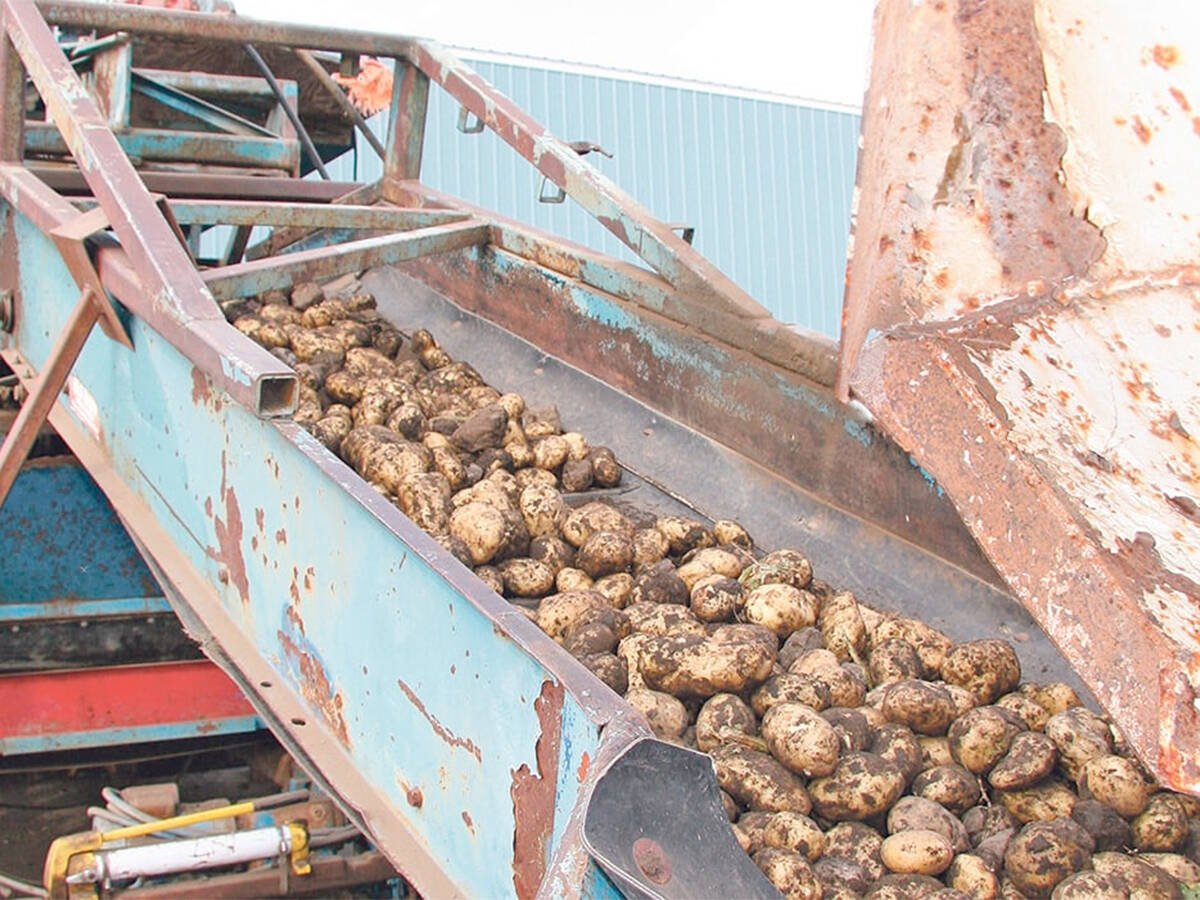
The biggest obstacle is water. A potato is about 80 per cent water, making transport to a processing plant economically challenging. Instead, the company plans to bring starch extraction to the farm with a mobile system that extracts the starch, recycles and treats water used during the process, and dries the starch so it can be sold into existing industrial markets.
Elkoun and his team at the University of Sherbrooke spent the past three years designing the process and the unit based on mobile cassava starch processing units used in Cameroon, ensuring it meets Canadian regulatory standards while reducing water use and recycling much of the water within the system.
The first pilot unit is expected to begin operating on-farm during Quebec’s 2026 potato harvest. According to Elkoun, it will visit three of the province’s largest potato producers — Les Pommes de Terre Cardinal, Patates Dolbec and Propur — to collect technical and environmental data needed for regulatory approval by Quebec’s environment ministry.
The secondary goal is to showcase the technology to the potato industry by inviting other producers to see the unit in action, Elkoun noted.
Revenue stream potential
The unit is designed to process about 5,000 kilograms of potatoes per hour, producing roughly 1,000 kilograms of starch.
ExclusiVert’s first commercial market will be native starch, which already has established uses in pulp and paper, manufacturing and other industries. The company also plans to produce modified starch for specialty applications before eventually manufacturing its own starch-based bioplastics.
“Our first market in the lab was single-use bioplastic applications,” Elkoun said. “We have a recipe we can use.”
Under the business model, farmers won’t have to own or operate the equipment. Instead, ExclusiVert will bring the mobile unit to participating farms, process the potatoes onsite and pay growers for the recovered material.
“Farmers don’t do anything except sell their residues,” Elkoun said, adding the company ultimately envisions placing mobile units strategically in potato-growing regions across Canada.
Potential beyond potatoes
The technology could also extend beyond potatoes. Elkoun’s research group has already produced bioplastics from carrot residues at the laboratory scale and is studying other agricultural byproducts that could become feedstocks for renewable materials.
“There are huge amounts of agricultural residues in Canada,” he said. “The question is how we can turn them into products that industry needs.”
It’s an idea that has caught the attention of funders, with the company receiving support from:
- Esplanade Quebec
- start-up accelerator Cycle Momentum
- Quebec’s Ministry of Economy, Innovation and Energy
- CRIBIQ (Consortium de recherche et innovations en bioprocédés industriels au Québec)
- RECYC-QUEBEC
- Desjardins
- The National Research Council of Canada Industrial Research Assistance Program
If this fall’s pilot is successful and regulatory approvals are secured, ExclusiVert hopes to begin commercial sales within about a year.
The post Mobile starch unit aims to turn cull potatoes into cash appeared first on Farmtario.


