
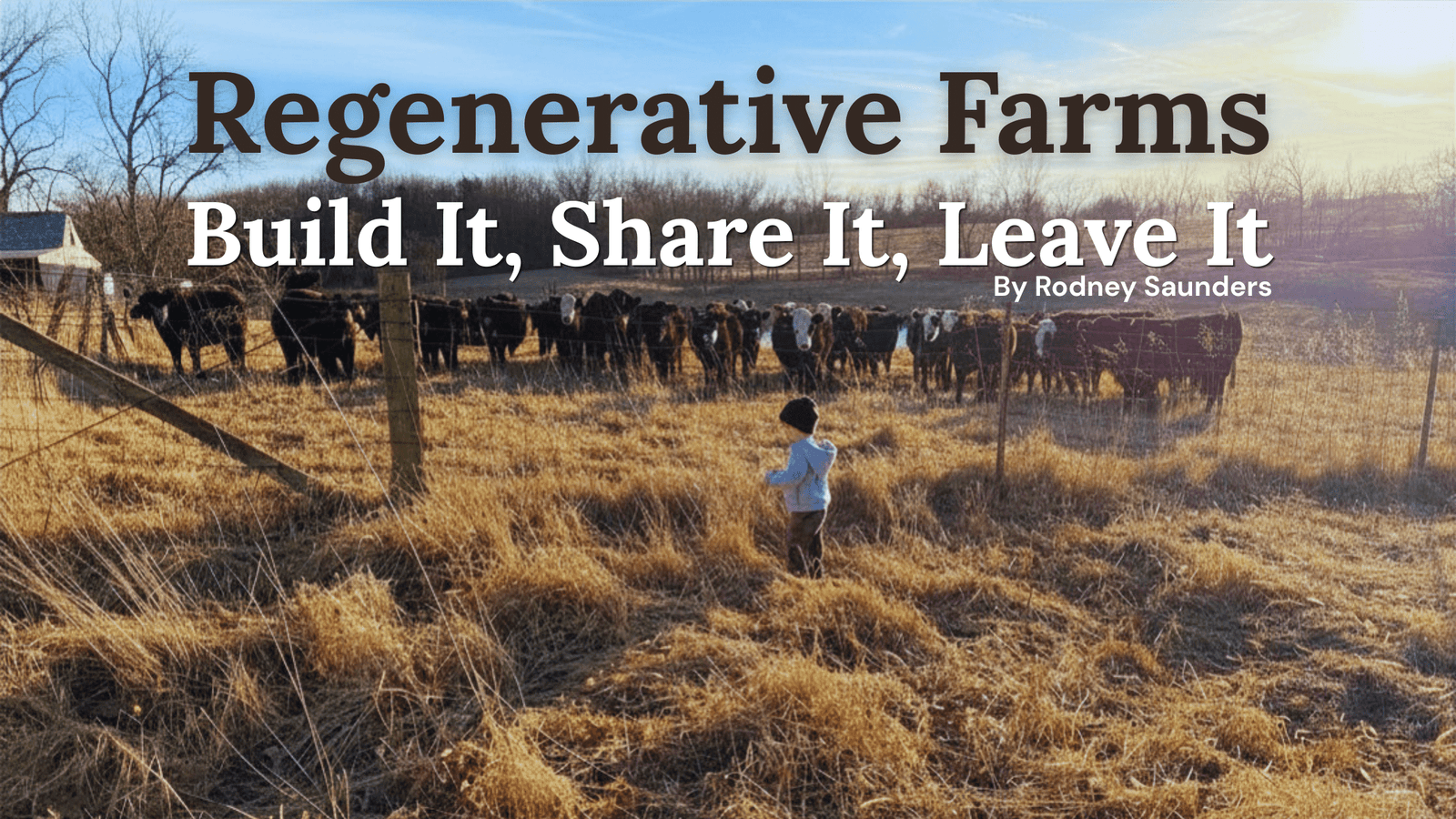
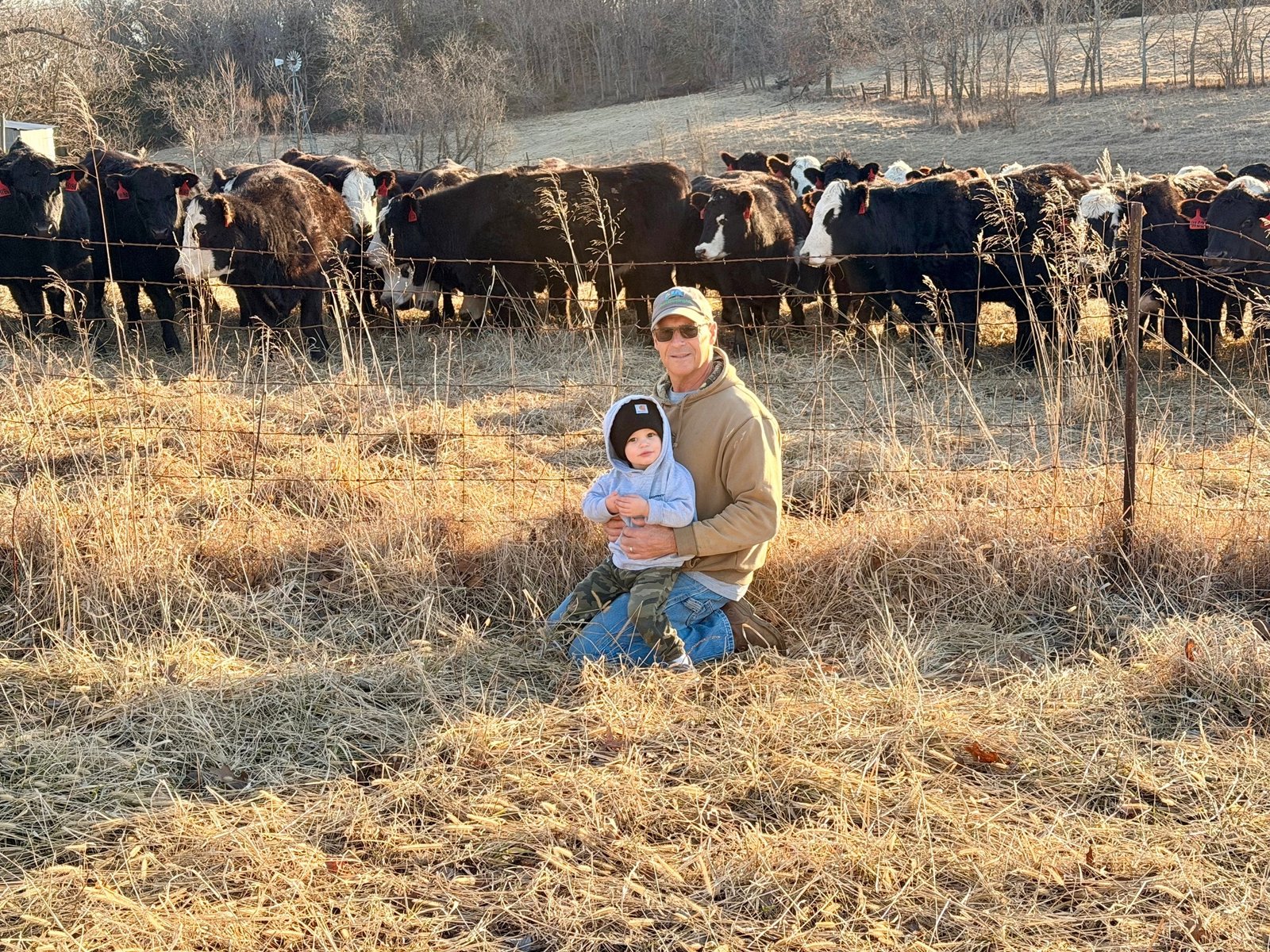
During a beautiful, abnormally warm February day this past winter, my two-year-old grandson was looking out the window and pointing at the heifers along my driveway and rambling about “da cows”. I decided to let him see them up close. Like most young, curious, and gentle cattle, they lined up shoulder-to-shoulder and slowly moved closer to us as if they each wanted him to get a good look. As we sat on the ground watching these heifers, it excited me that maybe one day he may be interested in following in Papa’s footsteps and take over our farm or build a regenerative farm of his own.
My dream is that he will be interested in building a farm, large or small, that grows life and hope. Regenerative farming has a growing number of people who are choosing a different path. These individuals are transforming degraded dirt into thriving, living soil, designed not just to produce food, but to cultivate knowledge, resilience, and legacy. Unlike industrial agriculture that has a growing dependency on commercial fertilizers, pesticides, and GMO seeds applied and planted over the landscapes. Ultimately, our goal should be to steward our land in a way that works with nature and to produce healthier food for our families and our communities.
By using a regenerative mindset, we can rebuild the degraded landscape, grow healthy, nutrient dense food and create something that could outlast the current generation while supporting future generations for centuries to come.
Build it
The journey —truly a journey, not a destination—starts with worn-out, degraded soils like we see everywhere. Soils that have been overworked and depleted through conventional farming practices and inputs. Through implementation of practices like cover cropping, no-till planting, rotational grazing, composting and/or reduced fertilizer rates (with proper timing and placement), the land slowly begins to regenerate. Earthworms and other soil biology return, soil aggregation develops and extends deeper into the soil profile, and water infiltration and retention improve. In our perennial pastures, new grasses, forbs, and legumes begin to fill in areas of bare soil. What was once dry and lifeless is now healthy and thriving with life.
Decisions on the farm are still guided for profitability, but with a long-term mindset. Instead of maximizing short-term yields, the focus remains on life and resilience. That’s life in the soil, life of plants throughout the year, life of animals above and below the ground, and fostering ecosystem balance—just as nature was designed to do
Share it
Our farm’s purpose extends far beyond producing row crops, livestock, produce, and orchards. It has become a hands-on training ground for the next generation of farmers and land stewards. As Understanding Ag staff hold workshops all over North America and other parts of the world, we are forever thankful to all the selected landowners and managers that allow us to bring our classrooms to their farms, to show and discuss examples of regenerative stewardship.
Farms like ours can be used to employ interns, part-time labor, and for hosting workshops, where people have an opportunity to see, experience, and learn directly from the land what regenerative farming is all about. Trainees gain practical skills—soil management, animal care, crop, and forage production, while also developing a deeper understanding of how nature functions when we work with her and not against her.
The farm emphasizes mentorship and shared responsibility. Experienced growers pass down knowledge, while new learners bring fresh ideas and energy, creating a cycle of continuous growth.
Leave it
Perhaps one of the most important aspects of a regenerative farm is a succession plan. We are just caretakers of the land for a period of time, and if we truly want our farm to be regenerative, we must develop a plan for succession. In the case of our next generation, one that is fair for all who are involved after we are gone. A very important part of this plan is to clearly review and discuss it with each member of the family so there are no surprises or resentment after we are gone. Families often face challenges when plans aren’t clearly communicated. Even with the best intentions, a lack of shared understanding can lead to confusion or tension over time. By having open conversations and involving all family members while you’re still able to guide the process, you create clarity, alignment, and a stronger foundation for the next generation.
Legal frameworks, cooperative models, and land trusts are being explored to ensure the farms across the world remain protected and productive for generations to come. The goal is clear: prevent the land from being sold off or degraded, and instead, keep it in the hands of those committed to regenerative practices.
We’re not just growing food—we’re growing a system that can survive beyond any one person.
Regenerative farming challenges us to think differently about land ownership. It’s not just an investment, it’s an opportunity to build something lasting, share its value today, and leave a legacy for tomorrow. And in a world focused on short term gains, that long term perspective may be the most valuable asset of all.
If you’re ready to move toward regenerative agriculture or put a clear succession plan in place, take the next step and reach out to a trusted ag consultant. Work with someone who understands both the land and the legacy you’re trying to protect—such as the team at Understanding Ag—and start building a plan that will carry your farm forward for generations to come.

The post Regenerative Farms: Build It, Share It, Leave It appeared first on Understanding Ag.


