

The numbers are becoming difficult to ignore. Around the world, the shift from petrol and diesel power to electric vehicles is no longer a slow-burning trend – it’s accelerating, and doing so faster than most forecasts predicted even a year ago.
In China, the world’s biggest car market, new-energy vehicles – plug-in hybrids and full EVs – made up nearly 55 per cent of new-car sales in 2025. Their monthly share exceeded 60 per cent in April 2026, although domestic sales have since weakened.
The pattern is repeating across Asia. Singapore’s EV share has rocketed from three per cent in 2020 to around 40 per cent of new car registrations in 2025. Across south-east Asia, EV sales more than doubled last year, while South Korea’s sales grew about 65 per cent in 2025.
READ MORE: Record sales for Tesla! EV heavyweight has huge May – Tesla Model Y outsells Ford Ranger, Toyota Hilux, Toyota RAV4
READ MORE: New findings: Australia’s EV boom is reshaping the used car market as record sales feed future supply
READ MORE: Milestone achieved! EV annual sales crack 100K in Australia as government warned not to axe incentives
Latin America, long considered slow to embrace electrification, posted 75 per cent EV growth in 2025, led by Brazil and Mexico. Europe, meanwhile, has simplified the charging experience by requiring card payment at new fast public chargers – removing some of the app-juggling that has long frustrated EV owners. ICCT data shows battery-EV registrations there rose 41 per cent in the first eight months of 2026 year-on-year, reaching 29 per cent of new-car registrations in August.
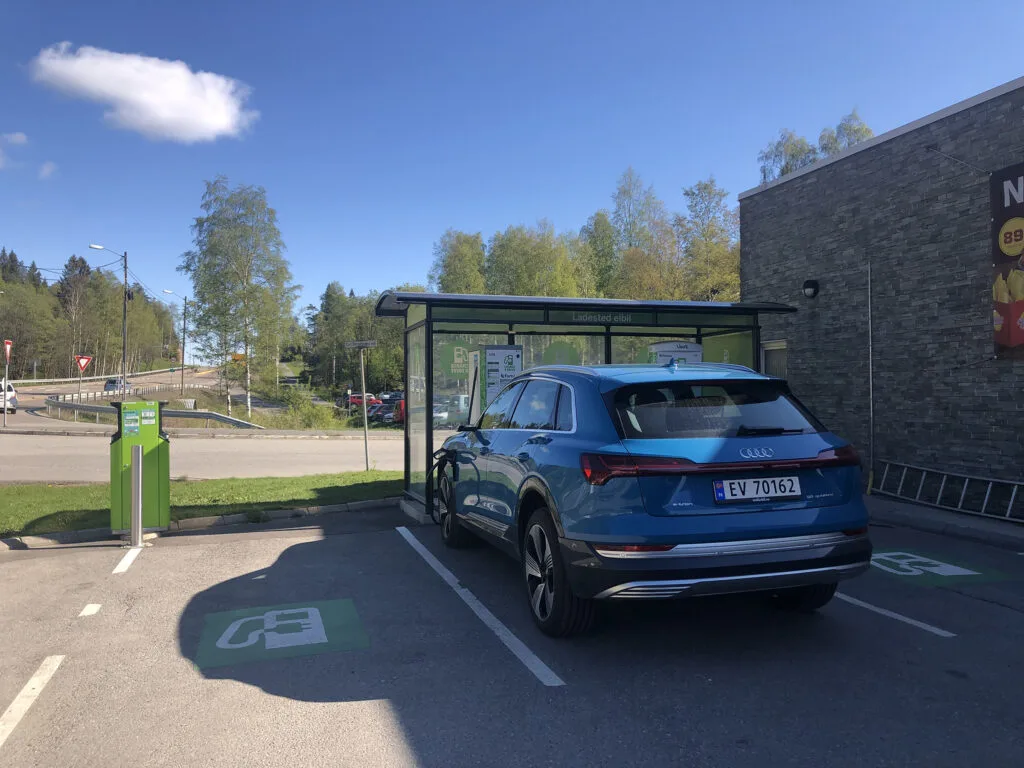
Norway remains the outlier everyone cites, with 98 per cent of new cars registered from January to August 2026 electric. Its head start was built on tax incentives, gradually wound back as EV acceptance became mainstream. Denmark isn’t far behind at 81 per cent, followed by Finland (50 per cent), Sweden (43 per cent), the Netherlands (around 38 per cent) and France (30 per cent) and Germany (27 per cent) – notable given Germany’s reputation as a bastion of combustion-engine enthusiasm.
Even Italy, a nation famed for its love of driving and manual gearboxes, has seen its battery-EV share rise to eight per cent in the first eight months of 2026.
Kingsmill Bond, energy director at UK think tank Ember, says the acceleration – sharpened by the recent oil crisis – reflects “the parabolic phase of the technology S-curve,” the point where an old technology is rapidly displaced.
“This is the first time we’ve ever had an oil crisis when there is an alternative on hand and it is easily available,” Bond says. “Battery costs are plummeting and everything is coming together. The whole of Asia is now electrifying and that is the soft underbelly of the global fossil system. Once you reach five per cent or 10 per cent market share, it takes off. The next stop is 30 per cent and suddenly you are on the way to 80 per cent.”
The affordability argument is backed by hard data. The International Energy Agency’s latest report found 70 per cent of battery-electric vehicles sold in China in 2025 were already cheaper than the average conventional car on purchase price alone – before running-cost savings. The IEA says more than 20 million electric cars were sold globally in 2025 and expects 23 million in 2026, representing 28 per cent of new-car sales.
UK commentator Jeremy Warner, deputy editor of the Daily Telegraph, cites University of Exeter research suggesting global EV take-up has passed a tipping point and could exceed two-thirds of new-car sales by decade’s end. He also points to UBS’s concept of “triple parity” – EVs matching combustion cars on price, range and refuelling time.
Warner argues that once the tipping point passes, the problem could flip: petrol stations, starved of demand, may become as scarce as today’s charging stations. Britain has pledged to end sales of pure petrol and diesel cars by 2030, with hybrids permitted until 2035. The government launched a review of its zero-emission vehicle mandate in August 2026.
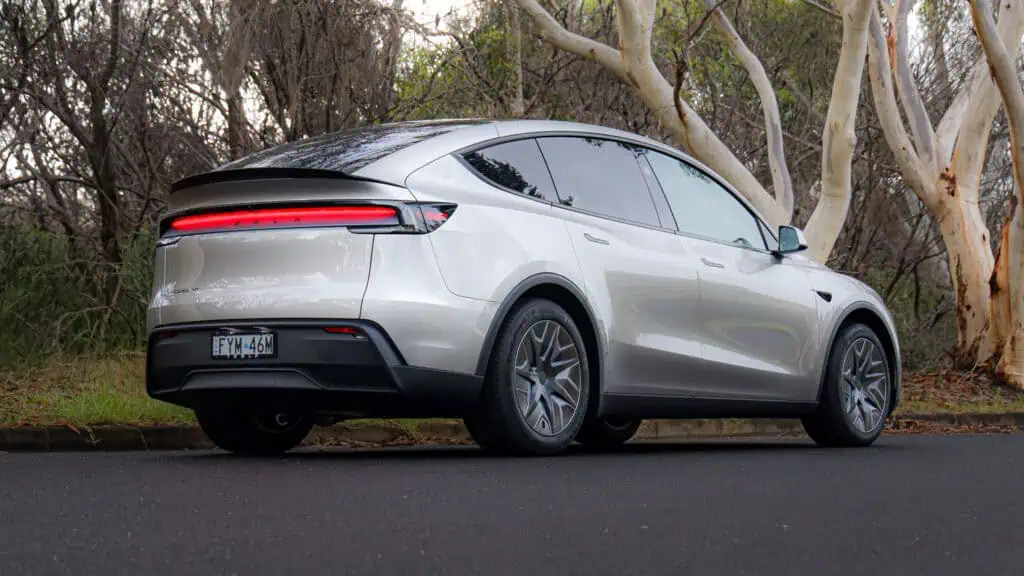
Australia is not immune. In May, Tesla’s Model Y became the nation’s best-selling vehicle outright – ahead of the Ford Ranger and Toyota HiLux – on the back of record monthly deliveries. That same month, EVs outsold hybrids here for the first time, taking 19.9 per cent of the market to hybrids’ 17.8 per cent, while petrol sales fell 30 per cent and diesel 26 per cent.
June, the strongest month for new-car sales in Australian history, saw battery-electric vehicles take 23.3 per cent of sales across all reporting sources, up from 7.3 per cent a year earlier and 8.4 per cent in January. Add hybrids and new-energy vehicles accounted for 49.16 per cent of June-quarter sales, per the Australian Automobile Association.
Then August set another record: 27,089 full EVs, or 24.9 per cent of all new-vehicle sales, outsold petrol vehicles for the first time. The Tesla Model Y topped the sales chart with 6414 deliveries. Australia’s battery-EV fleet has now passed 500,000 vehicles – well behind Norway’s fleet share, but climbing fast.

Federal Chamber of Automotive Industries chief executive Tony Weber says the August figures point to a genuine structural shift: “The sustained level of BEV sales, together with changing brand preferences, shows how quickly consumer choice and competition are reshaping Australia’s new-vehicle market.”
No one in Canberra is talking about banning combustion cars, but by 2030 it’s plausible half of Australia’s top-10 sellers will be electric. What’s still missing is a genuinely capable electric ute – though Kia’s PV5 van, priced from $55,990 with a 416km range, shows where light commercials are heading.
Kia Australia chief executive Dennis Piccoli told The Weekend Australian that demand had caught the brand off guard: “In terms of everyone speculating as to where it’s likely to end up, I think the transition is speeding up, quite quickly.
“I think it’s probably 2030 that we’re going to see Australia end up at pretty close to 50 per cent of new car sales being EVs. We had a forecast of about 50 orders a month for the PV5 van – the orders have gone through the roof.” He adds that early EV6 buyers skewed toward tech-savvy over-60s, suggesting resistance is more about attitude than age.
BYD Australia chief executive Stephen Collins pushes back on any suggestion brands are dragging their feet. “This is Australia, a big country, a little bigger than Singapore and Finland, and there’s still work to be done to encourage buyers in provincial and rural areas to make the switch,” Collins says. “EV ownership needs to be a positive experience that brings benefits and joy to everyone, not just those in the cities.”

Not everyone is convinced. Toyota chairman Akio Toyoda remains a vocal holdout. “Everybody is shifting to BEVs, this is the biggest fear for me,” Toyoda has said. “I love smell, I love sound and I love engines, and I want to keep the jobs for engine suppliers… it seems to me that I’m the only one. I feel very alone.”
The United States tells a messier story. EV sales jumped 60 per cent between 2021 and 2022 under Biden-era incentives, prompting Ford to rush the F-150 Lightning to market – only to discontinue its battery-electric version after weak demand. The second Trump administration scrapped EV tax credits and eased emissions rules, pushing Detroit’s Big Three back toward trucks and SUVs.
Stellantis has since written down US$26 billion in EV-related losses, Ford a further US$19 billion, per The New York Times. “The way I’d put it,” US auto journalist Martin Padgett says, “is that we pulled a U-turn while the rest of the world was pushing forward.” Even so, JD Power found 26 per cent of prospective US buyers “very likely” to consider an EV in April – before the Strait of Hormuz closure sent oil prices spiking again.
Washington’s 100 per cent tariff on Chinese EVs has locked out BYD and Geely – but Chinese brands have gained ground in other markets. Tesla founder Elon Musk warned in 2024 that, without trade barriers, BYD and Geely would “pretty much demolish most other companies in the world.” Increasingly, that looks less like hyperbole and more like a forecast coming true.
The post The EV tipping point has arrived and Australia is no longer the exception | Analysis appeared first on EV Central.


